6 hours ago
7
6 hours ago
7
A five-month investigation has named 13 previously unidentified victims of US attacks on boats allegedly carrying narcotics in a campaign that has killed nearly 200 people in the Caribbean and the eastern Pacific.
It is unclear if the US has ever identified any of its 194 victims before attacking them, and the names of just three had previously emerged, after their families launched legal cases against the White House.
The Trump administration has consistently sought to justify the killings, which began during last year’s military buildup towards Venezuela, by arguing those targeted were “narco-terrorists” transporting drugs to the US.
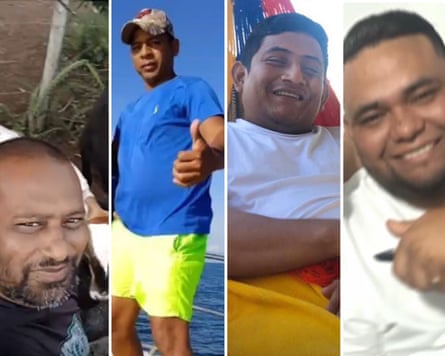
But a joint effort by 20 journalists led by the Latin American Center for Investigative Journalism (CLIP) this week published the identities of 13 of those killed, some of whom showed no indication of involvement in drug trafficking.
The CLIP’s report showed that all the victims identified so far, including those who may have had some involvement in drug trafficking, came from extremely poor communities across Latin America and the Caribbean.
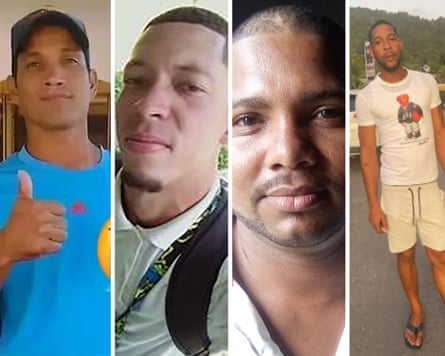
“Despite the US claim that the strikes are fighting narco-terrorism, what is actually happening is that young people living in extremely precarious conditions, doing whatever work they can to support their families, are being targeted,” said María Teresa Ronderos, director and co-founder of the CLIP.
“The US is not taking down any Pablo Escobar or Joaquín ‘El Chapo’ Guzmán,” she added.
The investigation also underlined what other reports and security analysts have concluded: that the strikes have not reduced the flow of drugs to the US, but have instead torn apart communities already fractured and weakened by organised crime and state neglect.
“There are communities where they stopped fishing for several weeks – and if they do that, people go hungry – because they were terrified of being bombed,” said Ronderos.
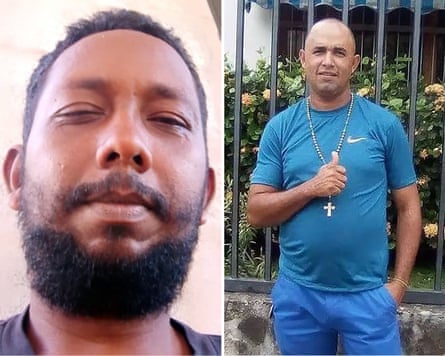
The main finding, she said, was putting names and faces to a greater number of victims, “to show that these were flesh-and-blood people” – even if the vast majority remain unidentified.
The investigation brought together journalists, media outlets and collectives from Colombia (CasaMacondo, Verdad Abierta and 360-grados.co) and Venezuela (Alianza Rebelde Investiga), and the Trinidad and Tobago Guardian, with support from the NGOs Airwars, from the UK, and El Veinte, from Colombia.
It was an “extremely difficult” investigation, said Ronderos, due to the fear of speaking out among relatives and communities –and local authorities. “Official government sources, prosecutors’ offices – nobody wants to speak because everyone fears damaging relations with the US and facing retaliation,” she added.
Of the 16 victims now identified, eight are Venezuelans: Juan Carlos Fuentes, 43; Luis Ramón Amundarain, 36; Eduard Hidalgo, 46; Dushak Milovcic, 24; and Robert Sánchez, Jesús Carreño, Eduardo Jaime and Luis Alí Martínez, whose ages are unknown. Three are Colombians: Alejandro Andrés Carranza Medina, 42, and Ronald Arregocés and Adrián Lubo (ages unknown). Two are from Ecuador: Pedro Ramón Holguín Holguín, 40, and Carlos Manuel Rodríguez Solórzano, 34; two are Trinidadians: Chad Joseph, 26, and Rishi Samaroo (age unknown); and one is from Saint Lucia: Ricky Joseph (age unknown).
Amundarain and Fuentes were drivers from Güiria, Venezuela, who crossed the Gulf of Paria to Trinidad and Tobago after being promised work at a car wash.
A few days later, they were offered a job on a small boat journey with two others. On 3 October, the boat was bombed. Their widows told the CLIP that neither man had any involvement in drug trafficking, but the report notes that “all signs suggest” they were “about to make a ‘run’, the local term for transporting illicit cargo”. Still, the fact that the boat was travelling from Trinidad and Tobago to Venezuela drew attention: “Boats carry drugs from South America northwards, not the reverse,” said Ronderos.
In several cases, the victims were fishers with no indication of involvement in the drug trade, such as the Colombian and two Trinidadians whose families have launched lawsuits against the US. But even those men who were involved in the drug trade generally fit the profile of people who turned to transporting drugs as a means to survive crushing poverty, the report found.
In the eight months since the airstrikes began, the US has not provided any evidence that any of the 194 victims were involved in drug trafficking.
A spokesperson for US Southern Command said that all the strikes were “deliberate, lawful and precise, directed specifically at narco-terrorists and their enablers. We have full confidence in the operations and intelligence professionals who inform our missions.”
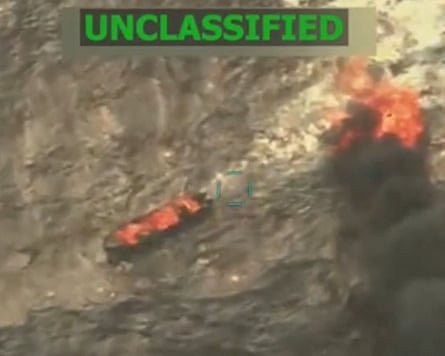
Ronderos said that even if all those killed had been transporting drugs, “there is no death penalty for cocaine trafficking. So the fact that they were killed without even having the chance to defend themselves is deeply troubling.”
Brian Finucane, a senior adviser at the International Crisis Group and a former US state department lawyer, said the boat strikes were never “a serious counter-drug operation” by Trump. “I think this was in part a military spectacle to give the illusion of the administration doing something ‘macho’ about drugs,” he added.
Organisations, countries and the United Nations have condemned the attacks as extrajudicial executions, yet they continue.
Finucane warned that the killings risk being “normalised” by the population and US politicians, or becoming “‘background noise’ while the administration is engaged in so many different military misadventures, such as the ongoing war with Iran”.
Meanwhile, it is local communities that bear the burden of the killings, said Ronderos: “Whether those men were doing legal or illegal work, children were left without the person who brought food home, in families that were already extremely poor.”