2 months ago
88
2 months ago
88
From Times Square to the Washington Monument, America saw in the new year with a bigger bang than usual, celebrating the fact that 2026 marks the nation’s 250th birthday. Yet as the US looks back, precious repositories of the nation’s history are facing an uncertain future.
Museum attendances are down. Budgets are precarious. Cuts in federal funding are taking their toll. And Donald Trump’s culture wars are spreading fear, intimidation and self-censorship among some directors and donors.
The alarm was sounded late last year by a survey conducted by the American Alliance of Museums (AAM), which showed institutions facing significant headwinds and a fragile, inconsistent recovery from the Covid-19 pandemic.
“It revealed some sobering news, which was that recovery from the pandemic wasn’t just coming to a stall but actually reversing,” says Natanya Khashan, associate vice-president of marketing and digital experience at the AAM. “We’re seeing declines in attendance, weaker financial performance and growing instability across the museum field thanks to some of the new economic and policy pressures that have emerged.”
The survey of 511 museum directors conducted in July and August 2025 found that only 45% of museums reported attendance at or above their 2019 pre-pandemic levels. This was a decline from 2024, when 51% had reached that milestone.
About 52% of museums reported a stronger bottom line in 2024 than pre-pandemic, a downturn from the prior survey, where 57% reported improvement in 2023. Meanwhile 26% reported a weaker bottom line, worse than the 19% who reported declines in the previous survey. Projections for 2025 are less optimistic than they were for 2024.
The Trump effect is being felt through executive orders and federal cuts: 34% of museums suffered the cancellation of government grants or contracts; 29% saw a decrease in attendance due to changes in travel/tourism and/or economic uncertainty; 18% experienced changes to the scope of their government grants/ contracts; 13% are subject to new legal restrictions on diversity, equity, and inclusion (DEI) activities. Only 31% of museums reported no impact at all.
For those affected by cancelled grants, the median loss was $30,000, the survey found. Lost grants were most commonly from the Institute of Museum and Library Services (IMLS), the National Endowment for the Humanities (NEH) and the National Endowment for the Arts (NEA).
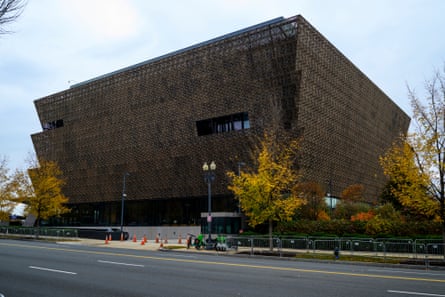
Among museums that lost federal funds, 35% had to defer or delay facility improvements, 28% cancelled or reduced public programming and 24% cancelled or reduced programming specifically for students, rural communities, individuals with disabilities, the elderly and/or veterans.
Khashan says: “The most direct impact we’re seeing as it pertains to the administration is the federal grant cancellations that have happened this year. About one third of museums reported losing federal grants in 2025.
“This is often mid-project and most museums have not been able to replace that funding and that has downstream effects: many of these organisations are planning capital renovations and things of that nature, so architects, design firms, other for-profit businesses are also losing business because of those cuts. Not to mention, of course, the impact on communities that are experiencing cancelled programmes or reduced capacity in museums or increased prices.”
Critically, 67% of museums reported that this lost funding has not been replaced by foundations, sponsors or donors. Only 8% reported the funding was fully replaced. Khashan added: “While we have seen some foundations step up to fill the gaps, particularly for those organisations that they were already engaged with, we’re seeing that isn’t going to bridge the gap for everyone.”
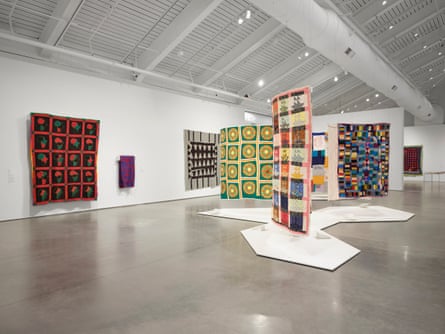
Among those affected is the Berkeley Art Museum and Pacific Film Archive (BAMPFA) at the University of California in Berkeley, which has about 30,000 square feet of gallery space and 120,000 visitors a year. In 2019 BAMPFA received a bequest of more than 3,000 African American quilts, the biggest collection of its kind.
But in April it learned the federal government had cancelled two grants, worth a total of $260,000, for conservation of the quilts. Julie Rodrigues Widholm, executive director of BAMPFA, recalls: “That was devastating because there’s an urgency to restoring the quilts. They’re textiles and it’s important that we not let this work linger so that was disorienting for us institutionally.
“It was hard to navigate an understanding because it was so unprecedented to be told from the government that the grant was cancelled because it no longer aligned with American priorities. There was a lot of confusion around the legality of that.”
The loss of funding received media coverage, which became a catalyst for new funders to step up and plug the gap. Widholm adds: “We were able to replace the lost amount from IMLS, which was fantastic and allowed us to continue the work and showed that our community and funders care deeply about this work that we’re doing to bring attention to this under-recognized part of American art history of African American mostly women quilt makers from the 20th century.”
But she cautions: “We still need more funding and it’s a very tough moment right now in general for philanthropy in the United States because of economic uncertainty and declining federal engagement with the arts or putting certain parameters around what will be funded by the government at this time. We’re having to get creative and think about how we can engage more deeply with individual donors.”
The 250th anniversary of US independence is likely to witness a struggle over American identity. The Trump administration has made aggressive efforts to reshape the Smithsonian Institution and other cultural bodies to align with a nationalist, “anti-woke” agenda. The president’s executive orders and political pressure led to the resignation of Kim Sajet, director of the National Portrait Gallery, and prompted accusations of self-censorship among some curators.
Federal officials are now demanding extensive reviews of exhibition content, aiming to replace narratives about systemic injustice with a more triumphalist view of American history. While some private museums remain insulated by their funding models, some observers warn of a chilling effect that could further damage funding and visitors numbers.
Stephen Reily, former director of the Speed Art Museum in Louisville, Kentucky, says: “There’s a trickle-down wariness of controversy by institutions and institutional funders. You hope that museums won’t stop trying to be relevant with the art they exhibit. That doesn’t have to mean offensive or politically controversial but if they just become watered down then they’re going to exacerbate the challenges they’re facing already.”
In Tulsa, Oklahoma, the Greenwood Rising museum is dedicated to telling the story of the city’s historic Greenwood district – known as Black Wall Street – and the 1921 Tulsa Race Massacre. It opened in 2021 on the 100th anniversary of the massacre, has about 12 employees with an average annual budget between $1.5m and $2m. It does not receive federal funding.
Raymond Doswell, its executive director, says the museum is focusing on marketing and outreach but the current political climate could affect future fundraising efforts. “We can tell that, especially from corporate givers, they’re very concerned about the language of diversity and those kinds of things and how that might be seen.
“Moreover, a lot of friends both in the corporate and philanthropic world are having to step in to help other institutions, other non-profits who have been struggling and who have been reliant very heavily on both federal and state dollars to do lot of different kinds of work outside education and the arts. It means that there’s support for institutions like ours but probably less so because there’s some real need out there and folks are pivoting to try to help with that need.”
Looking ahead to 2026, museum leaders expect major disruptions from shifts in philanthropy, inflation, financial instability and the continued reduction of government funding. But Doswell remains optimistic about America’s semiquincentennial.
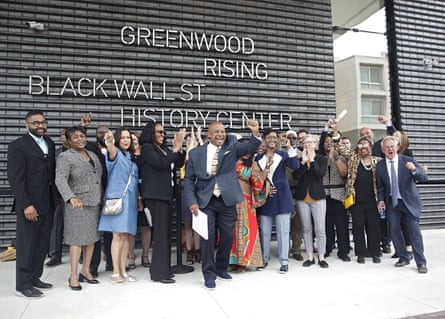
He adds: “We’re going to find how much we rely on institutions to help tell these stories. There’s some things that we are not going to be able to get around in terms of storytelling and some of that stuff apparently is going to be uncomfortable for a lot of people but it’s going to a battle between truth and propaganda. There’s going to be a strain on national institutions folks like us, the smaller institutions, I feel very grounded in what we need to do and what we have to say.”
Museums have weathered storms before, notably the Great Depression of the 1930s. But Marjorie Schwarzer, author of Riches, Rivals and Radicals: A History of Museums in the United States and a retired professor of museum history at the University of San Francisco, points out they have never had to deal with a figure like Trump.
She says: “Museums are focused on their mission and the public trust and they have been since the 1880s. They are not used to having to think about one individual who’s the president. This is completely antithetical to the field.
“This is throwing everybody off. He’s so direct. I read the most recent threat to the Smithsonian and it made absolutely no sense; it was busting my brain cells. Like, what are they asking for? It was out and out bullying. This is what’s different and it is rippling into the field.”
Although the US has more robust culture of donor support and cultural philanthropy than Britain, this too could be eroded by fear of Trump’s efforts to rewrite history. Schwarzer warns: “Funders are going to be careful. I’ve heard stories told to me in confidence by directors of exhibitions being cancelled, not because of federal funding or Trump funding but because other funders are worried about the political fallout.”
Federal money has been crucial, Schwarzer adds, for helping US museums push new boundaries. “You get periods of innovation like after the bicentennial celebration in the 1970s: you had this big rise of funding and this is where you get children’s programmes and programmes for people with disabilities and neighbourhood exhibits and exciting new kinds of exhibition strategies, new technologies. If you don’t have the funding to jumpstart that, you’re going to see the field is not going be able to do those kinds of programmes.”
Now, as other countries do innovative work, the US risks losing its “leadership edge”, she warns. “The 20th century and the early 21st century were when US museums took a leadership position and moved the field way forward. Now we’re not going to be able to play that role within the international museum community the way we have done for the last 100, 120 years. That mirrors universities, mirrors journalism, mirrors all of these fields.”