2 months ago
122
2 months ago
122
Erik Irmer has been documenting the spread of invasive plant and animal species that disrupt native ecology across Europe. He focuses on humans’ interactions with these plants and animals. Aliens is published by Fotohof
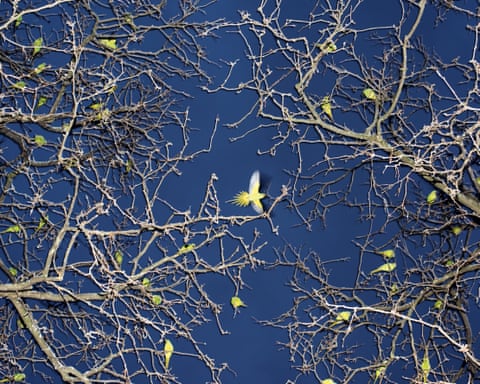
Ring-necked parakeets on the Rhine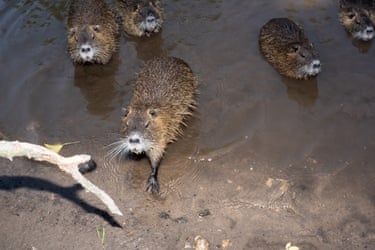
A nutria or coypu colony at Kotgraben in Halle, Germany, 2023
On the EU list of invasive alien species since 2016, these South American rodents were first brought to German fur farms in the 1920s. Animals either escaped or were released, and though there are no official estimates of the current wild population in German, hunters there killed more than 100,000 of them in the 2020-21 season
A dead Asian tiger mosquito, Arles, France, 2023
The species, which travelled to Europe from south-east Asia via global travel and trade, bites during the daytime and carries viruses such as dengue and chikungunya. First sighted in Albania in the late 1970s, the insect’s spread has been aided by climate change
Taxidermy specimens of Egyptian geese in the zoological collection at the Senckenberg Natural History Museum Görlitz, 2024
Introduced to Europe from the African continent as an ornamental bird, Egyptian geese have spread across Germany from the Netherlands, and are characterised by aggressive behaviour towards other waterfowl. The birds have been on the EU’s invasive species list since 2017
A diver catching American bullfrogs in the Eggenstein quarry pond near Karlsruhe, 2024
The American bullfrog was introduced to Europe from North America via the aquarium trade. A single female can lay up to tens of thousands of eggs, which has enabled the animals to spread rapidly
Ring-necked parakeets roosting in a tree in Ludwigshafen on the Rhine, 2022
Ring-necked parakeets, native to parts of Africa and the Indian subcontinent, are now among the world’s most widespread parrot species. With populations in cities such as London, Amsterdam and Cologne, they are beneficiaries of the effects of global heating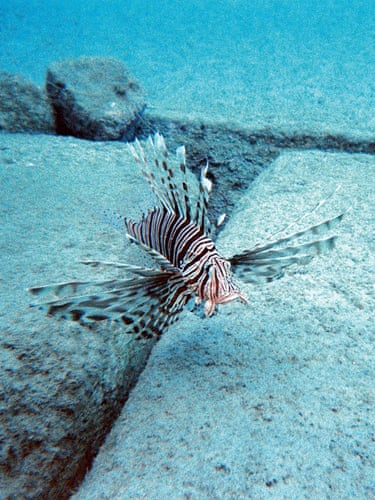
A common lionfish on the hunt in Crete, Greece, 2024
Originally from the Indian Ocean, the lionfish’s rapid colonisation of the eastern Mediterranean is a threat to native fish species. The lionfish lacks predators and has a high reproduction rate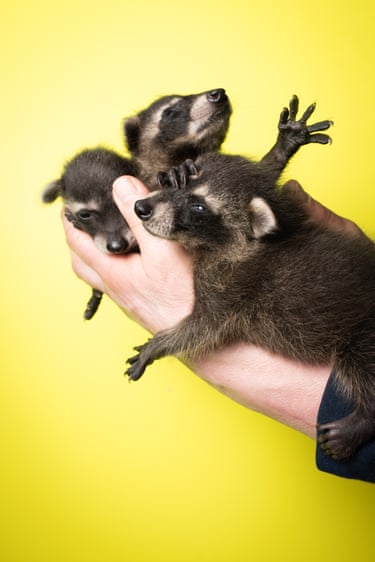
Raccoon cubs at the animal rescue centre run by veterinarian and animal rights activist Mathilde Laininger in Berlin, 2022
There are estimated to be more than a million raccoons in Germany, a population that has developed since the 1930s. The animals were introduced to Europe for fur farming, and in the wild have adapted to wooded and urban environments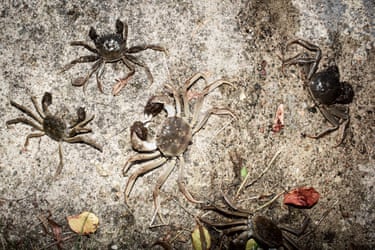
Chinese mitten crabs on the banks of the Bille River, Hamburg, 2023
Mitten crabs, which probably arrived via merchant ships, transmit diseases to native animals, as well as destroying traps and nets set by fishermen. The damage they cause to the fishing industry and infrastructure runs in to millions of euros
Japanese knotweed with attached rhizome, Berlin, 2023
Originally introduced to Europe in the 1820s as an ornamental plant, Japanese knotweed can spread up to 30cm a day, growing through pathways and buildings. The plant grows until it takes over land, leaving no other plants surviving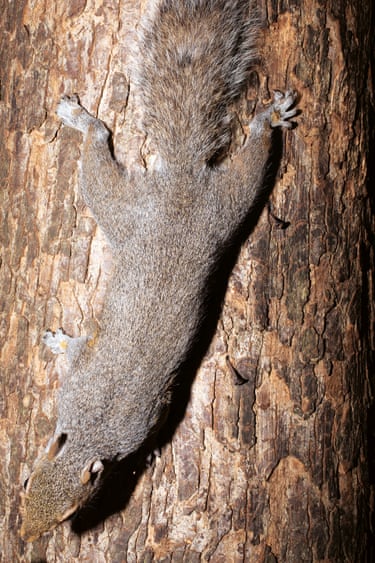
A grey squirrel in Hyde Park, London, 2023
Several million grey squirrels live in the UK, having mostly displaced the native red squirrels. They out-compete reds for food and space, and infect red squirrels with a viral disease that they carryExplore more on these topics