3 hours ago
10
3 hours ago
10
The late queen was the only person in history to have ever eaten a chocolate bar made with 100% British ingredients, after she was given one as a six-year-old in 1932 by the confectioner Rowntree’s.
The bar was created from a glasshouse-grown cocoa plant, at Rowntree’s headquarters in York.
But now, others could have the same experience after scientists at the University of Reading created a bar with cocoa beans grown in Berkshire.
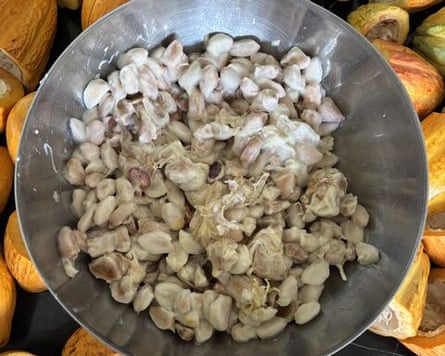
The bar was crafted to celebrate the university’s 100th anniversary, made with cocoa grown from plants in the institute’s collection.
The UK makes some of the world’s best chocolate in a market worth £10.4bn, but the industry is entirely reliant on imported cocoa.
Maha Khan, a master’s student at the university, decided to make a bar with cocoa from Reading. She harvested, fermented, and processed the beans at the university’s food department.
She said: “It has been amazing to follow the entire chocolate-making process, from pod to bean to bar, without leaving Reading.
“This British bar of chocolate highlights the precarious nature of our food supplies. Cocoa plants are very sensitive to changes in temperature and rainfall, and climate change is already causing problems in countries that produce most of the world’s cocoa. Protecting different varieties is vital if farmers need hardier plants that can cope with a changing climate.
“I hope this shows people just how much work goes into the chocolate we enjoy, and how important it is to protect cocoa farmers and communities around the world.”
She said the chocolate is “delicious”, adding that it had a very rich flavour: “It’s incredible to taste the complexity of the flavour profiles as the cocoa is made from plants originating from over 300 varieties grown here. It was also really interesting to taste the raw cacao before it gets processed – the beans are coated in a white flesh that tastes like lychee and isn’t something many people in this country get to try.”
after newsletter promotion
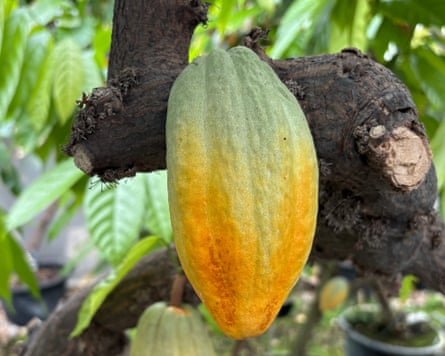
As well as being somewhat of a stunt, the university hopes that this can highlight the importance of its work in preserving different varieties of cocoa, which could be resistant to changes in weather brought by climate breakdown, as well as pests and diseases made more common by a heating planet.
Reading has more than 300 types of cocoa plant at its international cocoa quarantine centre, which handles 97% of the world’s international movement of cocoa plants.
Chocolate prices have risen in recent years as high temperatures in regions where cocoa is grown have stunted the growth of plants. Extreme rainfall made more likely by climate breakdown has also drowned crops across Africa.
The bar is currently a limited edition, with only six made so far, but Khan said there are hopes to ramp up production, depending on the availability of the beans – a single cocoa pod can take six months to grow.
She hopes to give one to the Princess of Wales: “We haven’t decided yet who will get to eat the chocolate. As the last British chocolate made was eaten by the future queen in 1932, it would be fitting if the next bar was a gift to another future queen, the Princess of Wales, who, like the chocolate, was also born in Reading.”