3 months ago
145
3 months ago
145
If you’re intimidated by making marmalade, the whole-fruit method is the perfect entry point. Blood oranges are simmered whole until soft, perfuming your home as they do so, then they’re sliced, skin and all, mixed with sugar and a fragrant cinnamon stick, and embellished with a shot of amaro. Squirrel the jars away for a grey morning, give a few to deserving friends, and be sure to keep at least one to make this elegant mocha marmalade mousse tart. A cocoa biscuit crust topped with a chocolate marmalade mousse and crowned with a cold brew coffee cream, it’s a delightful trifecta of bitterness that no one will ever guess is an easy no-bake dessert.
No-bake mocha marmalade mousse tart (pictured top)
If you’re not up for preserving, make this using shop-bought thick-cut marmalade.
Prep 10 min
Chill 10 hr
Cook 1 hr
Serves 8-10
For the topping
300g whipping cream
50g coffee beans
15g icing sugar
A pinch of salt
For the crust
230g digestive biscuits
15g cocoa powder, plus extra to finish, if you like
1 tbsp caster sugar, plus extra for rolling
½ tsp espresso powder
¼ tsp salt
115g unsalted butter, melted
For the mousse
170g whipping cream
175g dark chocolate, roughly chopped
1 whole egg and 1 egg yolk
¼ tsp salt
120g blood orange marmalade with amaro and cinnamon (see recipe below ), or shop-bought thick-cut marmalade, plus extra to decorate
1 tbsp amaro
Start the topping the night before. In an airtight container with a lid, mix the whipping cream and coffee beans, then cover and refrigerate overnight. If you like, you can also make the crust and mousse the night before to get ahead.
Grease a 23cm springform tin and line the base and sides with baking paper. To make the crust, put the digestive biscuits, cocoa, sugar, espresso powder and salt in a food processor, then pulse until the biscuits are finely ground. Add the melted butter, pulse again until combined, then press the mix evenly into the base of the lined tin; refrigerate while you make the mousse.
In a medium bowl, whisk the whipping cream to medium peaks, then cover and put in the fridge.
In a food processor, pulse the chocolate to chop it finely, then add the egg, egg yolk and salt and pulse again to combine. Put the marmalade in a small pan, add 60ml cold water, then bring to a boil over a medium-high heat, stirring to combine. With the motor running, pour the hot marmalade mixture into the food processor, scrape down the sides and keep pulsing for about a minute, until the chocolate mix has melted and slightly cooled. Add the amaro and pulse again to combine.
Gently fold a third of the chocolate mix into the chilled whipped cream, then fold in the remaining chocolate mix until no streaks remain. Pour on to the biscuit crust in the tin, then chill in the fridge for at least two hours (and up to overnight) to set.
To decorate the tart with sugared peel, rinse the jelly off a few tablespoons of marmalade, then dry the pieces of peel on a rack until tacky. Once dried, roll in sugar.
Just before serving, strain the coffee-infused cream through a fine-mesh sieve into a medium bowl, then discard the beans. Add the icing sugar and salt, and whip to firm peaks. Spread or pipe the coffee cream over the chilled mousse, then dust with optional cocoa powder and decorate with the sugared dried peel, if using. Serve at once or chill for up to three hours. Leftovers will keep, covered and refrigerated, for up to three days.
Blood orange marmalade with amaro
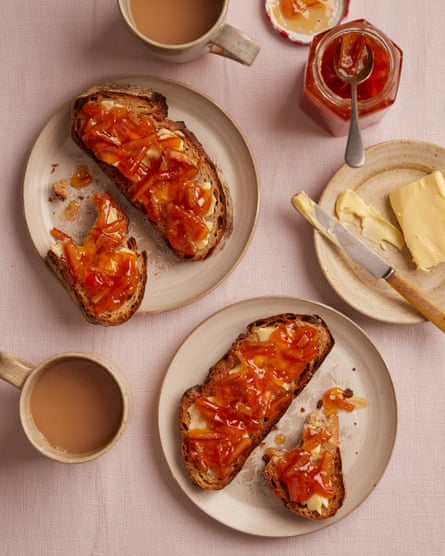
Prep 5 min
Cool 34 hrs
Cook 2 hr+
Makes About 5 250ml jars
1kg blood oranges
1kg white sugar
100g lemon juice
1 cinnamon stick
45g amaro
Wash the oranges, then put them in the base of a large pot in a single layer. Add enough water so the fruits float freely, then cover and bring to a boil. Turn down the heat to medium, then simmer for one to two hours, until the oranges are soft. Take off the heat and leave the oranges to cool in the cooking water overnight.
The next day, set a food mill or fine-mesh sieve over a large bowl. Drain the oranges, then halve them and scoop the insides into the food mill or sieve; reserve the peel. Push the flesh and juice through the mill/sieve and into the bowl, then discard the seeds and membranes. Cut the peel into 25mm x 6mm lengths.
Add the sliced peel to the bowl with the flesh, then stir in the sugar and lemon juice and leave to sit for at least 15 minutes, and preferably overnight (or up to a week, in which case cover and keep in the fridge).
When you’re ready to cook the marmalade, sterilise clean jars by putting them in a preheated 120C (100C fan)/250F/gas ½ oven for at least 20 minutes. Have new lids ready and put a couple of saucers in the freezer.
Transfer the marmalade to a large pot or preserving pan, add the cinnamon stick and bring to a boil, stirring often, over a medium-high heat. When the froth subsides and the bubbles become regular and splutter violently, test the marmalade for doneness by putting a teaspoon of it on the saucer from the freezer. After two minutes, the marmalade should have formed a skin that wrinkles when prodded; if it doesn’t, cook a little longer and test again.
Take the pan off the heat, add the amaro and fish out and discard the cinnamon stick. Ladle the marmalade into a heatproof measuring jug, then pour into the sterilised jars, filling them to just below the rim. If any marmalade strays, wipe the jar rims with damp paper towel, then top with the lids, seal tightly and invert for a minute or two.
Leave the jars to cool for another 24 hours, then check the seals before storing them somewhere cool, dark and dry, where the marmalade will keep for at least a year.
-
Camilla Wynne is the author of All That Crumbs Allow, and Nature’s Candy, which is published by Appetite By Random House at £26.99. To order a copy of Nature’s Candy for £24.29, visit guardianbookshop.com