1 hour ago
8
1 hour ago
8
Ceuta residents 'sad, helpless, anxious' as up to 5,000 migrants remain in the city, president says
Over in Brussels, Ceuta’s conservative president Juan Jesús Vivas is briefing European lawmakers on the situation in the city in the aftermath of last week’s migration crisis with Morocco.
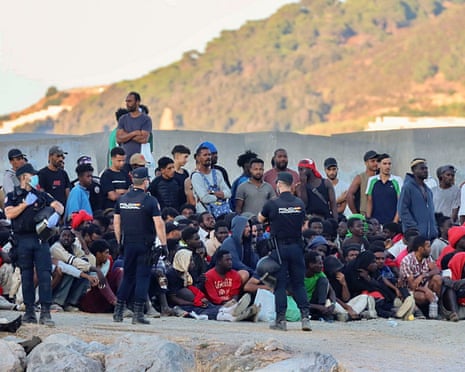
He tells MEPs that the incident amount to “an invasion” defined as “an anomalous or ir regulation occupation of a specific place.”
He says 3,000 to 5,000 people migrants of the 80,000 who he says crossed the border still remain in the city, which “in no way allows us to say that our city has returned to normal.”
“We have a situation where the influx has led to a humanitarian emergency of enormous proportions, compounded by disturbances to public order and a high risk to public safety.”
He warns lawmakers that “our people feel sad, helpless, anxious, fearful and worried, and they have good reason to, because it is inevitable to wonder whether this will happen again at some point.”
Vivas also says that “it has become evident” that “our security and integrity are in the hands of a third country, Morocco, that does not recognise our sovereignty.”
He calls upon Spanish national authorities to “adopt whatever measures necessary to restore the normality,” including “immediate expulsion” of all people who crossed the border irregularly.
He also laments the death of some 100 people who died during the crisis.
Key events
Lithuanian PM tells citizens not to be 'additionally worried' after warnings over possible Russian 'false flag' operation
Meanwhile, Lithuanian prime minister Mindaugas Sinkevičius said there was no reason for Lithuanians to be “additionally worried,” despite earlier warning about a potential Russian “false flag” attack on the Baltics or Poland (11:18).
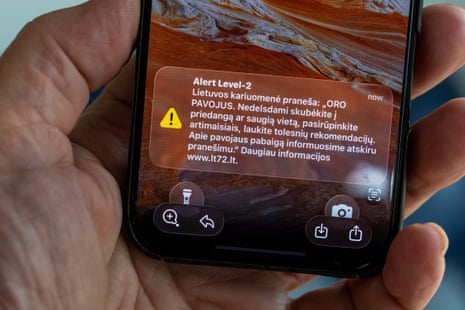
He acknowledged that “a certain level of threat exists,” but stressed that the country “has faced various hybrid attacks before,” LRT reported.
“The state is preparing and doing its work quietly. We do not explain everything because we do not want unfriendly neighbouring states to know too much,” he said.
He said the growing number of Russia-linked incidents in Europe – specifically referencing the drone incident at Leipzig airport earlier this week – shows that “as [Ukraine] war approaches its climax, there is often desperation.”
‘Morocco feels emboldened’: Trump’s influence in spotlight after Ceuta disaster

Ashifa Kassam
in Madrid
The cosy relationship between Washington and Rabat has long been flaunted by both sides, from Morocco’s announcement this year that it would be the first African state to join Donald Trump’s Board of Peace to the congratulatory message recently sent by Trump to mark King Mohammed VI’s 27 years in power.
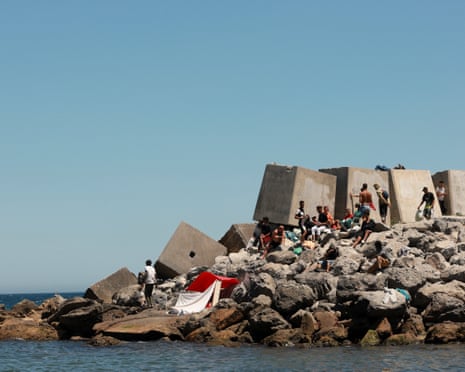
The latest example landed this week. As Spain grappled with the aftermath of the sudden influx – and swift return – of more than 70,000 people into Ceuta, Morocco’s monarch confirmed he had named a $1bn highway flanking the disputed territory of Western Sahara after Trump.
The deepening ties have come under renewed scrutiny as questions continue to swirl over what exactly led to the deadly mass border crossing into the tiny Spanish territory in north Africa.
“I think there’s enough evidence to hypothesise or claim that Morocco is behind this,” said Riccardo Fabiani, the north Africa project director for the International Crisis Group. “But there was no clear trigger for this, and this is what is puzzling for everyone.”
While Morocco had probably not “masterminded” the surge into Ceuta, he said, its relationship with the Trump administration – along with the Moroccan king’s desire to keep its claim to Ceuta in the spotlight – may have affected how it responded to fast-spreading online rumours about the Spanish border being thrown open.
EU’s Brunner also says the EU should use “all leverage” it can in talks with Morocco.
He says the two sides are “discussing a comprehensive partnership,” and the EU could also use its influence on visa policy, trade, development aid to shape the relationship.
“We really have to use all the leverage we have,” he says.
Brunner now keeps going through ideas on how to strengthen the bloc’s external borders.
But then he says there is also one “very important” reminder that the EU needs to work with its neighbours, with a comment on Morocco.
“We must cooperate with our neighbours, of course, but as long as control depends on the goodwill of one neighbouring state, we remain … vulnerable. And we know that unless something changes, migrant smugglers will try it again.”
He says the EU needs to enhance cooperation with third countries on returns and readmission, and step up its social media monitoring for any hints of possible attempts to cross the border.
Events in Ceuta have shaken European politics, EU migration commissioner says
EU migration commissioner Magnus Brunner is speaking next.
He begins by saying that overall irregular migration into the EU is being controlled more tightly than in the last decade, with the number of asylum applications going down across the bloc.
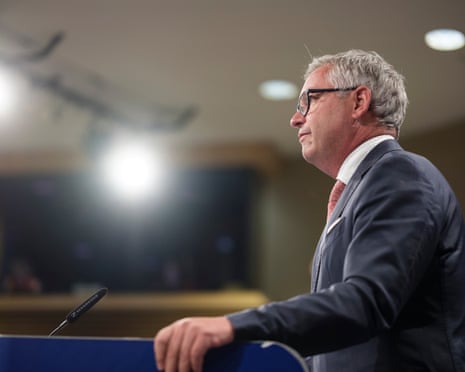
But he says this was understandably “overshadowed” by the events in Ceuta last week.
“These dramatic images beat actually [even] the best statistics and all the numbers I have just given to you on the falling arrivals, the restoration of control … in the eyes of the public across Europe, an event that that last[ed] three days, at one beach in one town, has shaken the politics of an entire continent.”
He says the EU “cannot accept such a breach of integrity of our external borders and violation of the union.”
But he commends Spain and Morocco for their work on “swift returns,” and pointedly praises Spain’s “commitment to prevent any movements towards the mainland.”
“Thanks to these efforts, I think, altogether the integrity of the Schengen are was preserved,” he says, pointing to the fact that Ceuta is covered by a special migration regime with border controls before leaving the enclave towards mainland Europe.
Ceuta residents 'sad, helpless, anxious' as up to 5,000 migrants remain in the city, president says
Over in Brussels, Ceuta’s conservative president Juan Jesús Vivas is briefing European lawmakers on the situation in the city in the aftermath of last week’s migration crisis with Morocco.
He tells MEPs that the incident amount to “an invasion” defined as “an anomalous or ir regulation occupation of a specific place.”
He says 3,000 to 5,000 people migrants of the 80,000 who he says crossed the border still remain in the city, which “in no way allows us to say that our city has returned to normal.”
“We have a situation where the influx has led to a humanitarian emergency of enormous proportions, compounded by disturbances to public order and a high risk to public safety.”
He warns lawmakers that “our people feel sad, helpless, anxious, fearful and worried, and they have good reason to, because it is inevitable to wonder whether this will happen again at some point.”
Vivas also says that “it has become evident” that “our security and integrity are in the hands of a third country, Morocco, that does not recognise our sovereignty.”
He calls upon Spanish national authorities to “adopt whatever measures necessary to restore the normality,” including “immediate expulsion” of all people who crossed the border irregularly.
He also laments the death of some 100 people who died during the crisis.
Ukraine moves to develop own ballistic, anti-ballistic system amid delivery shortages
Meanwhile in Ukraine, president Volodymyr Zelenskyy hosted a meeting on the military’s plans to develop their own anti-ballistic capabilities in the face of delivery shortages for existing missile systems.
He said:
”Developing one’s own ballistic capabilities and creating a new anti-ballistic system is a task that only a tiny minority of countries worldwide have managed to accomplish. Ukraine has this capability. Ukrainians have the necessary scientific foundation and expertise. We can state that our weapons manufacturers have also reached the required level. We expect Ukraine to achieve the necessary results in 2026–2027.”
The meeting looked into some of the “key challenges” including “access to critical components” and “technological cooperation with partners.”
“We support and expect more of our partner countries that are capable of contributing to join the Anti-Ballistic Coalition. We also discussed work with partners on PAC-2 and PAC-3 missiles. I expect results from the Ministry of Foreign Affairs and the Ministry of Defense in their communication with the partners that have already been identified and mentioned on numerous occasions.”
Bucharest dims street lighting to save energy amid heat pressures
Similar measures were adopted over in Romania.
The capital city Bucharest dimmed street lighting by a third on Wednesday evening and switched off lighting at night at landmark buildings and museums to save energy, AP said.
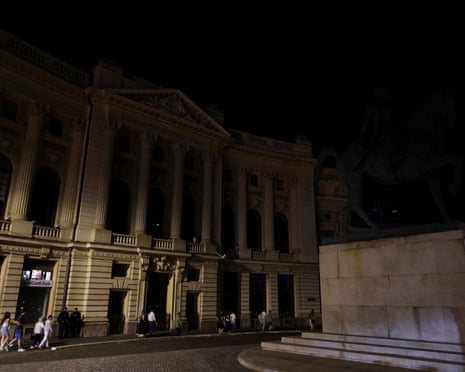
Other cities are enforcing similar measures.
The country’s prime minister, Ilie Bolojan, said on Thursday that the government will preemptively give power grid operator Transelectrica the authority to limit power access for industrial consumers in stages and with a 24 hours advance notice.
Bolojan added households, hospitals and other critical institutions will be exempt from the limits.
He said there was no need to enforce the limits for industrial consumers at the moment but that the framework needed to be in place, Reuters said.
Hungary turns off decorative, non-essential lighting amid drought-related energy crunch
In other news, Hungary has switched off decorative and non-essential lighting at all state institutions, including its parliament, most of the Buda Castle and Chain Bridge, at night to save energy as the country battles another heatwave putting strain on its energy system, AP reported.
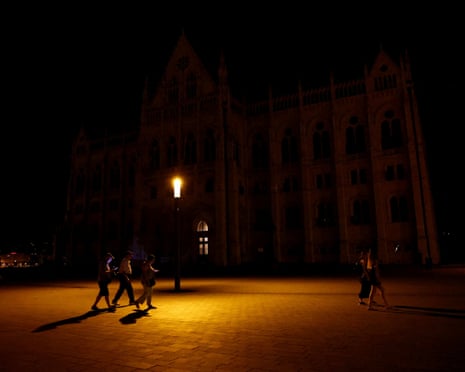
Record-low water levels on the Danube have forced the country to largely shut down its sole nuclear plant, which uses the river for cooling, stretching power supply capacity to its limits.

Jakub Krupa
I appreciate that’s not the main point here, but German authorities will hardly be thrilled that another confidential report on the Leipzig incident has leaked to the media.
This could put more pressure on them to explain what they know in a bit more detail than during Dobrindt’s briefing last night.
Ukrainian plane next to drone at Leipzig was carrying ammunition for 'onward transport' - reports
Back to the drone incident in Leipzig, German newspaper Süddeutsche Zeitung is reporting that one of the planes near where the drone was spotted was carrying “military ammunition” transported from France and “likely intended for onward transport.”

The paper says the revelation comes from a confidential police report, but it has not been confirmed by the authorities at this stage.