1 hour ago
5
1 hour ago
5
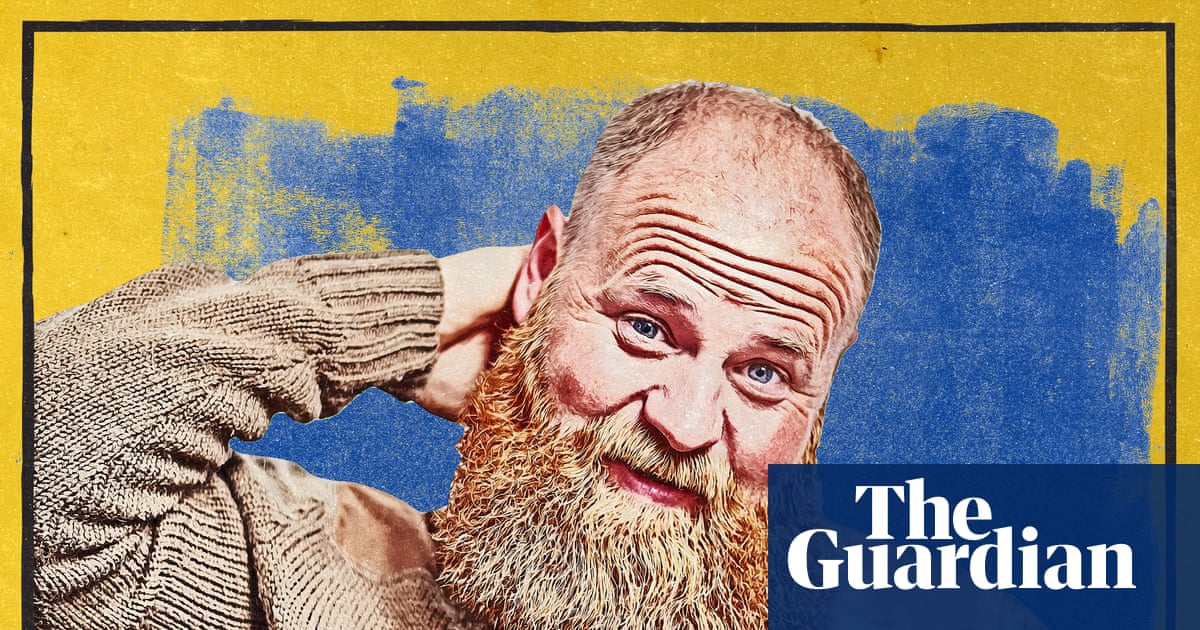
Kevin Powers’s fourth novel marks a return to the themes and subject matter of his acclaimed debut The Yellow Birds, winner of the 2012 Guardian first book award. Through the lives of its central characters, it explores the courage, folly, cruelty and absurdity involved in war, and the challenges of adjusting to civilian life afterwards. But while The Yellow Birds focused on the experience of US soldiers fighting in Iraq, where Powers himself served between 2003 and 2004, Children of the Wild is set amid the carnage of the first world war.
It follows the fortunes of two young men from a remote valley in Virginia. Roy is the arrogant young heir to a wealthy local landowner; Ennis is an orphan of unknown origin who has been living, like a character in a fairytale, in a shack on the top of a mountain. Ennis and Roy are first linked in a love triangle when Ennis is lured off his mountain top by his desire for Samantha, the daughter of the local minister, whose eyes have the “lustre of smoky quartz”. Roy has expected to marry Samantha, but she chooses feral Ennis. Roy accepts the setback remarkably swiftly, transferring his affections to Esther, the wealthy and shallow sister of his college roommate, Fintan. Roy and Ennis settle their differences with a mighty punch-up that cements an unlikely friendship between them.
When Roy joins the army to fight in France as an officer, he persuades Ennis to come with him as a private. This becomes a source of guilt to Roy as the novel unfolds. Unequal in terms of class and status, Roy and Ennis are also asymmetrically talented at killing. Roy, though nominally the leader, is haunted by terrifying dreams and finds the responsibility of his role overwhelming. Ennis turns out to have an Achilles-like genius for warfare.
Born out of a brawl, the relationship between Roy and Ennis turns out to be by far the strongest attachment in the novel. It’s reinforced by subsequent acts of violence that include killings on and off the battlefield. Roy is both in awe of Ennis and fearful of him. Indifferent to praise or glory, Ennis is “at home in a dark corner of his soul that Roy didn’t even want to acknowledge existed in his own”.
Powers is a tremendously gifted writer. He has an amazing knack for storytelling that seems to unfold visually and conveys landscapes, gestures and complex military engagements with great flair. His economical prose makes brisk work of a gripping tale that includes violent set pieces on the battlefields of France, war crimes, a pandemic, a quest through the mountains of Ohio, murders, a flashback to the bloodshed at Little Big Horn, and a powerful ending that reminds you, once more, of the heartbreak war brings in its wake.
Powers writes about violence and its impact on both perpetrators and victims in a way that feels unsettlingly authoritative. When Ennis commandeers a German machine gun, you sense that the scene is informed by more than academic research: Powers was himself a machine-gunner in the Iraq war. Various characters, including a civil war veteran, punctuate self-aggrandising Roy’s delusions about warfare and loss with memorably gritty wisdom. “Every single person on this earth has a hole inside them where someone they loved used to be,” one person tells him. “You sit there thinking that hole inside of you is special.”
Buried in the pages of the book is a telling allusion that hints at Powers’s ambition for it. On two occasions, in the context of terrible acts of violence – a scalping and a lynching – different characters utter these words to Roy: “Come and see.” Both times, Roy draws our attention to the phrase by repeating it: “‘Come and see’? It was familiar, but Roy couldn’t place it.”
Powers wants the reader to notice the words and supply the missing context: “Come and see” is the dark invitation that John the Revelator receives in the final book of the Bible to witness the apocalypse. It’s also the title of a Soviet film directed by Elem Klimov that has a strong claim to be the most harrowing war movie ever made. Very much like Klimov’s film, Powers mixes incredible visual intensity with the mythic and surreal in order to illuminate the apocalyptic extremes of human behaviour.
Yet his desire to make the story resonate at an epic level also makes parts of the novel melodramatic and implausible. When you notice the characters are mythic archetypes – Roy Young, Ennis Duke, the flawed Arthurian king and the Lancelot who steals his Guinevere – they seem a little less real as people. Ennis’s journey down the mountain and his progression from feral cow-wrangler to cold-eyed killer never feels fully persuasive and is punctuated by moments of improbability. This isn’t limited to Ennis: characters have a habit of doing things that are dramatically striking, but psychologically far-fetched. Samantha distributes presents to the local children with the corpse of her dead father in the wagon. Roy heads off to the Bighorn Mountains for a mission that’s supposed to be heartfelt, but feels like hollow spectacle. Ennis returns from the war and perpetrates a bizarre and self-sabotaging act of violence. And then there’s Fintan Thoreau, Roy’s ghastly future brother-in-law, whose villainy motivates an important section of the plot but feels cartoonish.
after newsletter promotion
There’s also something uncomfortable about the book’s representation of violence. Officially, violence is repellent, but it’s pretty cool too, especially when our heroes are cutting a swathe through German soldiers, who are depicted with a one-sidedness that reminded me of the jingoistic Warlord comics that were a guilty pleasure of my childhood. At one point, Roy is struggling to find the cold-heartedness to dispatch a German soldier who is pleading for his life. Roy looks over at Ennis, with a look “that begged him for permission to be free of this man’s death”. The permission is supplied by the author: the two-faced Boche sneakily pulls out a knife thus making him utterly unworthy to live.
Though I enjoyed the book a great deal and admired Powers’s bravura, economical prose, I ended up comparing it to other books about the same conflict. The first world war has many chronicles: All Quiet on the Western Front, Good-Bye to All That, Birdsong, Pat Barker’s Regeneration trilogy. The best of these manage to depict the awfulness of warfare with both more banality and more humour. I recently reread Frederick Manning’s 1929 novel The Middle Parts of Fortune alongside Alice Winn’s 2023 debut In Memoriam. I found their foul-mouthed soldiers and doomed public schoolboys more lastingly real than the avatars of Children of the Wild, with their murky backstories and portentous dream lives.