3 months ago
149
3 months ago
149
When Keir Starmer met Xi Jinping recently, reporters said the British prime minister was shocked at his Chinese counterpart calling Crystal Palace “Palace”, liking Manchester City and Arsenal and supporting Manchester United. The reasons can be guessed. Fan Zhiyi was popular at Selhurst Park in the late 1990s, Sun Jihai was a cult hero at Maine Road and Manchester United had Dong Fangzhuo. The president of the world’s second most populous country and second biggest economy didn’t, however, mention Everton.
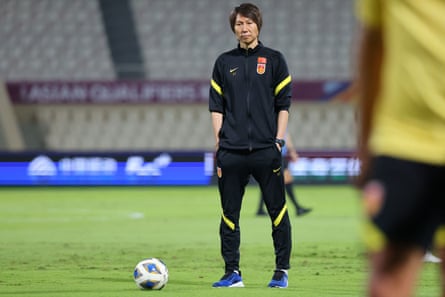
Li Tie spent four seasons at Goodison Park, playing the most in his first, 2002-03, with 29 Premier League appearances. The Chinese international moved into coaching on returning home and managed the national team from 2019 to 2021. Since December 2024, he has been in prison, serving 20 years on charges of taking bribes. Since last Thursday, he has been banned from all football activities for life.
That was when the ministry of public security, general administration of sport and the Chinese FA met to announce another round of punishments in their “zero-tolerance” campaign to clean up football. The punishments did not stop there and are going to greatly affect the 2026 Chinese Super League season which starts in early March, a campaign that has already made more international headlines than the whole of the previous campaign.
Last season was a good one with attendances averaging more than 25,000, the best in Asia and higher than a decade earlier when the league was dominated by big names. Those fans saw a genuine title race, a four-way fight for much of the campaign and three for almost all. On the final day, Shanghai Port pipped Shanghai Shenhua by two points to take a third successive title. Chengdu Rongcheng were third, despite being in pole position with just a few weeks to go.
Yet, the Sichuan side are now the favourites for the 2026 title as the season kicks off next month and not just because they have hired John Aloisi as head coach (one of four Australians in the 16-team tier with Kevin Muscat at Port doing the country’s reputation no harm at all). Chengdu are the only team to have finished in the top six last season that start the upcoming campaign on zero points and are suddenly looking like favourites for the title. Shenhua start on minus 10, while Port have been deducted five.
The CFA’s disciplinary committee said that these punishments, in the name of purification and fairness, were handed down to 13 clubs “based on the amount, circumstances, nature, and social impact of the improper transactions each club was involved in…”
It’s another blow for fans who, as always, pay the price but there are patches of blue among the grey clouds. First is some long-awaited international success. Until last month, China’s under-23 team had never progressed past the group stage of the Asia Cup but then, suddenly, the young dragons were in the final on 24 January.
Players such as Wang Yudong, Hu Hetao, Liu Haofan and others (including Xu Bin, who has since joined Wolves) all impressed, suggesting that investments made in youth development in the previous decade are starting to bear fruit. The football wasn’t the most exciting but a solid defence with Li Hao, the Great Wall of China, not conceding a single goal on the run to the final was a welcome change. That said, Japan were ruthless in winning 4-0, showing their neighbours they still have some way to go.
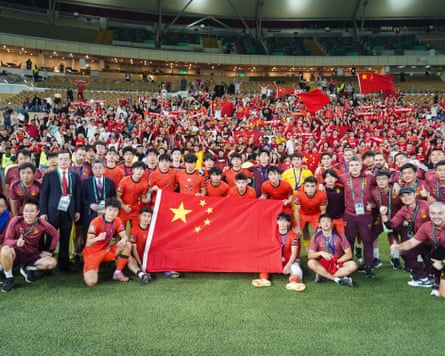
But China youngsters are getting game time at a decent level. “Our experience in the Chinese Super League and other domestic competitions has been crucial,” Li said. “It helped us address our weaknesses and turn a new page.”
Elsewhere, there is not just a page but a whole new chapter. In 2021, the 80-plus million residents of the province of Jiangsu found themselves without a CSL team when Jiangsu FC, the defending champions, folded, another victim of economic slowdown and a global pandemic.
With no professional club, the cities in the eastern province did their own thing. Last year, 13 amateur teams started the Jiangsu City Football League. It quickly took off with fans getting behind their local teams and cheering them in well-humoured battles for provincial pride. In the early days, some games took place in colleges but soon shifted to big stadiums. In July, 60,396 fans watched the province’s capital team Nanjing play Suzhou amid reports that more than 800,000 had visited the ticketing website.
Unlike professional Chinese football, top-down with a weight that is heavier than most, this was its organic opposite. Cities combined cheap tickets for visiting fans with cultural events, cruises and tours. Social media played a big part and, in short, it was fun and free from the rigid control that fans bemoan at the national level. Other provinces soon started their own competitions.
Keeping that spirit alive is key and if the professional game can find something similar then perhaps the next British prime minister to visit Beijing can surprise the hosts and chat about the goings-on in Chinese football.