3 months ago
152
3 months ago
152
It will be much easier to shoot deer in England under government plans that aim to curb the damage the animals are doing to the country’s woodlands.
Emma Reynolds, the environment secretary, plans to bring forward new legislation to give landowners and tenants legal rights to shoot deer to protect crops and property.
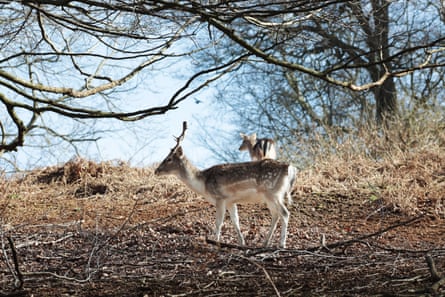
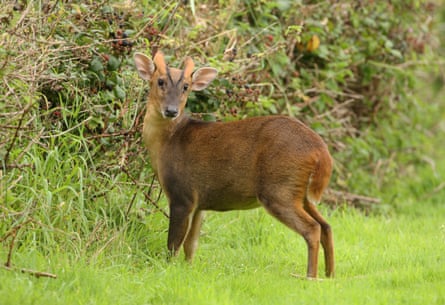
Because there are no natural predators in England, deer are able to breed quickly and without any population controls. Four non-native deer species – muntjac, Chinese water deer, fallow and sika – have been introduced into the wild and have thrived. Only two deer species present in England, the red and roe, are native.
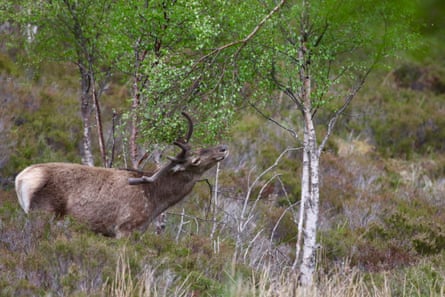
Overpopulation of deer causes problems for woodland: they eat leaves, buds and sapling stalks, and strip bark from mature trees, which can affect the trees’ health and make them susceptible to disease. Some deer, particularly the sika, rake their antlers against trees, which can kill younger wood.
The government’s legally binding environment targets require it to regenerate woodland equivalent to a net increase of 43,000 hectares (106,255 acres), which will be difficult if the deer population continues to expand. Government figures show 33% of English woodlands are now in unfavourable condition due to the impact of deer, up from 24% in the early 2000s.
The government has mostly focused on protecting trees with guards and fences rather than tackling the deer population. Now, it is announcing a change of approach. Under the plans, all publicly owned or managed land will have deer management plans within 10 years.
National priority areas – where deer are extremely populous and are having a very detrimental impact on woodland – will be identified, with culls targeted there.
There will also be a change to the grant system that pays landowners to shoot deer. Under the new scheme, landowners can be paid to shoot deer when the animals move out of wooded areas, making it easier to target a problematic population, said Emma Dear, the principal officer for tree establishment at Natural England.
She told the Guardian: “This means we can have timely interventions when ecological damage is likely to be greatest. There is an issue because of the way deer move through the landscape and are not constrained to one patch. The grant system was only facilitated in the woodlands; the new strategy will address that.”
Dear added that the lack of natural predators was driving the rise in the deer population across England. Wolves, bears, lynx and other apex predators were hunted to extinction many years ago. Climate breakdown is also a factor.
“Deer are changing their behaviour because of warmer winters. They can overwinter in better conditions and the number of babies they have is higher when the winter is warmer,” Dear said.
Defra sources said there would be a particular focus on reducing the muntjac population as these were listed as an invasive species, and the agency will assess sika and Chinese water deer to see if these can be added to the invasive species list and urgently targeted. These are the three deer species deemed to be causing the most damage.
The nature minister, Mary Creagh, said: “Our trees and native wildlife are under huge strain from deer damage, including from non-native deer species. This government is helping landowners and farmers manage deer impacts more effectively so woodlands can flourish and crops are better protected. These new measures will also help restore nature, boost our homegrown timber industry and protect the millions of trees we are planting across the country.”
The culled deer may be eaten, with Defra looking at how to market and safely get the meat into the supply chain.
Dear said: “There is a section of the strategy that is looking at venison marketing and supporting that industry. Supporting the wild venison sector will hopefully reduce the cost of management.”