3 months ago
60
3 months ago
60
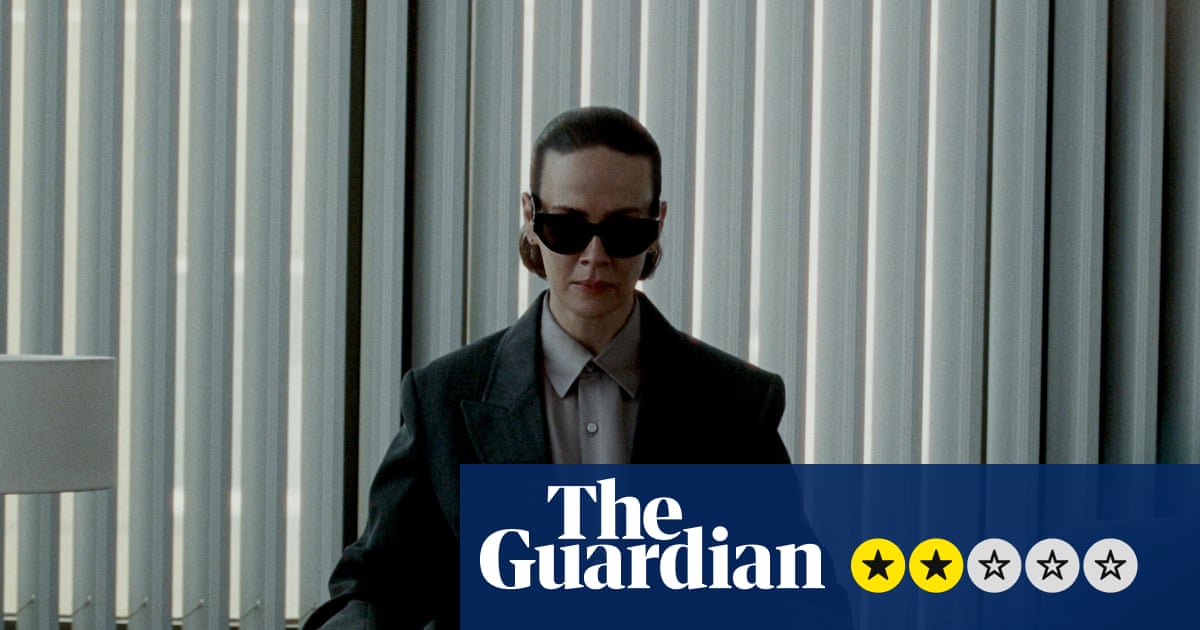
Swedish-Egyptian film-maker Tarik Saleh has long been a brilliant satirist of the corruption and shabby political compromises and conspiracies of post-Mubarak Egypt. Now he brings us the third of his “Cairo trilogy”, after The Nile Hilton Incident in 2017 and Cairo Conspiracy in 2022. This new film is a seductive black-comic political thriller set in Egypt of the present day, showing us that everyone in the glamorous world of the movies, infatuated as they are with made-up stories acted out by narcissists believing in their own publicity, can so easily be pressed into the service of political propaganda.
The result is a rackety, despairing, funny film with something of Billy Wilder, or István Szabó’s Mephisto, or Bertolucci’s fascism parable The Conformist. For me, it also had echoes of Daniel Kehlmann’s novel The Director, about 1930s Austrian movie director GW Pabst, fatally tempted by the blandishments of Goebbels. Saleh’s lead is his longtime leading man Fares Fares, playing an ageing Egyptian movie star; this is pampered matinee idol George Fahmy, a man comfortable doing cheesy crowd-pleasing potboilers, now bullied into playing the lead in a sinister government-sponsored biopic of the president (with news footage of the current president, Abdel Fatah al-Sisi, cheekily cut in).
Fares’s gaunt, handsome face so eloquently conveys vanity, but also a poignant emotional woundedness, anxiety and self-pity. And his aquiline nose makes him resemble, perhaps, a cartoon eagle, an echo of the creepy cabal of generals who have inveigled poor George into selling out the pitiful remnants of his integrity, calling themselves the “eagles of the republic”. George is notionally a Coptic Christian, which has made him an object of suspicion for the government, though he is hardly pious, and is separated from his wife (Donia Massoud) and grownup son Ramy (Suhaib Nashwan). Absurdly, he is with the young and poutingly untalented wannabe movie star Donya (Lyna Khoudri), whom he cannot satisfy in bed even with Viagra, and who irritably tells him that the middle-aged-man groaning sound he makes while sitting down reminds her of her dad. George is desperate for his son’s forgiveness for deserting the family and the movie shows us how embarrassingly misjudged his attempts to buy his approval are – such as getting him an absurdly expensive watch for his birthday, while Ramy is much happier with what he got from his girlfriend, a copy of Zadie Smith’s White Teeth.
George finds himself under pressure from the regime for his louche private life, though he is defended by his affectionate co-star Rula (Cherien Dabis). When his work dries up, he is astounded to be told that his acting career can only be revived by playing the lead in the president’s horrendous silver screen vanity project, supervised by dead-eyed secret police chief Mansour (Amr Waked), and there are unsubtle threats on Ramy’s life. Poor, preening George finds himself ordered to attend dinner parties and soirees convened by the reactionary junta, who all profess a feline, insincere admiration for his cinematic art.
It is at one of these events that a general smoothly assures the company that western bigots, who wish to efface Arab achievements, are in a conspiracy to conceal the fact that William Shakespeare was from the Arabic world and his name was “Sheikh Zoupir” – which explains, he adds, why he disliked Jews. This is an unimprovable bit of satirical mischief in Saleh’s script. George flies high with his eagles before a horrible and sickening descent.