1 month ago
72
1 month ago
72
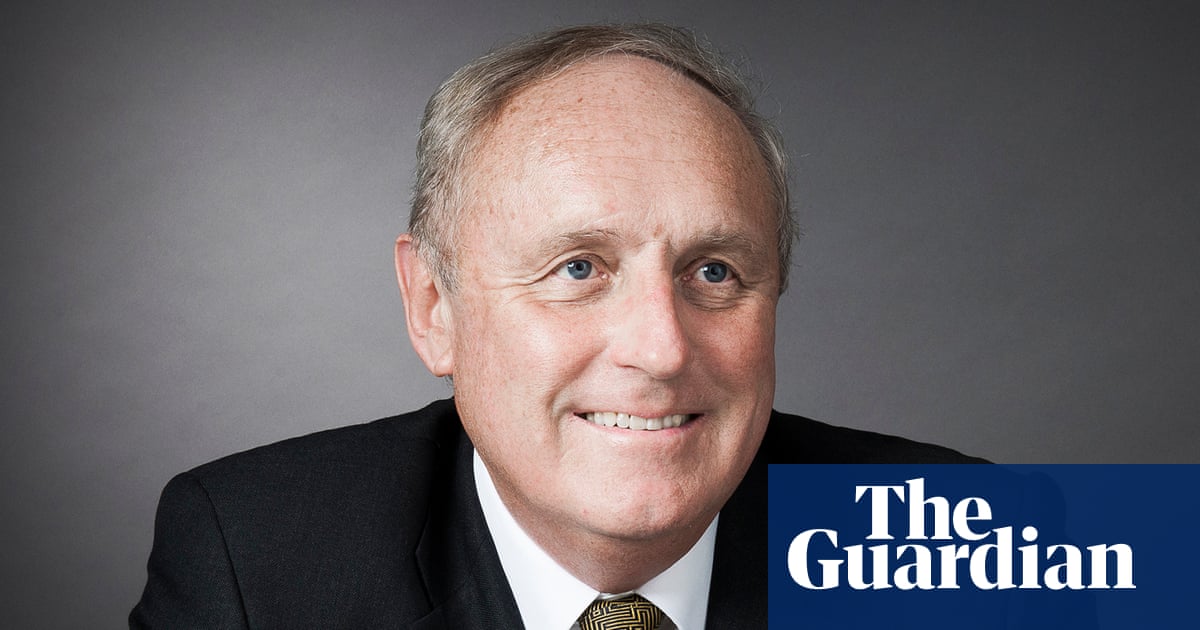
When the modern history of newspapers in Britain comes to be written, the name of Eddy Shah will deserve at least a footnote, as the man who started a revolution in the industry by freeing the press from the print unions and introducing new computer-based technology to the nationals.
Shah, who has died aged 81, owned a group of small, free newspapers based in Warrington, Cheshire, but launched two national newspapers in quick succession, Today in 1986 and the Post in 1988, after winning a strike battle against the previously all-powerful National Graphical Association (NGA) print union. He quickly lost control of the first and the second closed in just a month.
Nevertheless, Shah sparked the changes that broke the unions’ power and allowed the introduction of new printing methods, exploited first by Rupert Murdoch and subsequently by every other national newspaper group including the Guardian. From the grey and inky pages and grainy black-and-white photographs of the 1970s and early 80s, the newspapers burst into colour reproduction, more innovative designs and speedier and uninterrupted print and circulation runs – just in time for the internet and online printing to make paper printing near-redundant.
Shah was the man who made that possible, but he lacked the financial resources to become a media magnate and it was mostly established industry organisations that benefited. He himself moved quickly on to other enterprises. He said: “It wasn’t a failure because our innovations benefited the rest of the industry, especially bringing in new technology. I made it happen and everyone remembers the guy who did it first.”
He was born Selim Shah in Cambridge, the son of an English mother, Hazel (nee Strange), and an Iranian father, Moochool Shah, who was studying at the university and would later become a barrister. The boy was raised mainly by his grandparents in India, but was sent to Gordonstoun, the Scottish public school, aged 11 and then, after being suspended twice, was sent to state schools in Sussex, finishing his education aged 16 at a crammer in Brighton after obtaining seven O-levels.
He left home following an argument with his mother and took a succession of jobs, as a stagehand (when he acquired the nickname Eddy, sometimes spelt Eddie), then as a floor manager at the BBC, and then with Granada Television in Manchester. It was there that he met his future wife, the actor Jennifer White, in 1968 when she was appearing in the drama series The Caesars; when they married soon after, his parents chose not to attend the ceremony. She gave up acting to help her husband in his burgeoning business career.
In 1976, after he was made redundant from a job in advertising with the Manchester Evening News, the couple sold their house to raise money to launch a string of free newspapers in the north-west: a chain of Messenger mastheads that would eventually reach about 60 titles.
All the large newspaper groups were in those days in thrall to the print unions, particularly the NGA, whose members could shut down publication in an instant. Eventually, print union representatives approached Shah to unionise his printing plant. He told the Guardian what happened next in an article in 2002: “The unions had become very political and union leaders were more interested in protecting their own powerbases rather than their members. They came to me and said they wanted to unionise. I said: ‘Fine, put it to a vote.’
“Six of my staff didn’t want to unionise, so the unions asked me to fire them. I said I wasn’t prepared to do that, so they told me they would close me down. It’s pretty scary. They decided to turn their strike into a cause celebre, which I think was a mistake, but by then it had built up a head of steam nationally and took on a life of its own.”
The union tactics included sending coffins to the family home – two large ones for the parents, three small ones for their children – mass picketing of the company printworks and harassment of its non-union employees. Shah was particularly aggrieved that the intimidation occurred while his wife was undergoing radiotherapy treatment for cervical cancer. Wavering about whether to surrender, he told Jennifer, who replied: “If you give up, I’m leaving you.”
Police were called in to accompany the vans and ensure distribution of the newspapers. The siege went on for seven weeks before Shah was able to deploy the Thatcher government’s new labour legislation, which led to fines and injunctions against the union. The printers were no strangers to defying court orders, but found their funds frozen and sequestered.
Attempts were made to spread the closures to other newspapers that had reported on court action against strikers. In November 1983, a mass picket of 4,000 workers outside the Messenger printworks turned violent and was broken up by the police who deployed special riot-trained support units – a forerunner of the tactics used during the miners’ strike the following year. The NGA eventually agreed to abide by court orders, removed support for the picket and the strike was settled.
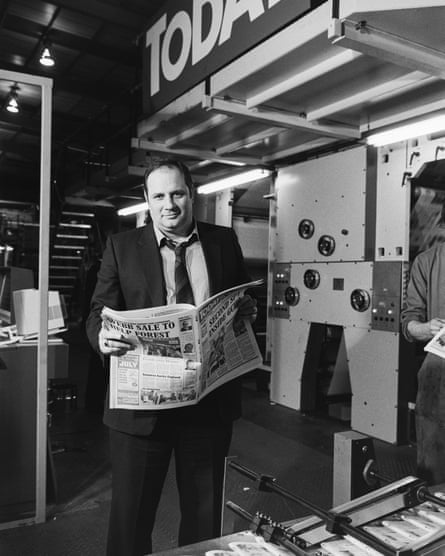
The outcome of the dispute was keenly watched by Murdoch who, in 1986, would also defy the print unions, secretly move his papers to Wapping, introduce new technology and non-union labour and spearhead the restructuring of the entire newspaper industry. Meanwhile, on the back of his success, Shah decided to launch his own national paper, Today, which started in March 1986. The trouble was that he lacked both the manpower and the resources to make the paper work, especially in taking on established tabloids such as the Mail and the Express.
The journalism was stretched to compete and the technology didn’t work properly: computers crashed and the colour reproduction was poor and blurry, leading to jokes about “Shahvision”. Where the national papers had been supportive of his struggle against the unions, they were ruthless in squashing the paper as a competitor. Within four months, as circulation failed to take off, Shah was forced to sell the paper to the business conglomerate Lonrho, keeping just a 10% share. Within a year the company was sold on again following an ownership battle between Murdoch (who eventually took over, until it ceased publication in 1995) and the rival Daily Mirror proprietor Robert Maxwell.
Apparently bored following the loss of Today, Shah launched the Post in November 1988. It was based in Manchester and produced on laptop computers, and it lasted for only 33 issues.
That ended Shah’s media ambitions. He sold the Messenger group for £40m and turned to writing novels instead. He told the Guardian: “It wasn’t as good as I thought it would be … My problem is that I am too rich to write. I haven’t got the motivation or the need to be somebody, because I’ve already had success.”
There was also a television production company and, after a spell living in the US, he and his wife returned to Britain and went into the leisure industry, buying up golf clubs and hotels, and building eco-friendly holiday homes. “I find it very difficult to play on the golf courses I own because I am always on the lookout for things going wrong,” he said. “It’s a fairly laid-back job. People ask me why I don’t write an autobiography, but I don’t want to. That’s looking back and as soon as you do that you start to die.”
In 2013, Shah returned to the headlines when he appeared in court at the Old Bailey charged with the rape of an underage girl in the 1990s. He denied the charges and was found not guilty.
Jennifer died in 2023. Shah is survived by two sons, Martyn and Alex, and a daughter, Tamsyn.