6 hours ago
13
6 hours ago
13
Key events
135 million people in Europe are set to experience temperatures above 35C today
More than 135 million people – particularly in France, Italy, Spain and the UK – are set to experience temperatures over 35C on Thursday as the continent’s latest heatwave intensifies, according to AFP calculations.

Temperatures are set to surpass 30C for nearly three out of five European residents (excluding Turkey), amounting to around 340 million people.
That’s according to an AFP analysis based on German weather service forecasts and 2025 population projections from the Joint Research Centre, with results consistent with the Austrian NGO Klimadashboard.
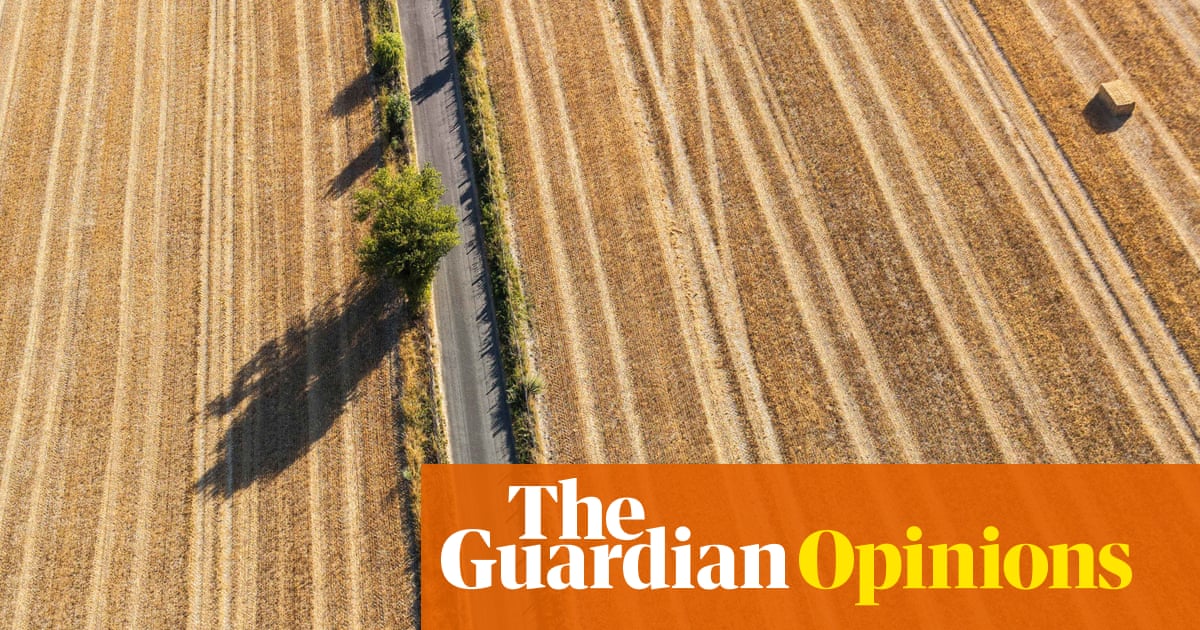
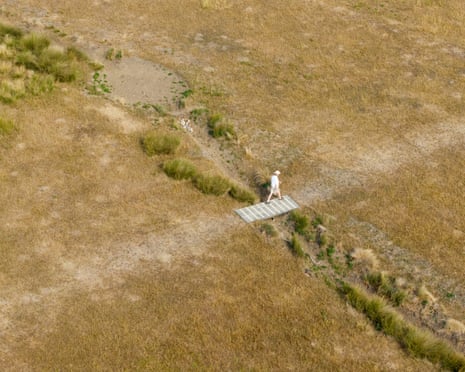
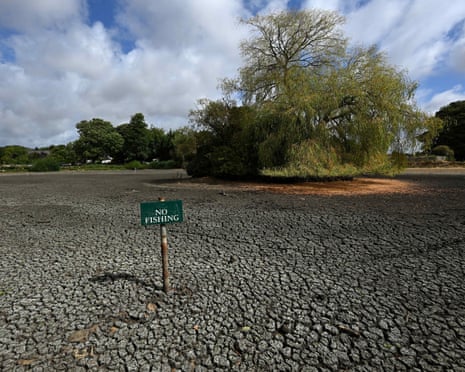
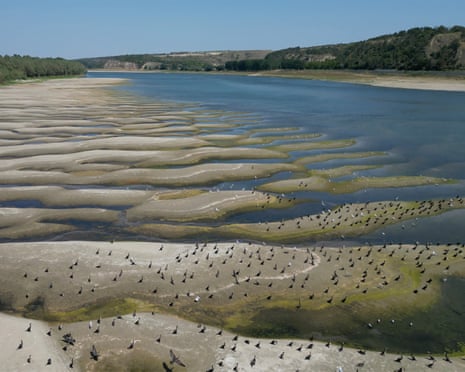
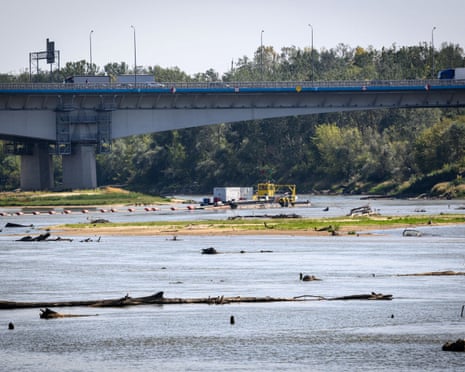
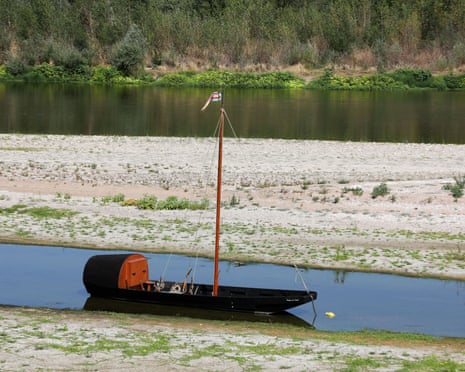
Drought across Europe as extreme temperatures continue - in pictures
Black Sea resort of Burgas picked to host 2027 Eurovision

Lisa O’Carroll
In other news, Burgas, a coastal city on the Black Sea, will host next year’s Eurovision song contest, the European Broadcasting Union has announced.

The Bulgarian holiday resort, the most western city on the Black Sea, has been selected for the 71st annual competition that was mired in controversy last year over Israel’s participation.
Five countries, Spain, the Netherlands, Ireland, Iceland and Slovenia, boycotted last year’s competition in protest against the continued war on Gaza.
The EBU announced reforms to the voting rules reducing the number of votes cast by any individual member of the public from 20 to 10 but it wasn’t enough to lure the five countries back.
Last night, it what looked like another move to address continued disquiet over Israel’s participation, the EBU separately announced that countries involved in conflict may not automatically have the right to host the final if their entry won the contest.
Countries at war will not be automatically barred however.
“Under the new rules, winning Eurovision will no longer automatically guarantee the right to host the next edition if an armed conflict, sensitive geopolitical situation or any other circumstance materially affects the security, safety or stability of the winning country or its immediate region,” the EBU said.
With record dry conditions in July and a dry start to August, nearly three-quarters of England and the whole of Wales are in drought, heaping pressure on water resources for households, agriculture and the environment, PA reported.

And England and Wales have already seen as many wildfires this year as in the whole of 2025.
Some 1,017 wildfires have been recorded in England and Wales this year, according to data shared by the National Fire Chiefs Council (NFCC), the same as last year’s record-breaking total, PA said.
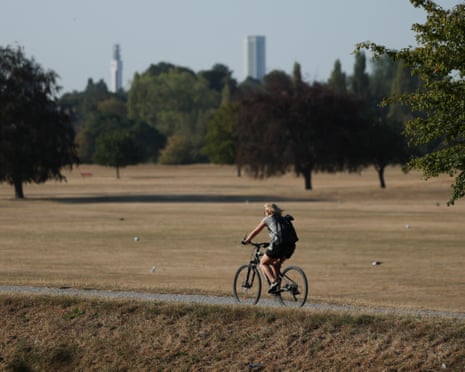
Temperatures in England could reach highs up to 38C, forecasters say
Over in England, the amber warning by the Met Office stretches from London to Sheffield, covering parts of the South East, East Midlands, East of England, West Midlands and South Yorkshire and is in place from 9am to midnight on Thursday, PA reported.
Met Office forecaster Alex Burkill said:
“Temperatures [in areas covered by the amber warning] could reach highs of around 36, 37, possibly 38C.
Now when you get these sorts of high temperatures, well that’s when we could see impacts to our infrastructure, our railway lines, our roads, they are not designed for this sort of heat.
And more people are likely to be impacted by how hot it is with regards to their health.
It could be the hottest day of the year so far if we get above 38C, and if we get above 38.5C, well it could be the hottest August day on record, but that’s actually pretty unlikely.”
PA noted that the UK is facing increasingly extreme conditions such as heatwaves, drought and wildfires fuelled by climate change, which is mostly driven by greenhouse gas emissions from burning fossil fuels for power plants, vehicles, heating and industry.
Romania begins complete shutdown of its nuclear plant as Danube water levels drop further
Romania began the complete shutdown of its only nuclear plant after water levels in the Danube, used to cool the site, fell to a record low, the national nuclear energy company said.
Nuclearelectrica already shut down last month one of the two reactors at the Cernavoda power plant, which usually generates a fifth of the Eastern European country’s total electricity, AFP reported.
The second needed to shut as well “due to the significant and ongoing drop in the water level of the River Danube”, it said in a statement.
This is despite several measures taken to avert a complete shutdown, including blowing up a rock and sinking four barges filled with rocks to divert its flows.
PM Burnham to consider ban on disposable barbecues as wildfires rage in UK
The government will look at banning disposable barbecues as wildfires continue to rage across the UK, Andy Burnham has said.

Disposable barbecues have been the cause of a number of serious fires over the last few years, but campaigners were critical of the prime minister’s failure to link those fires more broadly to the climate crisis.
Disposable barbecues, which can be carried into public areas, present a number of problems: they remain hot, sometimes for hours, after they are used, making them extremely difficult to dispose of safely, and when they cannot be carried away, people are forced to leave them or place them into bins where they carry on smouldering.
Burying the barbecues, as some try to do, will not stop the danger as these trays of charcoal can reach 450C and will carry on burning underground, where they can still ignite fires long after use. On beaches, the buried coals and metal grills are also a hazard for walkers, and in fields for farm animals.
Over the last few years they have been identified as the cause of a number of serious fires including:
-
Macclesfield, Cheshire, July 2026: a large woodland fire that was tackled by dozens of firefighters. Cheshire fire and rescue service said a discarded barbecue was the probable cause
-
Three separate fires in one day around London, July 2026: in Feltham, 6 hectares of heathland close to houses were damaged. The London fire brigade urged people not to use disposable barbecues and to properly extinguish cigarettes after crews tackled three grass fires.
-
The Trossachs, Scotland, May 2025: covered 2 hectares in the Glen Finglas region of the national park. Glen Finglas is the biggest Woodland Trust site in the UK. The barbecue understood to have sparked that fire was found with a burger still on the grill.

Jakub Krupa
Well, that was quick.
Straight off the back of the solar eclipse last night, we’re heading into a solar inferno as extreme heat returns today, with temperatures above 40C in parts of Spain and up to 38C in London and Paris.
You’ll be wishing for an eclipse today.

An amber weather warning for extreme heat is in place across large parts of the UK, while 80 French departments have been placed on an orange heat warning.
Drink lots of water, stay cool and look after your vulnerable family members, kids and pets. And keep reading Europe Live, obviously.
I will bring you all the updates from the UK and across the continent here.
It’s Thursday, 13 August 2026, it’s Jakub Krupa here, and this is Europe Live.
Good morning.