4 hours ago
11
4 hours ago
11
A fast-moving Nevada wildfire exploded to more than 13,000 acres (5,200 hectares) on Sunday, pushing from the Sierra foothills toward the center of Reno and urging nearly 90,000 residents to evacuate as flames threatened neighborhoods and reached the edge of the University of Nevada campus.
The Hawk fire’s “GO NOW” evacuation zone had expanded to the edge of the university campus as strong, gusty winds, low humidity and dry vegetation fueled the blaze, according to Truckee Meadows Fire and Rescue in Reno. Of those urged to evacuate, 42,000 were under strict orders. An additional 45,000 people were in the evacuation warning zone, and encouraged to leave now and be prepared to stay away for several days to clear the roads for first-responders.
“If you have been told to evacuate, please don’t wait!” Hillary Schieve, Reno’s mayor, said in a statement posted on social media on Saturday night. “Structures have already been burned in this fire and your life is more important than a building. Evacuating before the fire arrives also allows our firefighters to focus their efforts on battling the blaze.”
Authorities confirmed three civilians and three first responders had been injured in the fire and several structures have been destroyed. Officials said the fire was human-caused but did not provide additional details on how the fire was started, saying it was under investigation.
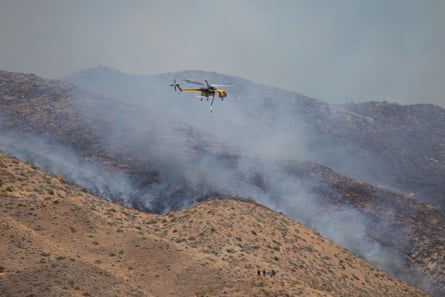
Governor Joe Lombardo declared a state of emergency in Washoe county and mobilized the Nevada national guard. Two helicopter crews were deployed to support aerial firefighting operations, while 60 troops were assigned to help police safeguard evacuated neighborhoods. However winds were whipping the flames, complicating the fight.
“It was extremely confusing,” said Darin Balaam, the Washoe county sheriff, describing how changing winds sent the flames in different directions.
The fire had already proved to be a challenge on Saturday night, moving exceptionally fast, jumping over fire trucks and making it difficult for responders to get to hotspots while residents were trying to get out, Balaam said.
The fire was so small on Saturday morning that it wasn’t even a concern, said Tyler Duvall, who went camping over the weekend. By the next day, his house was in the evacuation zone.
“The wind really blew it up,” Duvall said.
“Approximately 400 personnel are currently working on the incident, with resources coming together from local, state and federal agencies, including ground crews and air resources,” the Truckee Meadows statement said.
The rapidly expanding fire was surrounded by neighborhoods, and nearly 10,000 homes and businesses in Washoe county were without power on Sunday. Portions of US Route 395, a major north-south highway, were closed because of the fire.
Reno has a population of more than 280,000 residents.
David Barb returned from a weekend hunting trip to find the fire had leveled his taxidermy shop, but his house nearby appeared to have been spared thanks to workers with a landscaping company who cut a fire break, he said. His wife was home when the fire started on the other side of the mountain and later evacuated to a friend’s house.
“I’m kind of devastated, but thank God everyone’s safe,” he said on Sunday.
after newsletter promotion
Washoe county emergency officials opened the Reno-Sparks Convention Center to evacuees, but said pets could not be brought there. Small and large animals were instead to be left at two other locations. Casinos in Reno offered discounts on hotel rooms to evacuees.
At least 20 road closures were in effect as of Sunday afternoon.
The University of Nevada’s Reno campus remained just outside the evacuation zone on Sunday morning. The university, which had an enrollment of about 24,000 students in fall 2025, said officials had established an emergency response plan should conditions change. The first day of classes at the university is 24 August. However, students who are new to the university were allowed to move in as early as 13 August.
The Reno-Tahoe international airport also remained outside the evacuation zone, and commercial flights were unaffected on Sunday. The smaller Reno-Stead airport was closed to general aviation traffic because of the Hawk fire but remained open to firefighting aircraft.
Authorities were also closely watching a county detention facility located several blocks from the outer edge of the evacuation warning area.
“We have those inmates in mind and we are making sure that we have plans in place in case we may have to evacuate the facility,” said Darin Balaam, the Washoe county sheriff.
The Hawk fire comes just weeks after three wildfires fueled by dry and windy conditions north of Reno forced more than 13,000 residents from their homes earlier this month, according to the Nevada national guard.
Associated Press contributed reporting