2 months ago
109
2 months ago
109
A zombie fungus that springs from a trapdoor and a flame-like shrub named after the fire demon in the Studio Ghibli film Howl’s Moving Castle are among the species of plant and fungi named by scientists in 2025.
A list of 10 “weird and wonderful” new species was compiled by scientists at the Royal Botanic Gardens (RBG), Kew and their international partners, who together named 125 new plants last year. The list also includes an orchid whose flowers look bloodstained and attract sexually aroused flies, and a beautiful snowdrop that had been hiding in plain sight in UK gardens.
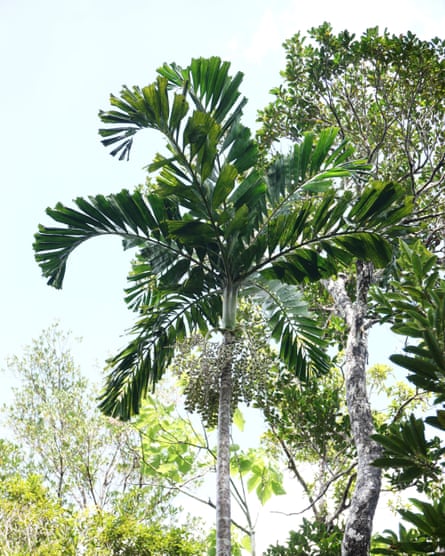
Among further new species named is a fruit that grows on the forest floor of Papua New Guinea and tastes like banana mixed with guava , and an elegant new Christmas palm from the Philippines.
There are estimated to be as many as 100,000 plant species globally that are yet to be discovered by scientists and 2-3 million species of fungi. Researchers name about 2,500 new plants each year on average.
However, it is a race against time to find and describe new species before they are driven to extinction by humanity’s destruction of nature. As many as three-in-four undescribed plants are already threatened with extinction. The loss of habitats to farming, building and mining are key drivers along with pollution and the climate crisis.
“Wherever we look, human activities are eroding nature to the point of extinction, and we simply cannot keep up with the pace of destruction,” said Dr Martin Cheek, at RBG in Kew.
“Describing new plant and fungal species is essential at a time when the impacts of biodiversity loss and climate change accelerate before our eyes: it is difficult to protect what we do not know, understand and have a scientific name for.
“If we fail to invest in taxonomy, conservation and public awareness of the issues now, we risk dismantling the very systems that sustain our life on Earth.”
Even for those plant species already named, about 40% are threatened with extinction.
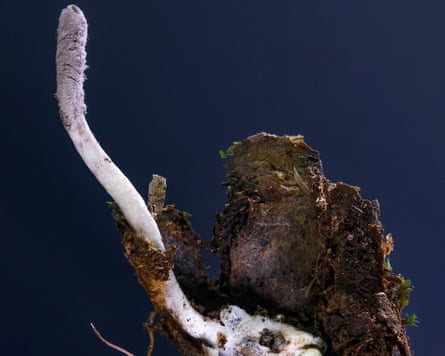
The new zombie fungus is a spider-eating species from the Atlantic rainforest of Brazil. It infects trapdoor spiders, which hide in burrows under the forest floor to ambush prey. The fungus envelops the spider in white mycelium threads and then emerges from the corpse as a fruiting body that passes up through the trapdoor hole, where it can release its spores and repeat the cycle.
Unravelling how the strategy evolved required the scientists to use cutting-edge, portable genome technology, which allowed the fungus’s genetic blueprint to be decoded in the field.
“Fungal taxonomy remains one of science’s most exhilarating frontiers of discovery even though it may also be the most daunting one we face,” said Dr Irina Druzhinina, at RBG in Kew.
“From giant bracket fungi growing on tree trunks to microscopic filaments in the soil, there could be more than 2 million species of fungi globally, of which only about 200,000 have been named. So, the challenge is immense but so is the wonder and privilege of uncovering new branches on the tree of life.”
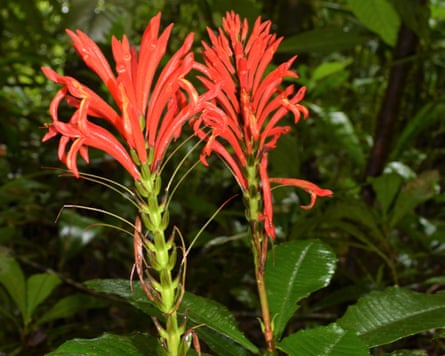
The spectacular bright orange-red flowers of a new 3-metre- (9.8ft) tall shrub from Peru inspired the scientists to name it after Calcifer, the fire demon in Howl’s Moving Castle. The scientists think Aphelandra calciferi has great potential as an ornamental plant.
South America is very rich in biodiversity. The bloodstained orchid was discovered in the high Andes forests of Ecuador. Its showy yellow flowers are stained red at the lip and mimic female flies in order to attract male flies that pollinate the plant. More than half of this species’ habitat has already been destroyed and tree felling continues because of mining and agriculture, meaning the plant is already considered in danger of extinction.
Some new species can be discovered after being overlooked. One type of snowdrop, while widely grown in the UK, appeared not to match any known species. The scientists led by Kew’s Dr Aaron Davis have traced its origin to the subalpine grasslands of Mount Korab straddling North Macedonia, Albania and bordering Kosovo.
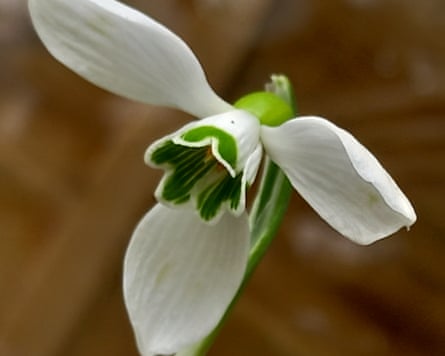
The tiny snowdrop is already critically endangered in the wild because of its small population size and the threats from collecting for the horticultural trade. Overgrazing of livestock and fires are additional factors putting the species at risk.
The loss of species does not only mean their unique biology is gone forever, but also the loss of potential new foods and medicines . A new species named in 2025 was an 18-metre-tall tree from Manus Island, Papua New Guinea, that produces round fruits that taste of banana and guava, with an aftertaste of eucalyptus.
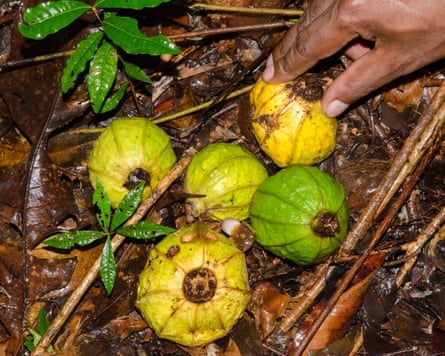
Picking the fruit is relatively easy as they form on whip-like stems that run down from the trunk and along the ground, producing white flowers. The species is thought to have evolved to have its flowers pollinated and seeds dispersed by giant ground rats. It has been named Eugenia venteri, after one of the people who collected it, Dr Fanie Venter.
An elegant, red-fruited palm from the Philippines was also named in 2025. It can grow up to 15 metres tall and is a close relative of the Christmas palm (also known as Manila palm), one of the most widely cultivated tropical ornamentals in the world. The newly named species is new to science, but was well known by local people and is already highly sought after by palm enthusiasts.
Where possible, the scientists will work with partners on the ground to protect the plant species in their habitats or conserve their seeds at national seed banks and at Kew’s Millennium Seed Bank in the UK.