2 months ago
87
2 months ago
87
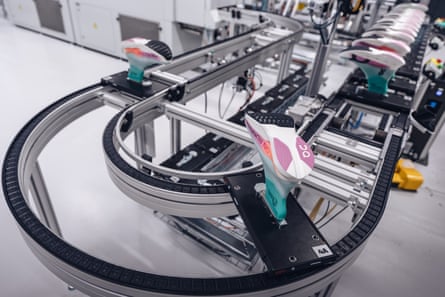
A robot leg whirs around in a complex ballet as an almost invisible spray of “flying fibre” builds a hi-tech £300 sports shoe at its foot.
This nearly entirely automated process – like a sci-fi future brought to life – is part of the gameplan from On, the Swiss sports brand that is taking on the sector’s mighty champions Nike and Adidas with a mix of technology and chutzpah.
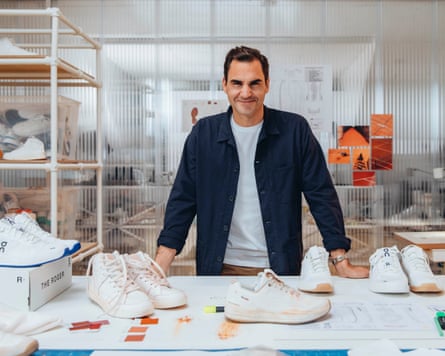
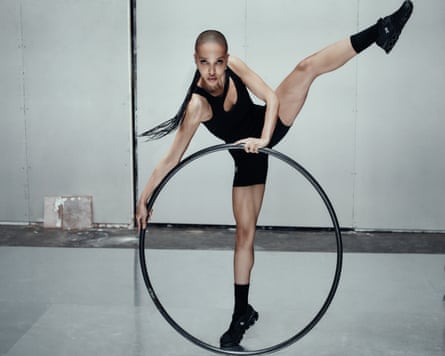
The brand is expanding rapidly after teaming up with the former tennis pro Roger Federer to create shoes suitable for the Swiss star’s sport and a mix of fashion-led collaborations including with the luxury brand LOEWE, actor Zendaya and singers FKA twigs and Burna Boy. In China, sales have doubled year-on-year. Growth has been strong in the US and mainland Europe and this month On will open its fourth London store, in Kensington.
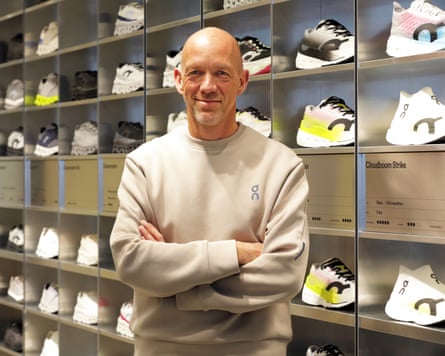
“We’re an innovation brand at heart,” says its co-founder, David Allemann, “because we are really going for the long run.”
He’s speaking from On’s Zurich head office, which has the vibe of a tech firm or luxe gym with light-filled spaces and quirky design features from the spiral staircase and workout room to a hanging fossilised tree.
Allemann says the company’s inspirations are disruptors such as Apple and Dyson. These two brands were on the “mood board” when On was set up as they combine “unique design” with “innovation in terms of user-experience or technology”.
Allemann, a former McKinsey consultant, ditched his job in 2010 as marketing boss of the furniture brand Vitra to start On with a former McKinsey colleague, Caspar Coppetti, and the Swiss Ironman world champion and triathlete Olivier Bernhard.

Bernhard’s idea was for a shoe that would protect his body from the impact of long-distance running but also promote speed. The original prototype, developed by Bernhard, an inventive individual as well as a committed sportsman, started out with sections of hose-pipe glued to the bottom of an old pair of trainers.
The three friends, all keen runners, tried out early versions together and put about £600,000 of their life savings into launching the company. They ordered 1,200 pairs of shoes, which they sold at running meets before convincing some specialist retailers to place orders.
In 2021, the trio floated the brand on the New York Stock Exchange at a value of $8bn (£5.95bn) , raising almost $750m for the business and netting them about $120m in cash while keeping a large stake in the business. This year they expect to sell 30m pairs. The brand is now worth $16bn.
After their innovative design took off, On developed the LightSpray flying fibre technology after a team member met a young student, Johannes Voelchert, at a design fair in 2019. The company decided to fund him for a year to develop his vision, which was inspired by a glue gun used to make Halloween spider-web decorations.
“We said: hey, he’s crazy, but we like that because Olivier was crazy as well,” says Allemann.
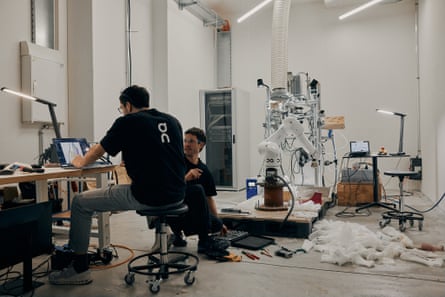
Voelchert is now part of a team of hundreds of research and technology experts, from more than 90 countries and numerous industry backgrounds, helping to develop new ideas for On in Zurich with a particular eye on the Los Angeles Olympics in 2028.
“We call that the explorer spirit,” says Allemann.
The idea is to foster innovation and creativity so that, even as a bigger company employing 4,000 people around the world, the whole business, from designers to manufacturers, can take risks on ideas without necessarily knowing the final outcome. “We’re still able to set sail without exactly knowing where we’re arriving without calling home the next day,” Allemann says.
Allemann adds that On is now seeing the benefit of “many little sprouts that now are growing up”, from its move into different sports – such as outdoor training and tennis – to its development of apparel and the opening of retail stores.
The small brand may control just 1% of the $450bn global sportswear market, according to GlobalData, but it is expanding rapidly.

On plays in the premium market with its shoes starting from about £120, excluding seasonal promotions, up to £495. That compares with Nike, which runs from £60 to £290, and Adidas, from £40 to £450.
Despite high-end purchases coming under pressure from cost of living increases, sales for the brand are on track to increase by just over a third to hit nearly 3bn Swiss Francs (£2.8bn) this year. On says it has grabbed as much as a fifth of the running shoe market in the UK and other European countries.
It faces some heavyweight competition. On is just one-tenth the size of Nike, which holds about 14% of the global sportswear market, according to industry analysts GlobalData, with Adidas on 9%. However, both have faced difficulties in recent years, creating space for new challenges including On, Hoka and revitalised old brands such as New Balance or Onitsuka Tiger, now owned by ASICS.
The company also faced a class action lawsuit last year in the US, where customers claimed its shoes make a “noisy and embarrassing squeak”. Its “CloudTec” trainers, designed with holes to feel like “running on clouds” – were criticised on social media over the noise. On said it did not comment on ongoing legal matters.
On’s Cloudboom Strike LS laceless shoe, which is made by just nine robots in Zurich and costs £310, has already won the attention of running enthusiasts after the Kenyan runner Hellen Obiri won this year’s New York and last year’s Boston marathon. She also took a bronze medal at the Paris Olympics in a pair.
In Zurich, the robots in their lab-like room are still outnumbered by humans, who monitor their work and complete the final process. Most of the brand’s footwear is made in traditional factories in Asia. But this year On is aiming to open its first robot-led factory to create a more accessible version of the shoe, the upper half of which is made from a single nearly one mile-long filament of thermoplastic polyurethane in just three minutes. Traditionally, a shoe takes several humans hours of work.
The factory’s location has not yet been decided, but will be close to one of its main retail markets, with the long-term aim of producing on every continent. That would be a dramatic change from today’s industry, which is largely based in Asia, particularly Vietnam and China.
Allemann says local manufacturing is attractive as it has “a huge advantage from a sustainability point of view, because you don’t have to ship shoes around the world, but also from an agility to market point of view – you can produce much faster, according to what people want”.
He says LightSpray shoes have a 75% lower CO2 footprint than an ordinary sports shoe, which plays to On’s aim to create more sustainable and recyclable kit.
Retail expansion is also a big part of the story. The latest London opening will make the UK capital its biggest retail centre, with plans for as many as seven in future. It is now part of a global portfolio of 60 outlets, with plans for up to 25 more a year despite the rise of online selling.
“We feel there’s still a lot of potential in retail, if done right. City centres are still a very important place for society, and shopping and sports are an important ingredient to that.”
With those in their late teens, 20s and 30s keen on sport, particularly training and running, Allemann says the shops “are not just stores but also community hubs where running clubs start”.
He believes On will continue to expand because participating in sport brings people together in a way the online world cannot.
“Running and sports, that’s such an important part of your life that we see consumers are willing to invest in great performance, innovation and better feel, but also in great design and what that tells us about them.”