2 months ago
95
2 months ago
95
Pasta all’arrabbiata is the perfect dish for January. Not only is it quick, vegan and made from ingredients you might conceivably have in the cupboard already, but the name, which means angry, could be said to suit my mood now that the last of the Christmas festivities are over. Happily, a big plate of rich, tomatoey pasta can always be relied upon to lift the spirits.
Prep 5 min
Cook 25 min
Serves 2
2 tbsp extra-virgin olive oil, plus a little more to finish
1 tsp chilli flakes
2 garlic cloves
400g good tinned tomatoes, or passata
200g penne (see step 1)
Salt and black pepper
¼ tsp red-wine vinegar
1 handful basil leaves, or flat-leaf parsley
1 A note on the pasta
This dish is traditionally made with penne, but any shape that traps chunky pieces of sauce will give maximum enjoyment. Caz Hildebrand and Jacob Kenedy’s book The Geometry of Pasta suggests no fewer than 14 alternatives, including farfalle, pappardelle and tagliatelle, while I’d recommend rigatoni, fusilli, conchiglie or, indeed, anything that looks vaguely like them. That said, Jamie Oliver uses good old spaghetti.
2 A note on the oil
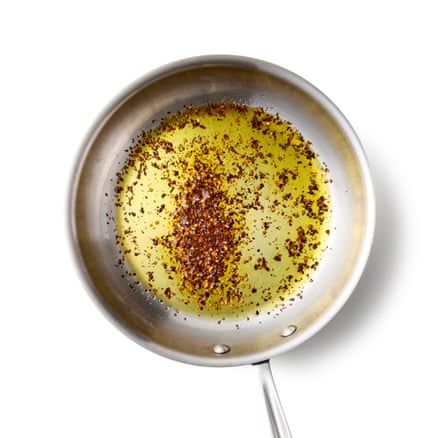
Put the oil in a medium saucepan on a moderate heat (olive oil for preference, and certainly use that to finish the dish, but a neutral oil or, in fact, the oil from a tin of anchovies would also be fine here). Be generous: a decent amount of olive oil is vital to give such a simple sauce the requisite richness.
3 Fry the chilli
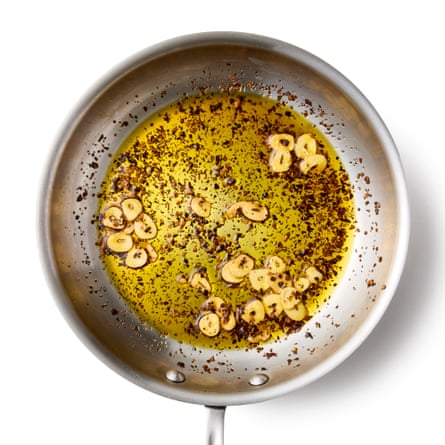
Add the chilli flakes to the hot oil. Depending on what variety you have, you may wish to adjust the amount to taste, and if you have only chilli powder or paprika, proceed with caution! (Alternatively, if you have fresh chillies to use up, finely chop them, removing and discarding the pith and seeds, if need be, to reduce the heat levels, and add them instead.)
4 Add the garlic
Peel and finely slice the garlic. Once the chilli begins to darken in colour, stir in the garlic and continue to cook until it turns the faintest shade of golden. At this point, some recipes also add a couple of anchovies or cured pork (pancetta, guanciale, chopped streaky bacon or similar), but I don’t think it needs either.
5 Add tomatoes and simmer
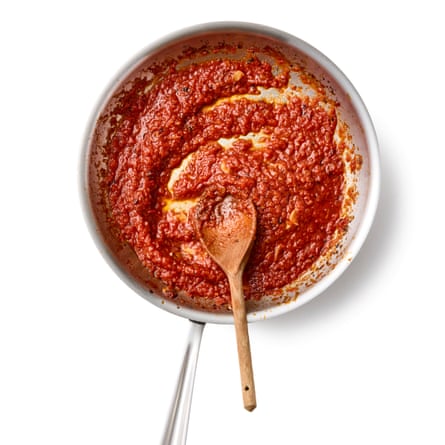
Pour in the tomatoes (chopped or whole, it matters not, though you will have to break up whole ones with a wooden spoon while the sauce is cooking) and add a generous pinch of salt. Bring to a simmer, then turn down the heat and leave to bubble away very gently for about 15 minutes, stirring occasionally.
6 Cook the pasta
Meanwhile, cook the pasta in salted boiling water for the time specified on the packet, or just shy of your preference, because it will cook some more when you combine it with the sauce. Towards the end of the pasta cooking time, scoop out a little of the water and set aside.
7 Add vinegar and season
By the time the pasta is almost done, the sauce should be thick. Stir in the vinegar and check the seasoning, adjusting to taste. (If the sauce isn’t quite ready, but the pasta is, drain the pasta, put it in cold water so it doesn’t clump together, then drain well before adding to the sauce.)
8 Toss the pasta into the sauce
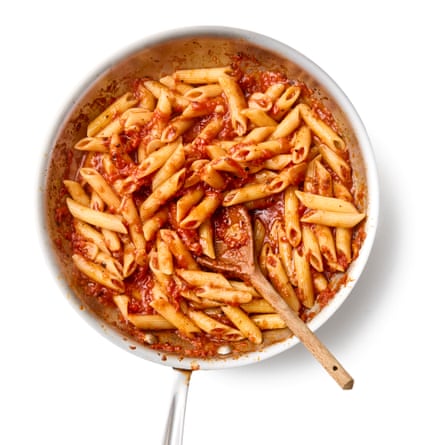
Drain the pasta, put it in the pan of sauce and toss to coat; if the mix seems too thick, add a splash of the reserved pasta cooking water. Cook, tossing, over a low heat, until the pasta is well coated, then divide between shallow bowls. Drizzle with olive oil and tear over some basil (or flat-leaf parsley). If you want cheese, pecorino romano would be ideal.
9 And if you want to get ahead …
You can prepare both elements ahead of time (though the pasta is better freshly cooked), leaving the sauce very slightly looser and the pasta a bit more al dente. Store the pasta in iced water for up to an hour. Reheat the sauce, then stir in the thoroughly drained pasta to heat through, and continue as above.