3 months ago
144
3 months ago
144
There is something magical about browsing someone else’s DVD collection.
Like a bookshelf it reflects the owner’s taste and interests; at least the ones they want visitors to see. But as a dead medium, DVDs make a more abstract statement: a collection suggests an ongoing commitment to physical media – the film equivalent of a record collection – but DVDs have come and gone, superseded in quality and accessibility.
Yet even with the world of streaming at our fingertips, if offered a DVD shelf we will happily peruse it like in Blockbuster stores of yore, whether it belongs to a friend, parent or a total stranger from Airbnb. The limitations of a finite collection offer more choice than an endless scroll. They’re recommended, not by an algorithm, but by the person who thought these films were worth keeping. Putting on a DVD, or a CD or LP, requires a physical action and stopping or changing it requires another – you have to commit to your choice.
It might seem strange to lump DVDs and CDs in with other obsolete technologies, since these digital formats signalled the beginning of the end for physical media. They might not be welcome at its funeral, but they have their place in the pantheon of obsolete technologies; forgotten but not quite gone. And as many of us head to the final resting place of outdated tech (our parents’ houses), these dead technologies deserve their day in the sun.
My affection for outdated technologies go well beyond media: the stovetop coffee maker, the old Sunbeam MixMaster and the phone simply used to make a call. As the world becomes more atomised there is comfort in the familiar. There’s also the inevitable, “they don’t make them like they used to” argument (and they don’t), but for me the appeal of older gadgets is all about tangibility. As the world is streamlined into integrated touchscreen devices, there is a joy to the clunky, tactile process of using technological unitaskers.
There is satisfaction in pressing a button or cranking a dial that no touchscreen will ever replicate. There is also certainty; if I reach for my car’s temperature control, I know it will be there, without taking my eyes off the road to click through six sub-menus. If I want to watch a film, the DVD can’t disappear from my shelf without notice. And as neat as a Switch is, can it really compare to smacking a cartridge into a Nintendo 64 and grappling with the unwieldy three-pronged controller?
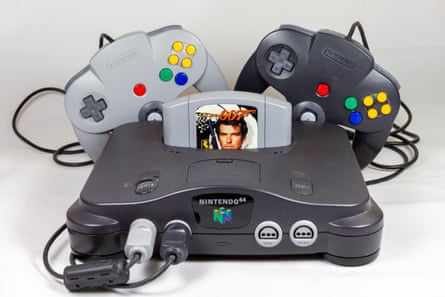
Brian Eno wrote in his diary in 1995 that, “whatever you now find weird, ugly, uncomfortable and nasty about a new medium will surely become its signature …these will be cherished and emulated as soon as they can be avoided”. In an era of frictionless digital experiences, it is friction itself that becomes precious. The act of loading a record on to a turntable, lowering the needle and being forced to listen all the way through, no matter how badly you want to skip. When you have to sit through a song you hate, you have to think about why you hate it, rather than just breezing by.
That very difficulty is the point – we’ve made a world so seamless that to have to get up and flip a record or fiddle with a radio dial makes you into part of the process. A broken piece of analogue tech can usually be fixed with a tape, WD-40 or physical violence, but a dead digital gadget is beyond salvation.
And for all its promises of frictionless-ness, the Screen Era has also invented its own unique frustrations. The pain of typing search terms into a smart TV with a remote, one agonising letter at a time. We have all the music available in the world, but it’s harder for new artists to break through. There are also far more serious concerns that replacing physical buttons with touchscreen in cars distracts drivers, and some researchers estimate that using a car’s touchscreen is more distracting than drink-driving.
Is older tech easier to use? No. Can the quality compare? Usually not. Is it reliable? No, but it’s unreliable in a predictable way – my mother’s 40-year-old soldering iron bravely solders on, provided it’s plugged into a dimmer switch to control the temperature.
In our endlessly updated age, there is also a sense of rest that comes with obsolescence. There are no new Walkmans, or Game Boys or landline phones, so the ones that cling on haven’t changed. If you knew how to use it once, you know how to use it now.
Sure, the friction of older technology is still friction – but at the heart of friction is interaction. There is victory in getting life out of a CD or button mashing your way to a Mario Kart triumph.
It may take a physical action to crank the volume of your car stereo, but that action is satisfying as hell.