3 hours ago
10
3 hours ago
10
Is the strait of Hormuz, recently cited by the office of the Iranian supreme leader as “the pillar of Iran’s new security order”, and as transformative as possessing a nuclear weapon, in reality becoming a fast-diminishing asset, leaving Iran increasingly vulnerable to the new planned US wave of economic sanctions?
It is the key debate that is raging inside Iran, with many different conclusions being drawn for Tehran’s negotiating strategy. Those who warn the strait’s value as a chokehold on the world economy will erode, leaving the country without foreign exchange reserves, argue that Iran’s negotiators should seek a deal soon.
One analysis written by Hamid Paktinat, the founder of the Forum of Economic Activists, suggests the construction of alternative pipelines and export routes by Iran’s Gulf neighbours will halve the strait’s strategic value within three years.
Those who worry about wasting assets inevitably set store by the separate visits this week to Tehran of Oman’s foreign minister, Badr Albusaidi, and Pakistan’s army chief, Asim Munir. These two men are critical to renegotiating the terms for the reopening of the strait and the revival of the discarded memorandum of understanding agreed by the US and Iran in June.
The Iranian president, Masoud Pezeshkian, and the parliamentary speaker, Mohammad Bagher Ghalibaf, have both recently made unusually blunt comments about the need to end the war – and the economic consequence of continuing it. Ghalibaf said that regardless of how much military power Iran possessed, “if people are hungry” and there was no economic growth, the country could not endure. Security, he argued, could not be sustained without a functioning economy. He added that, as someone with a military background, “we know the value of peace better than those who talk about peace”.
Pezeshkian was even more blunt: “The war must end at some point,” he said. His argument was that Iran should end the conflict now, while Tehran still believes it is negotiating from a position of strength, rather than wait until its position weakens.
The Iranian central bank governor, Abdolnaser Hemmati, also recently went on TV to warn about the economic pressures. “We are facing four or five major challenges simultaneously, including maximum sanctions, blockade, cutting off oil exports, and a budget imbalance, each of which puts pressure on the economy,” he said. “One of the neighbouring countries told me that if one-fifth of what happened in your country happened in our country, we would not be able to govern the country.”
What is driving these remarks is the pressure on ordinary people in Iran, and an acceptance that the strait cannot become a permanent security doctrine in itself.
Hamid Asefi, a Tehran-based journalist specialising in geo-economics, is one of many warning that if Hormuz is to be played as Iran’s final card every time a crisis arises, this card will gradually lose its value. “A threat that is constantly repeated turns from ‘deterrence’ into a political habit; and a political habit, if not accompanied by concrete achievements, sooner or later leads to an inflation of threats,” he said.
The main question is no longer: can Iran close the strait, he wrote, but if Iran closes Hormuz to the world, does it open the door to power for itself or lock part of its power behind that door?
“This is the Hormuz paradox. In international politics, a lever that is constantly flaunted can become its own enemy because it forces others to plan to reduce their vulnerability […] the main question of Iranian policy in Hormuz must change from: ‘How can we make the passage difficult?’ to ‘How can we make the passage so safe and stable that everyone needs Iran to maintain this order?’”
That does not imply the lever is valueless. Far from it.
According to data compiled by the ship tracker Kpler, only 112 oil and gas tankers went through the strait between 1 and 19 August. Almost 79% used unconfirmed routes, 19% used Iran’s preferred northern route and 2% used the Omani route. In reality many of the ships that used the unknown routes probably turned off their transponders and used US protection along the Oman route.
It also appears that aided by the US government, Saudi, Emirati, Qatari and Kuwaiti oil companies have chartered a small group of oil tankers to take cargo through the southern route to the Gulf of Oman, where they then offload the oil to waiting tankers owned by their customers. Much of the risk is therefore transferred from shipping companies and oil customers to the more highly motivated state oil producers and to the US government. Iran has drawn up a blacklist of about 48 ships that it will try to ban or fine.
But the US government is probably exaggerating the impact of these workarounds. Chris Wright, the US secretary of energy, claimed on 18 August the US navy had assisted in the transfer of more than 15m barrels of oil and other products. He also claimed the average daily transfer of oil through the strait was now more than 8m barrels, but even this figure is less than half the prewar average and is anyway seen as inflated. Most ship data trackers estimate the daily figure at closer to 6m barrels a day.
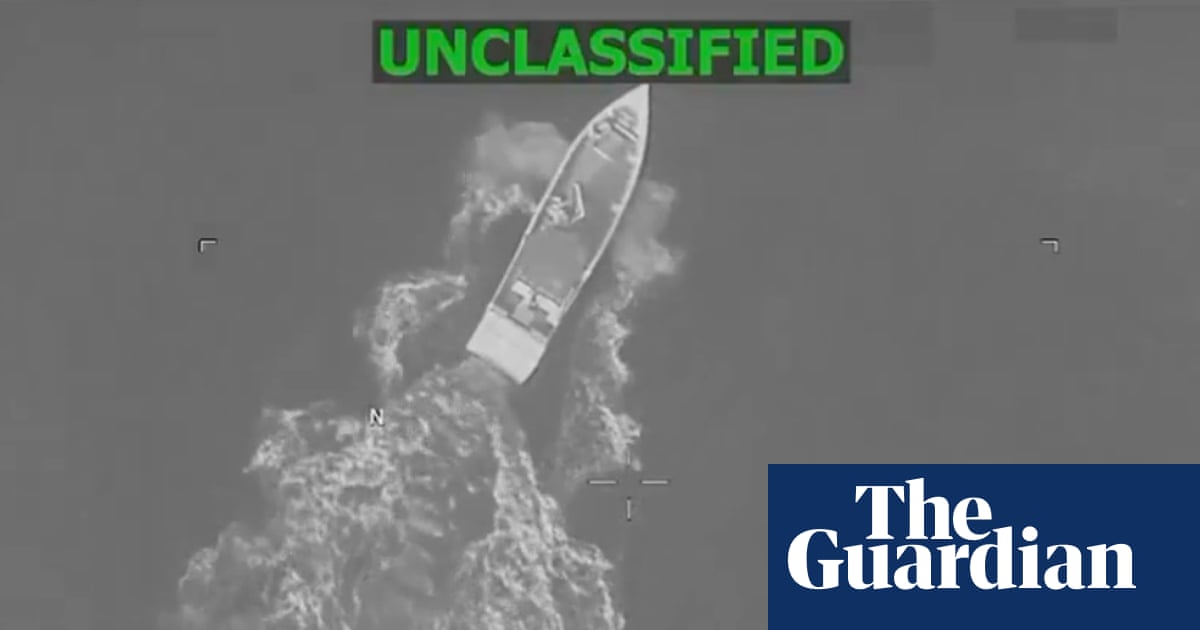
Arsenio Dominguez, the secretary general of the International Maritime Organization, furthermore dismissed Donald Trump’s outlandish claim that the US navy had all but opened the strait, telling Bloomberg: “Given the very small number of ships that transit the strait of Hormuz, it is clear that this strait is, in practice, not open.” The US president has countered that all mines in the strait have been removed, leaving Iranian drone and naval attacks as the chief threat.
But the fact that before the war the strait accounted for 20% of oil and oil-related products is serving as a catalyst for the restructuring of the global energy infrastructure. Countries in the Gulf are rapidly building a network of alternative pipelines, with the aim of protecting more than half of their prewar exports from the impact of Hormuz by the end of this decade.
Paktinat has looked through the region at the capacity, length and cost of pipelines being prepared in six countries over the next one to four years. He concluded Saudi Arabia’s reliance on the strait of Hormuz would decrease from 70% to 15%. The UAE’s reliance would decrease from 50% to 15%, and Iraq’s dependence would fall from 100% to 30%.
Kuwait and Qatar’s reliance would decrease from 100% to less than half. Bahrain’s reliance would fall from 100% to 15%, he assessed. Finally, Oman’s reliance would change from 0% to becoming a major coastal oil transfer hub for the entire region.
Overall, he says, the strategic value of the strait of Hormuz will be halved within three years and almost lost within six years with the implementation of these projects. The narrow horseshoe waterway will remain, but its strategic importance – the centre of Iranian gravity – will have evaporated.
In the meantime, the US will try to turn Trump’s premature boast that the Iranian economy has completely collapsed into reality. It will try once again to block the vital arteries of the Iranian government across five key sectors: gold, cryptocurrency, technology, shipping and aviation.
Success is by no means guaranteed, as Trump must know from the failure to defeat Iran in his first term. But slowly chipping away at Iran’s economic resilience until the strait finally becomes an irrelevance may be Trump’s only remaining option.