3 months ago
258
3 months ago
258
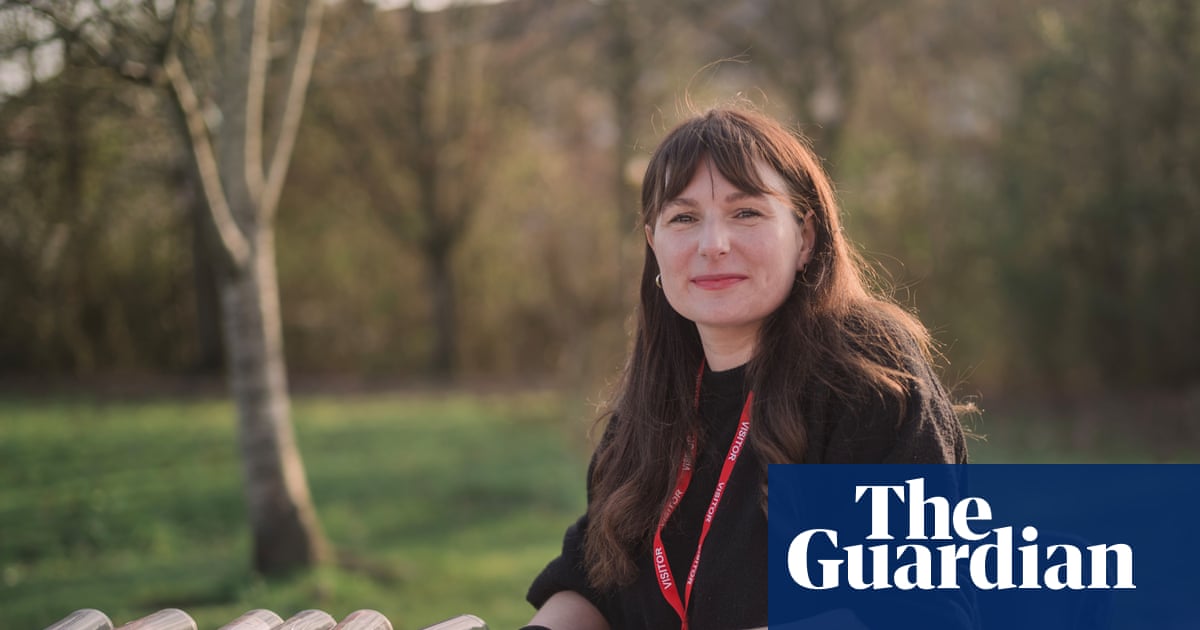
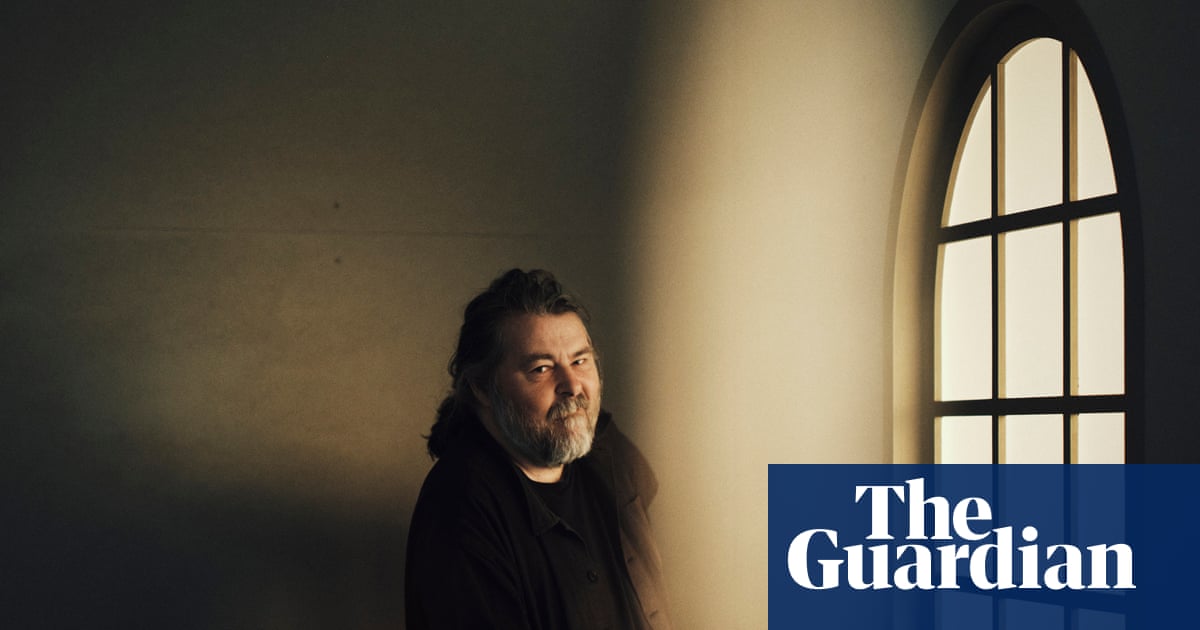
Dave Welder may just be the most prolific musician you’ve never heard of. In a little more than a year, he has released a staggering 26 records spanning electronica, dub, ambient, kosmische and drone. One of these albums, Thunderdrone, is more than four hours long. Based in Brighton and Hove and described as “a rotating group of musicians and artists”, in reality “Dave Welder” is largely the work of one man who, until now, has been operating in secret: film director Ben Wheatley.
“I’ve always wanted to make music,” says Wheatley, whose films include the independent movies High-Rise, Kill List and Sightseers, along with big-budget Hollywood flicks such as the shark thriller Meg 2: The Trench. “I wanted to do it for my films but there was a dissonance. Of all the art forms, I couldn’t really understand it. I would dream that I could play, but then it was like, no, I can’t.”
After he started tinkering with GarageBand a few years ago, it quickly became an obsession. “It’s this weird flow state where you sit at the machine and then this tune pops out and it’s like, ‘Oh, fuck,’” he says. “I listen back and I don’t even know how I’ve done some of it.” Music-making can be a healthy distraction: “I might have a job to do but I’m like, ‘I don’t want to do that’, so I’ll do some music and then go back to it”. Or alternatively, “a reward for doing stuff, whereas before it might have been playing games or doomscrolling. It’s a more productive and creative way of calming down.”
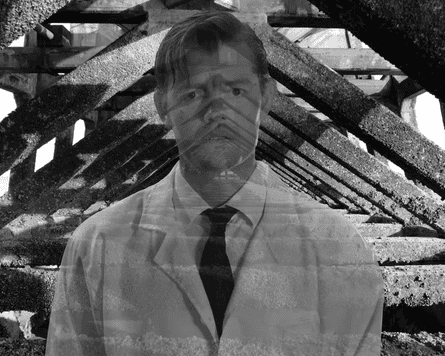
Wheatley’s latest project is an experimental sci-fi film, Bulk – and for the first time, the music is by him (or Dave Welder), too. “One of the great things about making films is you get to work with amazing composers and I managed to spoil that,” he says with a laugh. However, the feedback loop was an easier process. “The arse of being a composer is having to listen to directors but luckily for me, my director is me. So I’m like, ‘Oh yeah, that’s pretty good, dude!’”
Wheatley describes his approach to composing music for the screen as being in line with the aesthetic of Bulk: “Very cottage industry, very handmade.” Delivering dialogue with playfully wonky dubbing, Sam Riley’s character Corey explores a multiverse as the movie glides between film noir and B-movie sci-fi, with scant regard for conventional narrative. As well as writing, directing and scoring the film, Wheatley also made all the models used in the lo-fi special effects, and even hand-drew the credits sequence.
Those credits recall a punk-style fanzine, with instructions on how to recreate the film and its soundtrack on the same primitive equipment he used, such as iPhones and GarageBand. “There is a punkness to it,” he says of the overall approach. “Modern technology, at the same time as it fucks you, actually gives you the opportunity to make stuff and get it out there.” The credits also pay tribute to some of Wheatley’s musical inspirations, including the Fall, Neu! and Aphex Twin.
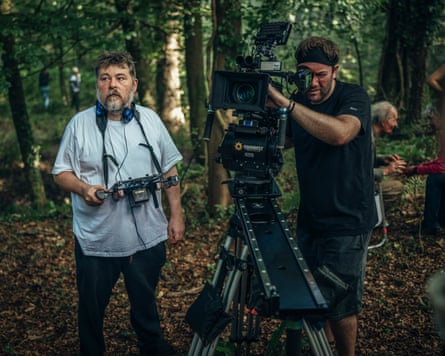
Is this newfound playful, experimental music-making, and the staunchly DIY ethos of Bulk, a response to big projects such as Meg 2 and its $130m budget? “It’s all part of the same making,” he says. “It is a reaction, but not in a negative way. After Meg, I made [teen zombie drama] Generation Z which was different again.” While making his next film, Normal, with Bob Odenkirk, he was still making his own music throughout. “I’d shoot on Bob’s film and then go back at night and make stuff and listen to it. It sounds indulgent listening to your own music but it’s one of the secret pleasures of it.”
Wheatley has caught the bug so intently that he’s even got ideas about creating new immersive experiences that combine music with films in cinemas, incorporating stacked sound systems and bespoke narrative light shows. “Like a gig but also a film,” he says. “It would be a wicked experience but whether it makes any economic sense … I don’t know.”
There have even been a couple of clandestine live performances from Dave Welder, including one at London’s Cafe Oto. “Music needs to be listened to by people, so it’s no good just pumping it out and leaving it in the back walls of the internet for ever,” he says. “I wanted to hear it on massive speakers. I’ve always tried to do different things, and playing live was just another of those experiences, but I was sitting there going, ‘How the fuck did I end up on the road that led me here?’ I’m really glad I’m doing it, but it’s bizarre.”