2 hours ago
10
2 hours ago
10
An intense and prolonged heatwave has been causing misery for millions across Pakistan and India.
In southern Pakistan throughout April and May, temperatures have risen far above seasonal norms. In Sindh, daytime temperatures have frequently crossed 44C to 46C, forcing residents indoors during peak afternoon hours and severely affecting outdoor labourers, transport workers and farming communities.
India has also been experiencing intense heatwave conditions in recent weeks, particularly across Rajasthan, Gujarat, Maharashtra and parts of northern and central India, where temperatures in several cities have crossed 45C. Authorities in multiple states have issued heatwave alerts as extreme temperatures increase health risks, strain electricity supplies and disrupt daily life for millions. Climate experts say the recurring heatwaves across south Asia reflect a broader pattern of rising temperatures and increasingly severe weather linked to the climate crisis.
In Pakistan, the city of Karachi – usually moderated by sea breezes from the Arabian Sea – has struggled to escape the extreme conditions. During the first half of May, temperatures in the city crossed 40C on multiple occasions. According to the Pakistan Meteorological Department (PMD), Karachi recently recorded a maximum temperature of 44.1C, the city’s highest reading since 31 May 2018, when temperatures touched 46°C. Meteorologists have warned that hotter days may still be to come.
The impact has been particularly severe in Karachi’s coastal settlements, where prolonged electricity outages and water shortages have compounded the effects of extreme heat. In Ibrahim Hyderi, one of the city’s largest fishing communities, residents say survival is becoming increasingly difficult.
Abdul Sattar, a fisherman with more than three decades of experience, recalled how one of his colleagues collapsed from heat exhaustion during the recent heatwave. “We gave him lemon water and rushed him to a doctor,” he said. “He regained consciousness after receiving intravenous fluids.”
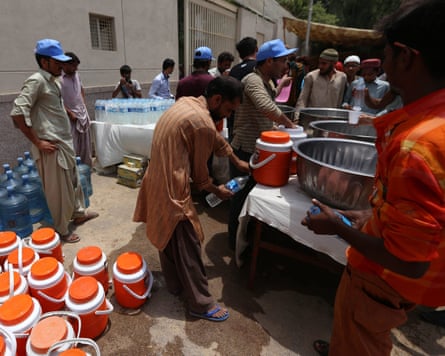
The community still carries painful memories of Karachi’s catastrophic 2015 heatwave, when thousands of people died across the city, including several fishers from Ibrahim Hyderi. More recently, heat-related deaths reported during the summer of 2024 again highlighted Karachi’s vulnerability to extreme weather events.
The strain is also becoming visible in local healthcare facilities. Dr Suresh Kumar, who heads the children’s ward at Ibrahim Hyderi government hospital, said the number of children visiting the outpatient department has risen sharply since the last week of April.
“On normal days, we would see around 50 to 60 children,” he said. “Now the number has crossed 200 daily.”
According to Kumar, most children are being treated for diarrhoea, stomach infections and dehydration – illnesses commonly linked to extreme heat and unsafe water conditions.
Climate experts warn that rising temperatures are no longer isolated incidents but part of a worsening long-term trend driven by climate change and rapid urbanisation.
The World Weather Attribution group has looked at the current extreme heat in Pakistan and India and found that “human-caused climate change approximately tripled the probability of an event like this happening, making it no longer exceptional in today’s climate. The same heat event would have been about 1C cooler in a pre-industrial climate.”
Yasir Darya, founder of the Climate Action Center, said Karachi’s humidity often makes temperatures below 40C feel significantly hotter. He also noted that unusually warm nights – once rare in the city – are now becoming more frequent, affecting sleep, health and overall living conditions.
“The intensity of heat has sharply increased since 2024,” Darya said, warning that Karachi lacks sufficient cooling centres and public heat-relief infrastructure. He added that the city’s shrinking tree cover is worsening the urban heat effect and increasing exposure for vulnerable populations.
According to the PMD, average temperatures across the region have risen by approximately 1.4C, while Sindh alone has experienced an increase of around 1.7C in recent decades. Experts say winters are becoming shorter, while summers are growing longer, harsher and more unpredictable.
Climate specialists are urging immediate intervention, including the establishment of public cooling centres, expanded access to drinking water, emergency medical preparedness and large-scale urban tree plantation drives.
For many people, however, as for the residents of Sindh, the crisis is no longer a warning about the future. It is already reshaping everyday life — turning extreme heat from a seasonal hardship into a persistent struggle for survival.