2 months ago
114
2 months ago
114
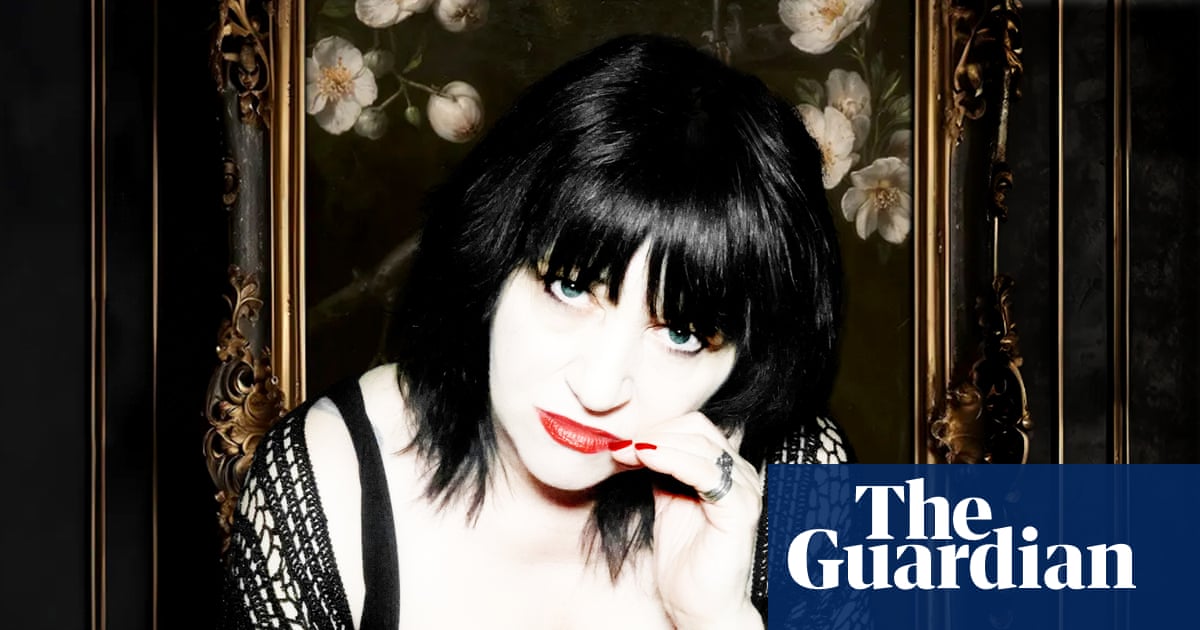
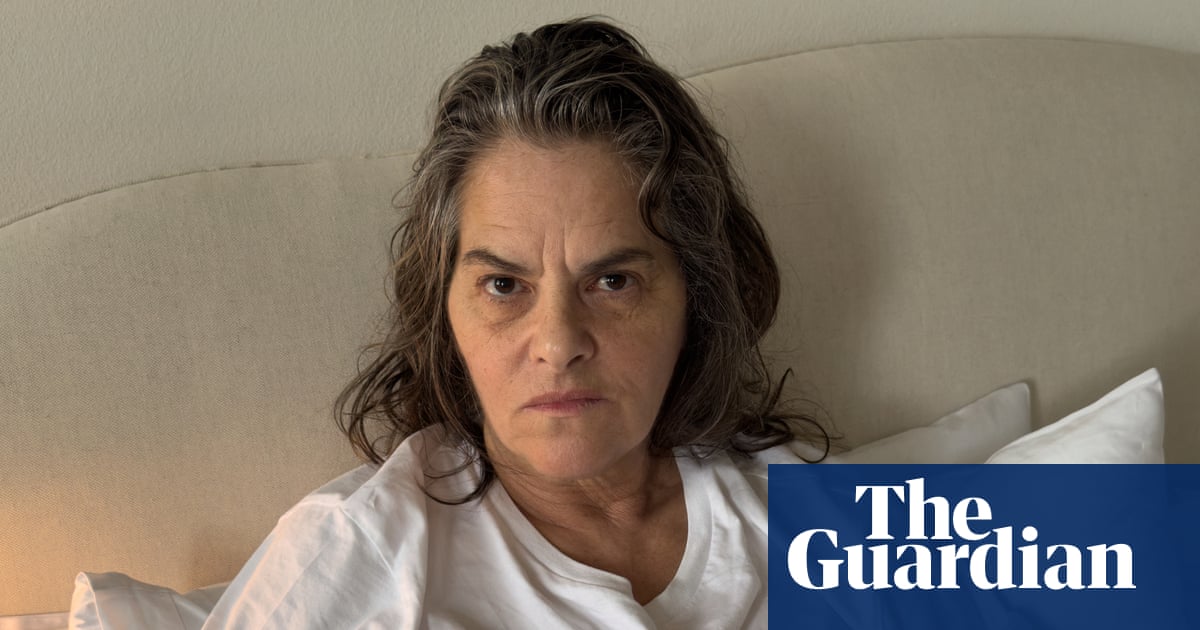
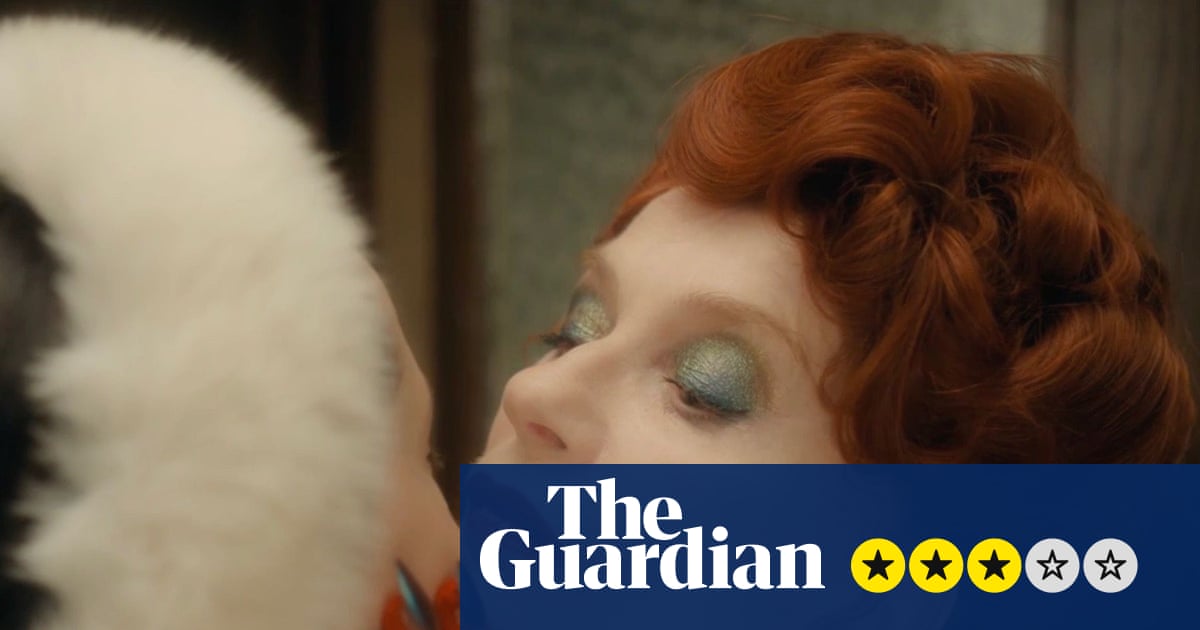
The first time Rebecca Lucy Taylor read David Hare’s 1975 play Teeth ’n’ Smiles, she says, her “mind was blown”. “I couldn’t believe it,” says the artist better known to music fans as Self Esteem. “The way I feel about my actual life is so mirrored in this play. It just mirrors what the music industry today is like.”
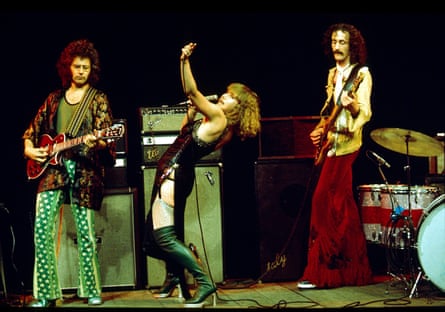
In a sense, that’s a surprising thing to say. You could view Teeth ’n’ Smiles as something of a period piece. Set in 1969, it is the saga of a band imploding in a mass of drugs, alcohol and violence backstage at a Cambridge May ball – inspired, Hare says, by the experience of seeing a “grumpy, angry, miserable” Manfred Mann going through the motions at a similar event while he was a student at Jesus College. There is debate among the band’s members about the late-60s countercultural “acid dream”, and the attendant belief in rock music as a revolutionary force capable of inciting social change. But the play seems less a product of the era in which it is set than that in which it was written. It is soaked in the disillusionment and broiling discontent of the mid-70s, when the countercultural dream was unequivocally over.
It certainly struck a chord with audiences at the time. The original production, which premiered at the Royal Court theatre and starred Helen Mirren as the band’s vocalist, Maggie Frisby, was a hit. “My memory of it in 1975 is that it blew such a hole in the respectability of the Royal Court, which was a very puritanical theatre,” says Hare. “It really shook the plaster off the ceiling and people came out exhilarated.” Still, the playwright told an interviewer in the mid-90s that Teeth ’n’ Smiles was so “in touch with the mood of a particular time” that he didn’t expect it ever to be revived.
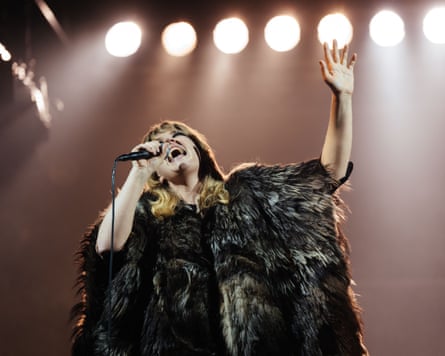
But that’s the point, says Taylor, who is playing Frisby in a West End revival – and has also added extra music and lyrics. It’s not just that the play touches on some universal truths about pop music, although it undoubtedly does – among them what she calls the “mundanity and weirdness” of life on tour, and the continuing lack of any duty of care towards performers. “The word at the time was ‘casualties’,” nods Hare. “Brian Jones, Janis Joplin or whoever – they were all just ‘casualties’.”
It’s also that Taylor thinks Teeth ’n’ Smiles was written in an era not unlike our own. “The disillusionment – I feel like something is dying that I grew up believing in,” she says. “I thought, six years ago, that something would change, politically. I’m a big liberal lefty idealist, a real Fuck Boris-head, and I think we thought we might get somewhere, and now I very much feel like we won’t. Obviously I’ll have a second wave at some point, but at the moment it’s hard. I thought that working hard and being a good musician would be enough, and it hasn’t been, because of TikTok and AI and the conveyor-belt nature of music now. I believe in the album format, I believe in 12 tracks that take you through something. I couldn’t be more extinct if I tried, now. You can make the most mediocre album in the world, but if there’s enough money and buzzy marketing and a fucking TikTok dance, you’ll do better than I’m doing.”
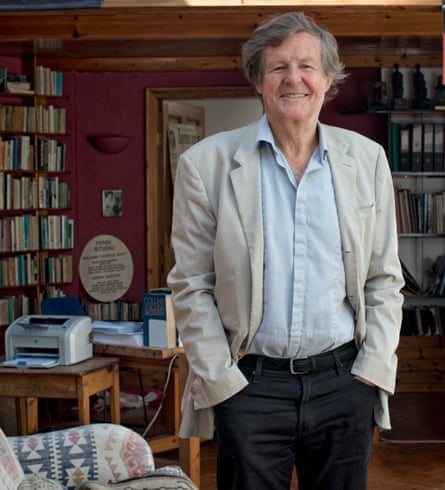
Sitting next to her in the cafe of an east London rehearsal space, Hare says the play had a number of inspirations. There was his memory of the Manfred Mann gig, and of the summer he spent as a member of Portable Theatre, a travelling company touring England in a van. “There were seven men and one woman: an actress of incredible composure and integrity who had to cope with this constant barrage of male humour, which was really what we were all using to get around the country. It was totally exhausting for us and I imagine quite a challenge for her.”
There was also his own equivocal view of the 60s counterculture. He loved everything that was being done to destroy the rigidity of 1950s bourgeois society, which “I had grown up in and knew to be incredibly repressive, particularly sexually”, but he didn’t share the belief that a revolution was on its way. Nor that, “through taking drugs, society would be threatened and changed”. And he had a dissatisfaction with the vogue for musicals that “tried to hitch a ride on rock music’s energy”: Hair, Jesus Christ Superstar et al. “I thought theatre ought to be able to survive on its own terms. So a play where you see the set that the band play, and then you find out what happens in between, seemed to me a way of having rock music in a play without cheating. It just seemed such a perfect format.”
With the benefit of hindsight, the most startling thing about Teeth ’n’ Smiles is what Hare calls the “modestly prophetic” way it seems to foresee the arrival of punk. One of the songs is a frantic-paced number called Bastards; the title of another, Last Orders on the Titanic, weirdly presages The Titanic Sails at Dawn, a quote from Bob Dylan’s Desolation Row repurposed by journalist Mick Farren for a famous punk-anticipating essay published in the NME a few months after Teeth ’n’ Smiles opened.
The one thing that excites both the band and their audience in the play is an act of nihilistic, violent destruction. “That was the best night I’ve had in years,” enthuses one previously torpid band member in its wake. Most startling of all are the similarities between the band’s manager, Saraffian (played by Phil Daniels in the revival), and Malcolm McLaren, the manager of the Sex Pistols. Just as McLaren was, Saraffian is obsessed with the 50s British pop world of manager Larry Parnes, and revels in his image as an avaricious conman while claiming to have a higher purpose involving disrupting the social order.
Perhaps it wasn’t entirely coincidence. When the play opened in September 1975, Hare had no idea what was fomenting at the other end of Kings Road from the Royal Court, where McLaren and Vivienne Westwood’s shop Sex was located and the Sex Pistols were gathering. But McLaren and Westwood were certainly aware of Teeth ’n’ Smiles. “They came to see it,” nods Hare. “Malcolm loved it, he thought it was just heaven. He got in touch with me afterwards and talked to me a lot. He loved it because he could see the way the play was going, which was heading towards the punk thing. He was both extremely charming and so obviously a conman I would not have trusted him for a second.”
Despite her belief that 2026 is not unlike 1975, Taylor isn’t sure that another punk-like disruption is coming any time soon. “I mean, I’ll say yes today, but catch me on a different day and I’d say no,” she smiles. Still, she feels inspired by the character of Maggie, who on the one hand is a drunken liability but, on the other, is by some distance the play’s most clear-eyed and fearless character. “She gives me hope. Maggie can see it’s not working, it’s not going to work, it’s all bullshit. But her thirst for experience is something I remember feeling, and I must worship that feeling to keep it in mind. It’s very seductive to stop searching for experience – I bang my drum all the time about women not having to choose that idea of happy-ever-after that’s gone before us for millennia, then even I succumb to the comforts of having a nice boyfriend that my mum and dad like. But Maggie doesn’t.” She laughs. “I went to the Brit awards on Saturday and it was quite difficult for me to be in Maggie’s headspace. The red carpet was quite hairy.”
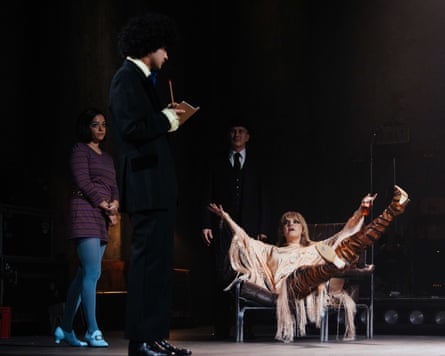
For his part, Hare is unsure how what he once called “a sloppy, dirty, funny play about hippies behaving badly” will be received 50 years on. “I really don’t know what they’ll make of it now. I sit there going, ‘I’m absolutely terrified.’ The energy of it is quite frightening, it’s quite alarming.”
Taylor nods enthusiastically. “I love it, though. I want people to be uncomfortable.”