2 hours ago
10
2 hours ago
10
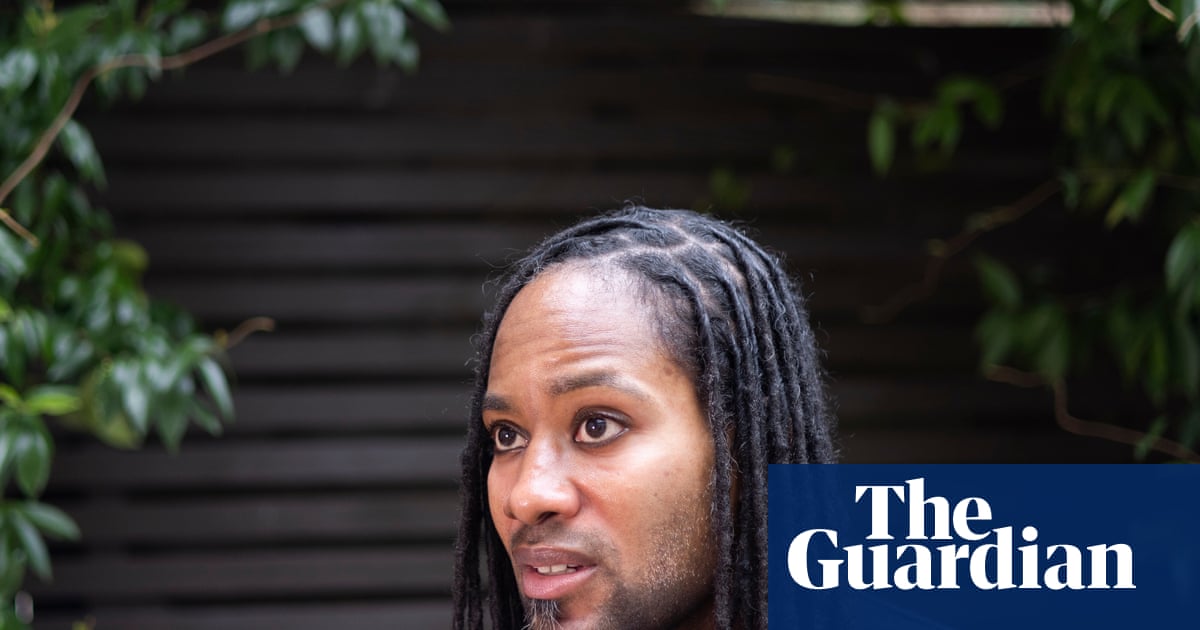
Few stories have dominated discourse and headlines like that of Jason Arday. The University of Cambridge professor, now resigned, was accused of plagiarism, and appears to have made up an awful lot of fantastical stories about his life. But weeks into the affair, it feels that there has been an additional layer of reality-distortion: this time, by the rightwing press and in broader public discourse. This week, I try to unravel some of the falsehoods that have taken hold around the matter.
Debunking five myths around the Jason Arday discourse
The stories told by Arday about his life are outlandish, but so are some of the stories we are being told about Black people’s position in professional life. Increasingly, a number of fantasies are being spun by the media and wider public as they attempt to make an example of Arday.
Here are the most egregious:
1. Academia is dominated by DEI appointments
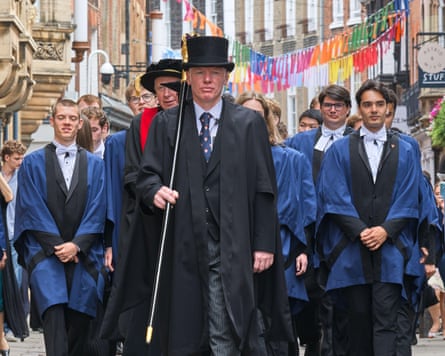
While Arday was in a senior position at Cambridge as the university’s youngest Black professor, he was still in a significant minority. The proportion of Black professors in the UK remains at around 1% of the total cohort. In the last academic year, only 75 of Cambridge’s 6,180 academics across all levels were Black, according to the Higher Education Statistics Authority. The university has serious questions to answer, but can this one case really be taken as a broader comment on the erosion of academic standards in favour of diversity? Arday was a high-profile appointment precisely because he was not the norm. For Black people, the path to academia is not a smooth ride greased by wokeness, but a bumpy one, hampered by persistent under-representation. And crucially, the percentage of Black professors in the UK has remained broadly static over the past few years, indicating that post-Black Lives Matter DEI measures, of which Arday has become symbolic, are actually not changing academia across the board.
2. DEI has taken over the world

Critics of DEI (Diversity, Equity and Inclusion; EDI in the UK) have framed the Arday case as evidence that diversity initiatives have taken over certain elite institutions and white-collar professions. Let’s zoom out a little, and survey what the real world looks like. In the UK civil service, there have been measurable improvements in racial diversity in entry-level roles – but diversity up the ranks remains largely unchanged. Sector statistics suggest that there is a glass ceiling firmly in place for Black civil servants. This glass ceiling also exists in media jobs: a recent survey of broadcast newsrooms found that journalists from all ethnic minorities are still locked out of top jobs. One respondent described their workplace as an “apartheid newsroom … You look left and there’s disproportionately too many people [of colour] because everyone’s on the lower rung. And you look on the other side, it’s like, [almost] everyone’s … white.” In 2015, Black journalists in the UK were “under-represented by a factor of more than 10”, a figure that has barely changed. The story is the same among Britain’s top firms, where Black directors remain under-represented, even as overall ethnic minority representation increases. In addition to this persisting lack of advancement, Black people now have to worry about a growing perception that they are “diversity hires”.
3. DEI is about race (and mostly Black people)
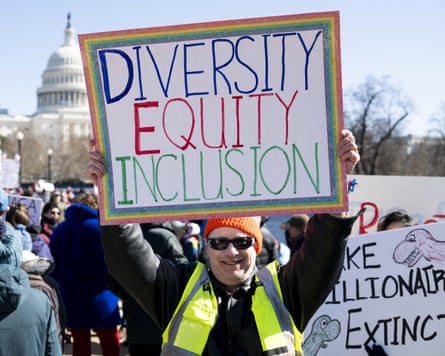
It’s striking just how much “DEI” has become a straight swap – a byword for “Black” in conversations about employment and representation. DEI is also about much more such as disability, class and gender. There is something instructive in how it has become collapsed into race, because it seems that it is only race that triggers outrage – the sense that these minorities are cheating their way in. The Arday case itself proves, rather than negates, the fact that resonant DEI themes go beyond race. One can see how his story weaves in all strands, and would not have been as compelling if it was one of a typical middle class professional. In Cambridge’s own announcement of the appointment, their narrative centred neurodivergence, Arday’s delayed speech, his class. He epitomises, the statement says, “the significant barriers that neurodivergent individuals, those from lower socioeconomic backgrounds, and Black, Asian and Minority Ethnic people face when trying to build careers in the sector”.
4. Black people aren’t critical of DEI
after newsletter promotion
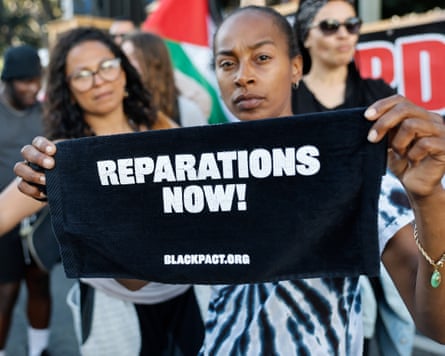
The fallout around Arday has landed in the middle of a fraught and nasty public debate about DEI, which has pushed Black people into a particular rhetorical position. A post-BLM backlash has argued that attempts to redress systemic imbalances against people of colour are not only discriminatory, but unsafe. Donald Trump has legally challenged DEI initiatives in the US by executive order, and has gone so far as to blame air traffic accidents on DEI, due to the alleged lowered hiring standards under his predecessors. These interventions have created an environment in which it is impossible to have reasoned discussions about DEI, and its value, application, flaws and benefits. The Arday case is troubling on its own terms, but it also feeds into an image of a world held hostage by “wokeness”, one that has been amplified by motivated, cynical actors.
But there is a difference between rejecting such hysterical notions and universal denial that there is nothing to see here. Several Black analysts and writers (myself included) have long been critical of DEI. We have warned that a focus on “representation” over material change will do little to genuinely address the harms that Black people face due to their class, employment status, housing, policing and immigration. But it is the right, in politics and the media, that has dictated the terms of the debate.
5. We live in a meritocracy

Public discussion of Arday’s case would have you believe that elite institutions reward skill and aptitude alone. This is fiction. It is a mundane fact of life, for example, that US higher education admissions have a formal preference for “legacy students” who have family ties to a given university. Between 10% and 15% of Ivy League students are legacy, and are favoured in order to promote donations and alumni networks. In 2019 Harvard’s acceptance rate of legacy students was almost five times that of the general rate. These students are overwhelmingly white and wealthy. While things are not codified as such in the UK, one Cambridge student newspaper survey found that more than 27% of its undergraduates had an immediate family member who attended Oxford or Cambridge. One first-generation student recalled being asked in the first week which Cambridge college their parents went to. And the sort of informal networks that mean that a British royal and his sibling – the future king – can gain admission despite not attaining the results required, are evidence that there are systemic biases towards the connected, the rich, and the predominantly white circles from which they come. Yet that is not perceived by the same people scandalised by Arday. The outrage around perceived preferential treatment only seems to extend to certain demographics, which tells us a lot.
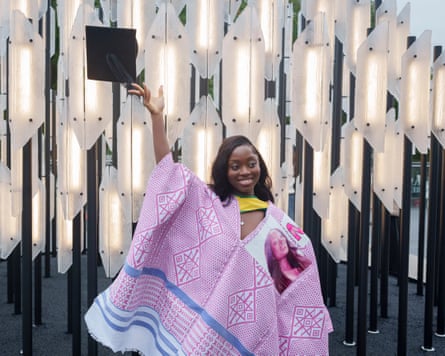
None of this is to say that Arday, and Cambridge, have not failed to live up to the academic standards required for such a role. But so much reality has been warped in the fallout, the story flattened into an account of a world in which Black people and their gullible enablers have created a society plagued by a fixation on identity, to the detriment of quality and fairness. Arday, by all accounts, appeared to tell many untruths. But we should be careful that in our eagerness to draw grand conclusions from his story, we don’t end up concocting another lie.
Tap in
How are you handling the conversation around Jason Arday? Share your thoughts by replying to this, or emailing us at [email protected] and we may include your response in a future issue.