2 months ago
109
2 months ago
109
Unpopular politicians take consolation in the thought that opinion polls are sometimes wrong and often describe the wrong thing. They capture the moment but don’t predict the future. A midterm poll measures how much voters like the government. A general election asks whether the opposition is trusted to take over. It isn’t the same question.
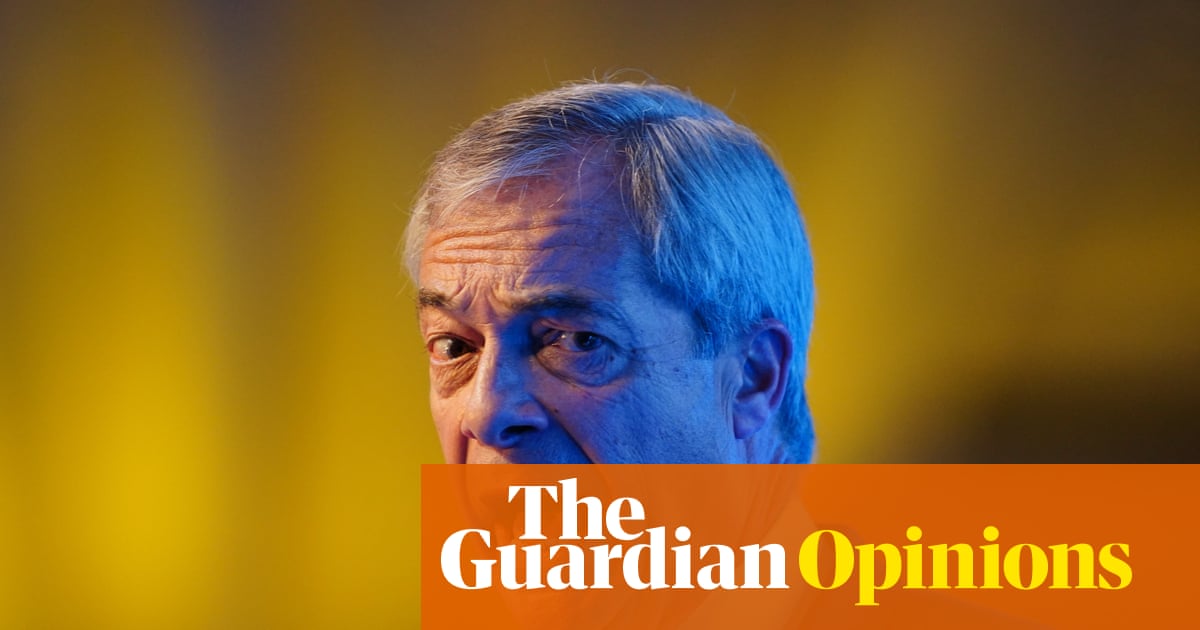
Labour’s hopes for recovery rest on that distinction. The plan is that economic growth and governing competence will boost general wellbeing in the coming years. That will dial up the risks associated with other parties, especially for Reform UK. Voters who lack enthusiasm for the prime minister may be persuaded to stick with him if the alternative is Nigel Farage.
A similar calculation sustains the Conservatives, although in their version, the economy falters. The Tories then hope to surge with a campaign arguing that Labour has overtaxed Britain and misspent the proceeds, and that Reform UK, lacking fiscal or any other discipline, would make matters worse.
These are optimistic but not wildly improbable scenarios. They also have a common bias in the assumption that politics will follow precedent; that beneath the surface volatility flow strong and familiar currents; that the normal way of things is not lost for ever.
For Labour, that assumes continuity of a trend for the ruling parties to regain support when a general election comes around. For the Tories, it is the idea that Britain always turns to them as the accountants of last resort, once Labour has run out of money.
Both are attached to the convention that only two parties are licensed to supply Britain with prime ministers and, whatever polls might show today, Reform UK is not one of them.
Farage recognises that as a cultural barrier to his ambition. It is why he takes such pleasure in parading Conservative converts to his cause. Their function is to cast Reform UK as the new natural party of power on the right. The downside risk is diluting any claim to rupture from the old establishment.
The latest recruit, Nadhim Zahawi, illustrates the dilemma. On one hand, having a former Tory chancellor on board is supposed to signal the seriousness of intent to govern. On the other hand, Zahawi is an opportunist who resigned over tax irregularities and is on record calling Farage a menace to Britain. The Reform leader is betting that he gains more in political momentum from headline-grabbing defections than he loses in brand contamination when the calibre of the defector comes under scrutiny. Sharing stages with every kind of opportunist chancer has never slowed Farage’s progress before.
Meanwhile, Kemi Badenoch’s boosters claim her recent focus on the economy is working. The Tories are polling marginally higher now than a few months ago, but are still shy of the 24% share they managed in July 2024, when they were crushed in a general election. It could be worse. Keir Starmer is struggling to keep Labour’s share out of the high teens and above the Greens.
Strategists in all parties like to complain about Westminster’s unhealthy obsession with polling (while obsessing unhealthily over polls). It is true that surveys don’t tell us anything certain about a general election that isn’t due before 2029. The future is never fixed. Also, Britain’s first-past-the-post electoral system is hopelessly ill-equipped to translate multiparty politics into a rational distribution of parliamentary seats. Once four or five candidates are clustered around the same projected vote share, almost anything could happen.
Two-party politics assumes stable bases of support on the left and on the right, with swing voters migrating across the centre ground. In today’s fragmented and polarised climate, that trade is thinner than traffic within multiparty blocs: a liberal-progressive one and a conservative-nationalist one. Neither is very stable, but they are efficiently delineated by attitudes to Farage. Either you recoil from the thought of him holding the levers of national power, or you don’t.
Labour and Tory leaders assume a historic claim to primacy within their respective coalitions, but that sense of entitlement doesn’t reflect the balance of real-world opinion. Viewed through the lens of local council races so far this parliament, England’s two-party system looks more like a competition between Reform and the Liberal Democrats.
Perhaps it is premature to call the decline of Labour-Tory duopoly terminal. Farage might have peaked. He might be consumed by scandal. Starmer and Kemi Badenoch might be replaced by leaders who give their respective parties new leases of life.
But the possibility that a more permanent, seismic change is under way might also be underpriced by Labour and Tory leaders who have a lot invested in old patterns reasserting themselves. The scale of it is hard to process, psychologically and psephologically. It requires acceptance that their current unpopularity is not just a consequence of dissatisfaction with choices made by the present government and its immediate predecessor, but an expression of doubt that politics in the familiar configuration can deliver anything other than disappointment.
The historic Labour -Tory rivalry is also a kind of mutual dependency. They define themselves as ideological antitheses and so they find it hard to admit shared ownership, in many voters’ minds, of a long historical incumbency. They are joint guardians of the Westminster system that has stopped working for a lot of people since around the time of the 2007-08 financial crisis. That was when average incomes stopped rising in real terms, when conveyors of opportunity stalled and the postwar promise that each generation could have what their parents had and more was broken.
It is unfair to apportion blame equally to both parties when every prime minister from 2010 to 2024 was a Tory. Labour didn’t preside over austerity and Brexit. But it was Starmer’s job, as the first Labour leader to win an election since 2005, to convince people that he had a theory of what had gone wrong in the meantime, and a plan to fix it. His failure to communicate such things is one point on which opinion polls are unambiguous.
Could he turn Labour’s fortunes around? Could Badenoch capitalise on his weakness to put the Tories back in contention? Normal political patterns indicate either is possible. But the pattern of recent politics also suggests that the old normal is exactly what voters do not want.
-
Rafael Behr is a Guardian columnist