2 months ago
103
2 months ago
103
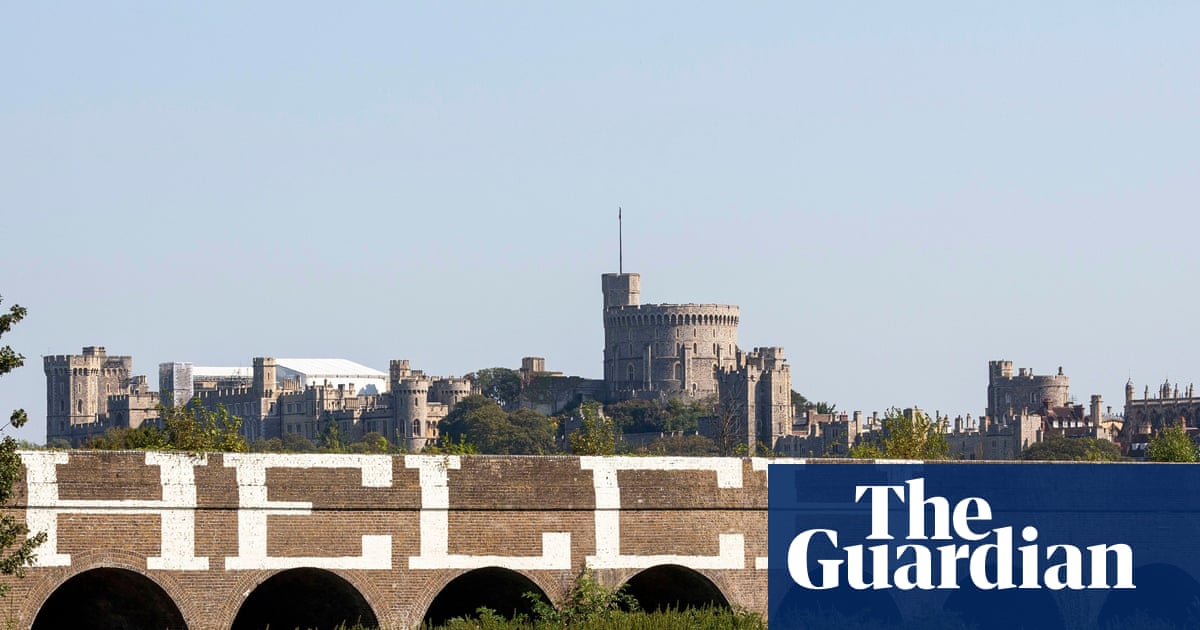
This week Britain and Spain agreed to demolish the border dividing Gibraltar from the Spanish mainland. It was good news. Decades of negotiation came to a happy compromise. Unfortunately the deal will not be celebrated on Sunday in a World Cup final between Spain and England. But is it too much to hope that a similar negotiation might arise from last night’s semi-final, a crushing defeat for England at the hands of Argentina, after which the Falklands-Malvinas issue raised its tired head in the form of a banner on the pitch? Can nothing good follow the generous embrace of Lionel Messi and Harry Kane?
None of Britain’s imperial-era territories have an eternal right to stay as they are, let alone one that costs British taxpayers upwards of £60m a year in defence costs. In the case of the Falklands, its status as an overseas territory has been staunchly defended by successive governments largely as the price of victory in the 1982 Falklands war. In truth, I suspect this has much to do with the fact that the islanders, unlike the abandoned Hongkongers or Diego Garcians, were white British. The war also rescued Margaret Thatcher’s government from unpopularity and covered the then prime minister in glory, unlike later military adventures.
What is forgotten is that prior to the war, British governments were actually negotiating a transfer of the islands’ sovereignty with the Argentinians. This followed a 1971 communications deal reached with Buenos Aires by the Foreign Office. It enabled islanders to trade and travel with the adjacent mainland, making use of its hospitals, shops and other facilities. They even had scholarships at local schools. Hundreds of Argentinians used to visit the Falklands capital Port Stanley as tourists. The islanders were gradually gaining sensible relations with their coastal neighbours, from which a future settlement was expected to arise.
At the time the United Nations was encouraging Europe’s former colonial powers to dispose of the remnants of empire, including the French, Portuguese and Spanish. In the case of Britain they included Hong Kong, Diego Garcia, the Falklands and, it was hoped, Gibraltar. The issue was not historic entitlement – an eternal argument – but geographical common sense. For Britain, it was ridiculous that a European state should fund a grand navy to defend distant and contested lands. Desperate to save money, the government was already withdrawing from the South Atlantic. The Falklands were exposed and undefended.
A Labour Foreign Office minister, Ted Rowlands, duly visited the islands in the late 1970s and discussed extending the communications deal to a leaseback agreement in which Argentina would have sovereignty, with government control remaining in British hands. In 1977, one view was that he had won them over with assurances of continued autonomy and a security guarantee under UN auspices. The Thatcher government of 1979 inherited Rowlands’ proposal. Though the new minister, Nicholas Ridley, lacked Rowlands’ persuasive powers, he was authorised by Thatcher to pursue it.
It was blatantly outrageous for the Argentine military to invade the Falklands in 1982, when their ministers were negotiating with the British in New York. The result inevitably collapsed the talks. But such was their plausibility that efforts by both the US and Peru continued to search for a deal prior to the UK’s South Atlantic taskforce actually landing. Though Argentina might then have settled, Britain was no longer interested. Such was the logic of war, that once started it required a “victory”. A deal could have saved hundreds of lives and billions of pounds.
What the 1982 war did not require was Britain’s total freeze on any future discussion of the islands’ sovereignty for more than 40 years. The 2013 Falklands referendum, in which 99.8% of 1,517 voters chose to endorse status quo, is cited as the end of the discussion. The reality is that these colonies will sooner or later inevitably become part of their continents. They cannot indefinitely be protected by a European patron, and Argentina’s claims are not going away. Without the 1982 war, the Falklands might now have made its peace with its neighbour, Argentina, hopefully under some UN-mandated autonomy.
As it is, the Falklands must continue its existence frozen as an isolated military fortress on the far side of a world from its generous protector, Britain. But sooner or later, a UK government will have the courage to begin negotiations again. As it is, the Foreign Office and defence ministry merely kick the can down the road. It would be gratifying if the Falklands-Malvinas banner waved at a US football match might jolt someone into action. I somehow doubt it.
after newsletter promotion
-
Simon Jenkins is a Guardian columnist
Do you have an opinion on the issues raised in this article? If you would like to submit a response of up to 300 words by email to be considered for publication in our letters section, please click here.