3 months ago
117
3 months ago
117
I close my eyes and picture a boat making its way towards the mainland. Lit only by moonlight, a silhouette walks towards a post box and mails three letters, one by one. Then, the familiar tune of ABBA’s Gimme! Gimme! Gimme! (A Man After Midnight) starts to play, and the musical begins.
Sometimes as a child I had trouble falling asleep. But from age 11 and through my early teenage years, recreating the film Mamma Mia! in my head frame-by-frame was my remedy. Running each line of dialogue through my mind and bringing to life the colour of the characters’ clothes, usually by the time they arrive flustered from their journey, I would drift off.
Almost 20 years after my Mamma Mia!-assisted sleep therapy, I’ve learned not everyone can replay scenes – real or imagined – in such vivid detail. It is a nearly impossible task to objectively describe how one thinks, and how our unique way of thinking may be different to others. But my ability to picture the exact blue of the sea and recite the line delivery was, to me, always clear – and it has a name: hyperphantasia.

Hyperphantasia is a cognitive trait characterised by an abundance of vivid mental imagery. In an area of developing science (the term was only coined a decade ago), those who identify with this experience have an imagination of “lifelike” quality and can create detailed images and scenarios in their minds. It can also extend to multiple senses.
The most common measure of how visual you are is the Vividness of Visual Imagery Questionnaire, which uses a series of questions on the clarity of images when visualising people, settings and objects. But while the test is a generally well regarded measure and leads many people to a self “diagnosis”, researchers are also beginning to look for more objective ways to study the brain’s attempt to generate imagery. The question of exactly how we define “vividness” is still, according to some researchers, relatively underexplored.
I have never been someone who can recall dates and times with autobiographical accuracy. But I have always been able to remember the clothes people wore the first day I met them, and things people have said word-for-word. For those with hyperphantasia, a rich visual world is always at our fingertips, one where we can call to mind the faces of our loved ones down to the wrinkle, imagine the characters in novels we read and play out everything that can go wrong on our commute before we’ve even boarded the bus.
‘I can keep my eyes open and I see it’
Learning I had hyperphantasia began with a fascination with its opposite. For the 1% of the population with aphantasia, there is no mental image, eyes open or closed. The phrase “picture this” exists simply as a metaphor.
The absence of a mind’s eye can manifest in multiple forms, but most often it is multisensory, says Joel Pearson, professor of cognitive neuroscience at the University of New South Wales and director of Future Minds Lab. “You can have full multisensory aphantasia, so you can’t imagine sounds or music or temperatures, touch or taste, or you can have pure visual,” he says.
The same goes for what I – and, by some estimates, 5.9% of the population – have. When a friend described their experience of having no imagery, baffled, I took the test to confirm I had the total opposite. While my own hyperphantasia chiefly means I can always construct a mental image, others find their imagination is also amplified by recall of sound, taste, touch or smell – and sometimes it may even be overwhelming.
Alanna Carlson, a lawyer and executive coach, has always found it difficult to articulate her unusually visual mind. Throughout her life, she has scored highly on assessments which measured spatial reasoning and long term memory storage. But she only found the term hyperphantasia as discussions about neurodivergence proliferated online.
“I always described it as my mind’s eye … but I don’t have to close my eyes. I can keep my eyes open and I see it, but I’m not seeing it in front of me like a hallucination,” she says.
“If I do close my eyes, it’s more vibrant, or I can add more details, one by one.”
Carlson describes her ability to visualise as akin to design software, rotating objects in her brain to see them from all sides and determining their mechanics.
Acting as an “archive” of years-old information and interactions, Carlson has long been relied on for her memory and, before she lost some of her recall after suffering from long Covid, would often question why others couldn’t just “try harder” to remember as much detail as she could.
But for those with hyperphantasia, distancing themselves from memories they’d rather forget can also be taxing. Carlson has experience with post-traumatic stress disorder both in her practice and her personal life and says trauma can be haunting.
Joel Pearson has also seen evidence of this in studying the pupil response to light and dark shapes and in experiments assessing the individual’s emotional reaction to frightening scenarios through skin conductors that measure microsweat response. For those with visual imagery, that response goes up; for those with aphantasia, it flatlines.
A cognition and personality jigsaw
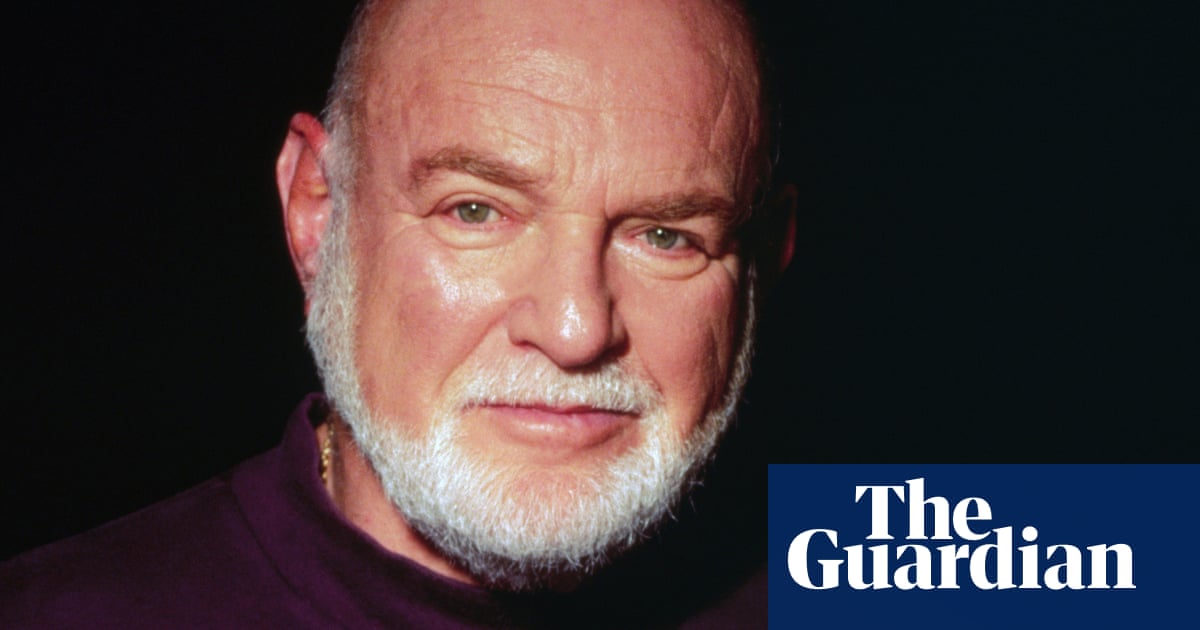
The term aphantasia was coined, alongside hyperphantasia, by Prof Adam Zeman, a British neurologist, in 2015 after he was referred a patient who lost the ability to imagine following a cardiac procedure. When his paper on the case was picked up by and published in Discover magazine, it soon became clear it was not just an anomaly.
“People began getting in touch saying ‘I’m just like your patient, with the difference that I’ve always been that way’,” says Zeman.
Zeman has always been fascinated by the relationship between matter and mind, and in what makes the human mind special. “One quite strong candidate is imagination, in the sense of our capacity to detach ourselves from the here and now, recollect the past, anticipate the future, enter virtual worlds,” he says.
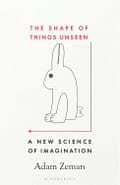
After publishing a book on the science of imagination last year, Zeman is turning his mind to the further study of aphantasia and hyperphantasia.
“You might think that aphantasia would prevent people from thinking and remembering – doing anything much with their minds – and that’s clearly not the case,” he says. “It is just one element in the huge jigsaw of cognition and personality.”
‘Imagine a …’
When Richard Arblaster discovered he had hyperphantasia two years ago, he was eager to find like-minded individuals. His newly formed Facebook group still has fewer than 50 members, but he hopes a community will grow.
Arblaster only realised not everyone could visualise like him following the death of his best friend, describing during grief counselling how he could still imagine him walking through the woods as they did together. Despite the circumstances, and aided by therapy, he sees his hyper-visual abilities as overwhelmingly positive.
“I think it’s comforting,” he says.
“You can go back into the past and be in a setting that has happened. You can also project into the future of what could happen. You can put anybody in any setting at any time.”
Arblaster sees the understanding of visual imagery as full of potential in his work as a piano teacher, recalling learning methods from his own student days.
“When I was at school, my best way of remembering anything was to draw it and so on my bedroom walls, I drew all my history topics on wallpaper … Then in the exam, I recalled the picture and I wrote about what I saw.”
For Zeman, it is our ability to “imagine a” that has always fascinated him.
“I really do think most of us live a lot of our lives in our heads … most of the time, people are more or less daydreaming. We’re in our thoughts.”