4 hours ago
12
4 hours ago
12
Venice is a city of tradition and projection, a place feeding the imagination of millions of people arriving from elsewhere. The “impossible city”, suspended on water, often appears unchanged, fixed in time. Yet, like the water that carries it, the city is in constant, subtle transformation.
-
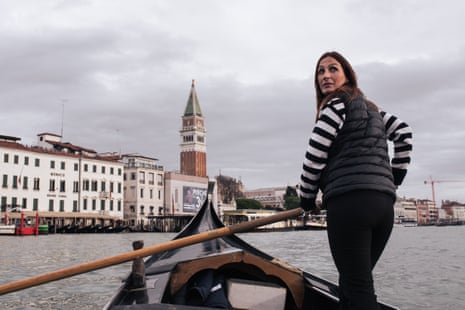
Beatrice, 28, has been working as a gondolier for one year, pictured during a shift operating the traghetto public-ferry gondola that crosses the Grand Canal
We often speak of Venice as if it were immobile. We call it timeless, suspended outside history, untouched by change. But Venice is changing. It is fragile, exposed, under pressure. On one side, rising sea levels and increasingly unpredictable tides are reshaping the lagoon and threatening a delicate equilibrium. On the other, mass tourism continues to transform the city from within. Homes become short-term rentals, local businesses give way to visitor-oriented commerce, and residents leave the historic centre in steadily increasing numbers. The spaces left empty by those who move away are often filled by tourism itself, both a cause and a consequence of this transformation.
-
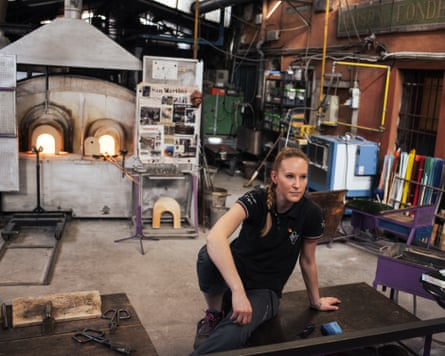
Agnese Tegon, 31, works at a Murano glass furnace alongside her maestro, Giancarlo Signoretto. She aims to become the first female master glassmaker in a field that remains physically demanding and largely male-dominated
Yet beyond the dominant narratives of overtourism and climate breakdown, another, quieter transformation is taking place. Venice lies on contradictions – appearance and structure, illusion and rootedness. One of these tensions emerges in the role of women in shaping the city’s identity. While many Venetian traditions are historically grounded in women’s labour, from lace-making to textile work and other forms of craftsmanship, women have long been excluded from what in Venice constitutes public space: water.
-
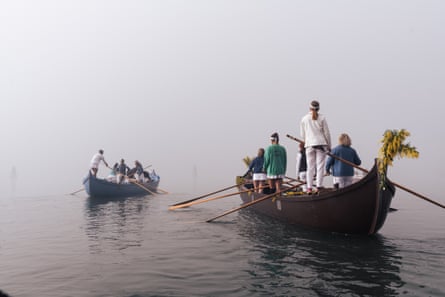
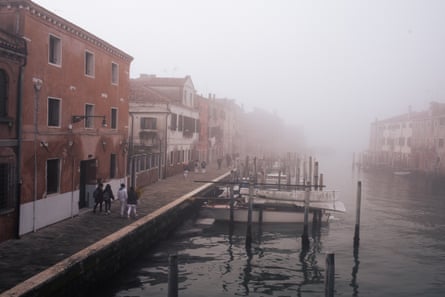
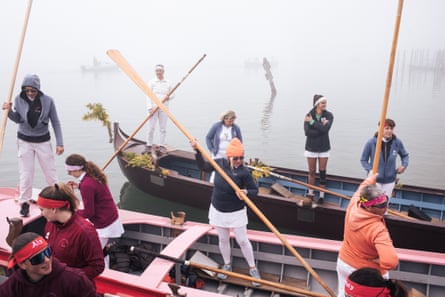
Participants gather along the canal before the Women’s Regata delle Caorline, which was held as a time trial due to heavy fog and safety concerns
-
Above: teams prepare for the Women’s Regata delle Caorline held on 8 March for International Women’s Day. Thirteen teams – made up of professional and amateur rowers of different ages – compete in the 26th edition of the event.
-
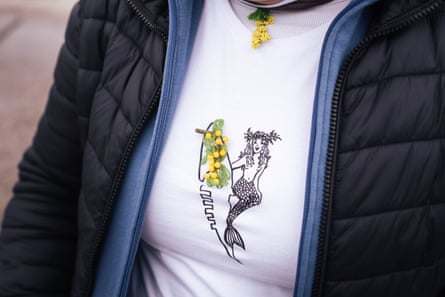
During the regatta, Gabriella wears a brooch shaped like mimosa – the symbol of International Women’s Day – made by Luisa Conventi, one of the last remaining impiraresse (traditional bead stringers)
In Venice, water functions as the street. The city is crossed by about 150 navigable canals, which remain its main routes for movement, work and social exchange. For centuries, these waterways have been spaces governed by explicit rules and implicit codes that largely excluded women. As in many other cities where women have historically been marginalised from the street, in Venice they have been marginalised from the water. From navigating boats, from professions such as gondoliera and sandolista, from boatbuilding and competitive rowing. Today, these boundaries are beginning to shift.
-
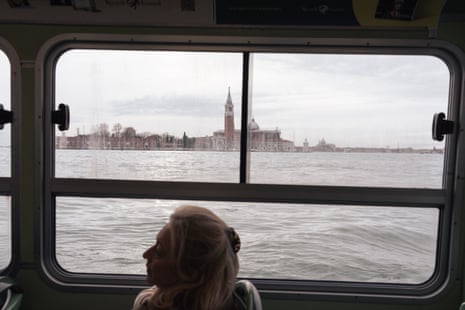
A woman aboard a vaporetto. In Venice, waterways function as streets, and the vaporetto is the city’s public transport system
-
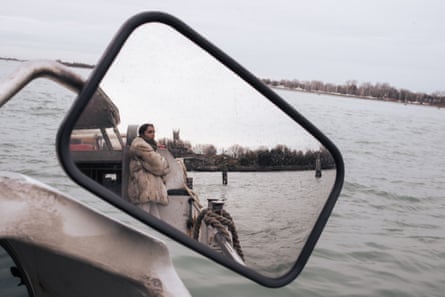
A woman reflected in the rearview mirror of a vaporetto
The journalist Anna Toniolo has lived with Venice her entire life, having been born and raised only a few kilometres from the city. This project grew from years of observing Venice and from a shared awareness, with photographer Daniela Sala, that some of the city’s most vital spaces remain inaccessible to women – not through formal prohibition, but through traditions deeply embedded in everyday life. Between November 2025 and March 2026, they spent weeks documenting the experiences of women whose work and lives are closely connected to the lagoon, through field reporting, interviews and observation, seeking stories that challenge the dominant image of Venice.
-
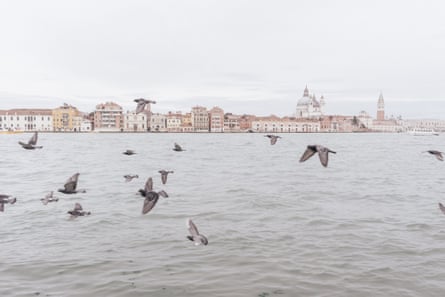
Birds fly over the Giudecca canal
The stories gathered in this project reveal how women are reclaiming space precisely through tradition, carrying forward skills and professions that have long defined Venetian identity while simultaneously reshaping them.
In 2010, Giorgia Boscolo became the first woman to obtain a gondolier licence, breaking a centuries-old barrier and opening the way for others. Today, women practising the profession are still few. According to fellow gondoliers, those actively working can be counted on the fingers of two hands, although more women have passed the qualification exam in recent years. There are about 440 licensed gondoliers in Venice, alongside approximately 200 substitutes – qualified gondoliers who have passed the exam but do not yet hold their own licence.
-
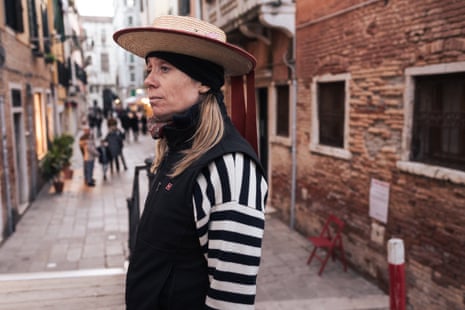
Chiara Curto is the only female sandolista in Venice (about 20 sandoli operate in the city). Smaller than gondolas, sandoli are ancient boats traditionally used by Venetians for everyday transport
A similar profession is that of the sandolista, who rows a sandolo, a traditional flat-bottomed Venetian boat once widely used for everyday transport across the lagoon. Today, there are only about 20 sandolisti left, and just one of them is a woman: Chiara Curto.
-
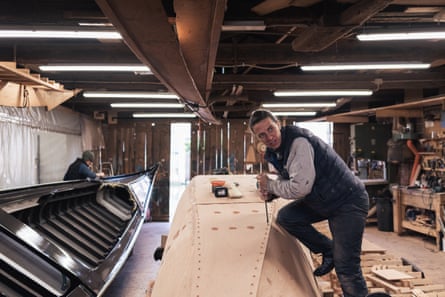
Silvia Scaramuzza – the only female maestra d’ascia in Venice – works on the construction of a gondola. After a decade of apprenticeship at another boatyard, Scaramuzza opened her own workshop with her business partner, Francesco Stenghel, in 2022. A new gondola costs about €30,000–35,000 (£26,000-£30,000), excluding decorations, carvings, upholstery and other custom work

-
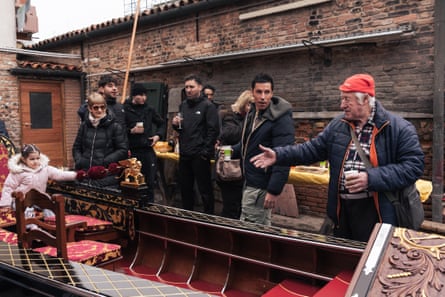
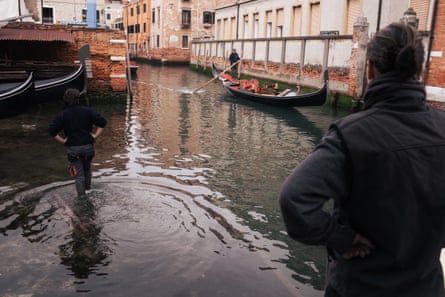
Top left: during the launch celebration of a newly built gondola at Squero Tramontin (where Silvia Scaramuzza works) family and friends gather as a retired gondolier points to Isabella, the two-year-old daughter of the owner, to whom the boat is dedicated. A modern gondola, if well maintained, can last about 30 years. Top right: the launch of Fabio’s gondola: once the boat is placed in the water, Silvia Scaramuzza and her partner Francesco Stenghel check that everything is working perfectly. It takes about two months of work to build a new gondola from scratch. Bottom: a decorative element depicting the Lion of St Mark, ready to be installed on a new gondola
In the city’s remaining squeri – the traditional boatyards where wooden boats are built and repaired – Silvia Scaramuzza is the only female maestra d’ascia, or master boatbuilder. Other women are creating new paths into these spaces.
In 2020, Marta Canino founded “Fie a Manetta”, a name that roughly translates as “Girls at Full Speed”, while also evoking the image of women taking the helm. It is the first, and still the only, motorboat navigation school in Venice run by women and open to everyone.
-
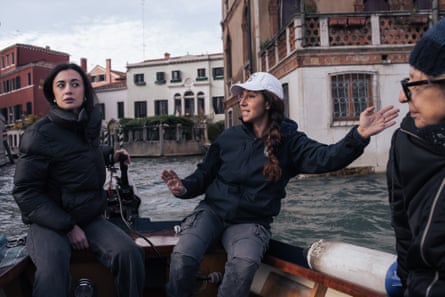
Marta Canino leads a practical boat-driving lesson on the Grand Canal. Through her association Fie a Manetta, she teaches women how to navigate Venice by motorboat
The idea grew from the awareness that navigation remains a predominantly male environment. “Girls, we need to start recognising each other and giving social value and political weight to our role in this city,” Canino said.
Slowly, and often without proclamation, women are entering and inhabiting Venice’s public spaces through practice. Their presence does not simply occupy the water, but begins to redefine it.