3 months ago
170
3 months ago
170
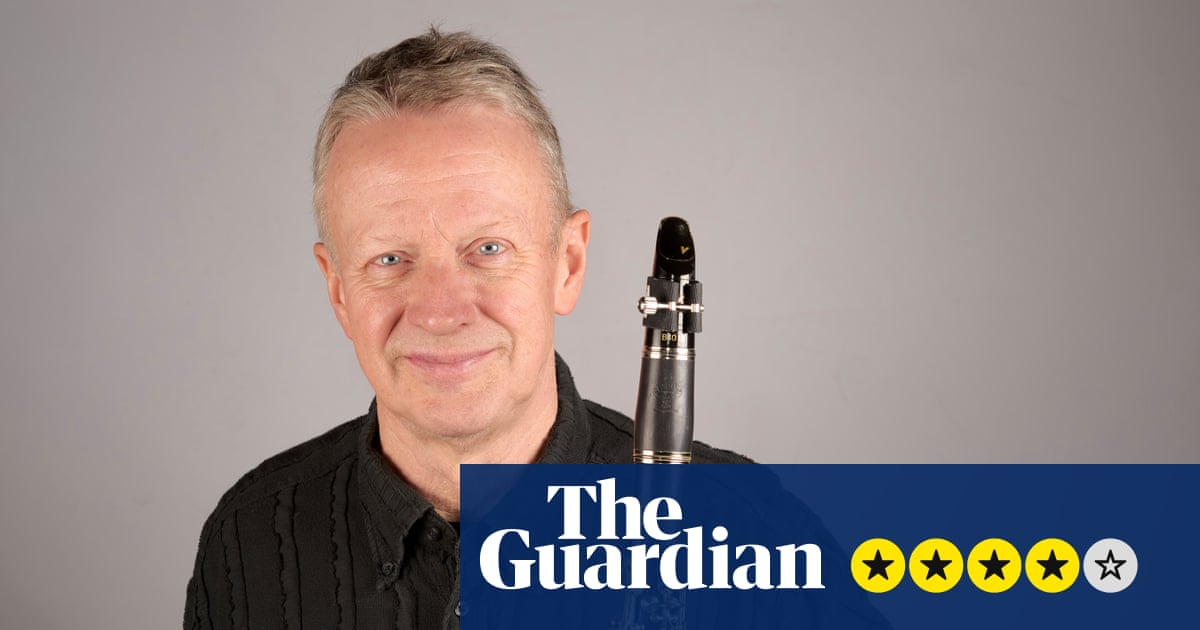
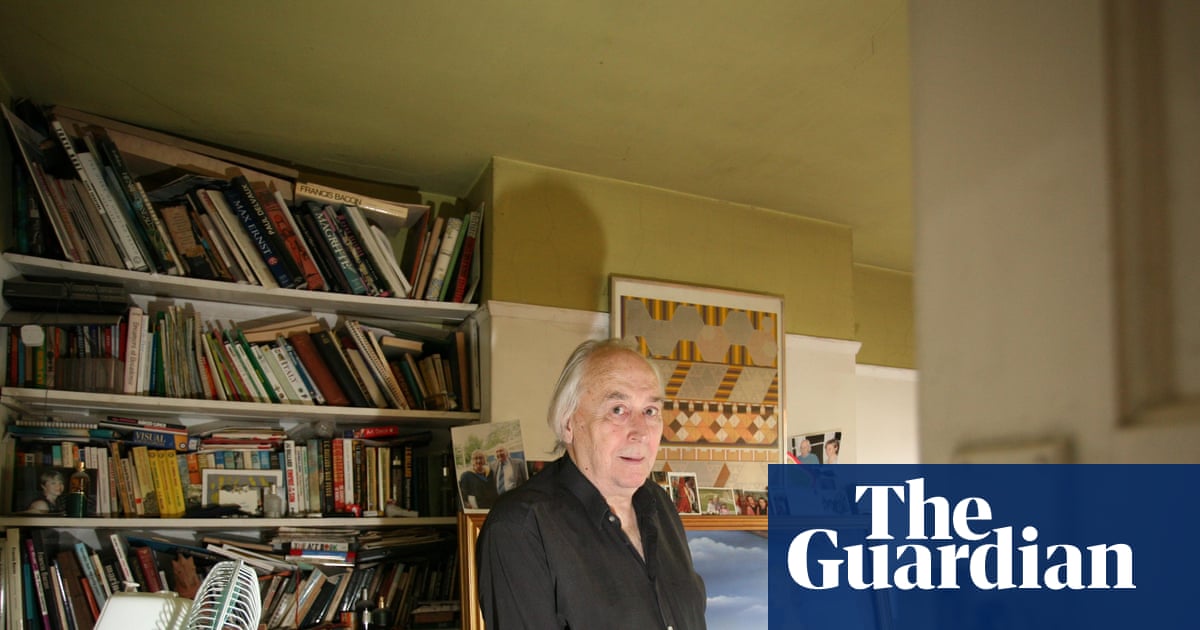
As Ronnie Scott’s Old Place – the original basement club on Gerrard Street in London’s Chinatown – prepared to close its doors for the final time on 25 May 1968, the last musicians to take the stand were the 10 young members of Mike Westbrook’s Concert Band.
Recruited from a variety of backgrounds, they formed the vehicle with which their leader had begun to demonstrate his gift for slotting together elements of jazz from various periods and styles, filtering them all through his own sensibility to produce something thoroughly stirring, definitely contemporary and highly original. A capacity audience had queued all the way from the club’s entrance to Shaftesbury Avenue, and stayed on at the end to applaud the work of a musician on his way to becoming one of the most significant and productive figures in the history of British jazz.
That was just one of the countless memorable moments in the long career of Mike Westbrook, who has died aged 90. While studying in Plymouth in the 1950s, he had begun by assembling a band that called itself a workshop, a designation used by other jazz musicians of the era, particularly those keen to find new ways of negotiating the relationship between composition and improvisation.
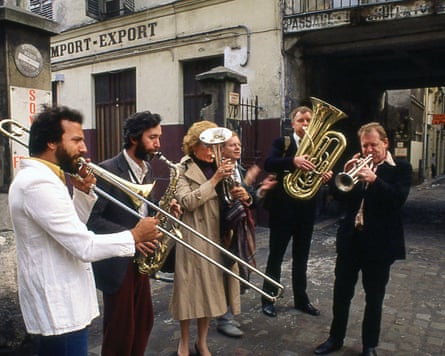
And that, in a sense, became the permanent condition of Westbrook’s music, whether he was performing his settings of William Blake’s poetry, adapting the compositions of Duke Ellington – his first and forever hero – and the songs from the Beatles’ Abbey Road. He collaborated on theatre pieces with John Fox and the Welfare State, led his brass band through the streets of French villages, working with his second wife, the singer and librettist Kate Westbrook, and performed his arrangements of Rossini’s arias and overtures at the Albert Hall in 1992, in the first jazz concert to be incorporated into the main programme of the BBC Proms.
Although he was English, and it was on British stages that he first came to prominence, there was a feeling that Westbrook was more profoundly appreciated elsewhere.
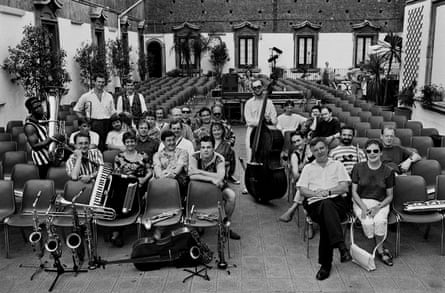
In 1984 two French jazz festivals, in Amiens and Angoulême, jointly commissioned the suite On Duke’s Birthday, his celebration of Ellingtonia. In the summer of 1992, the local jazz association of Catania in Sicily organised a Mike Westbrook music festival, flying in a 25-piece ensemble to perform his music over three days on the terrace of a baroque palazzo. The Rossini arrangements would receive a kind of homecoming in 2022, when performed by his last big band, the Uncommon Orchestra, at the 18th-century Teatro Rossini in Lugo, in the province of Ravenna.
In his final years he occasionally gave intimate solo piano recitals in which, for an unbroken hour, sometimes two, he would range through gospel tunes, folk songs, pop ballads and jazz standards, revealing his inclusive and humanistic view of music.
Gentle reshapings of Mood Indigo, My Way, As Time Goes By, Skylark, Monk’s Mood, She Loves You, Goodbye Pork Pie Hat and You Make Me Feel Brand New would form a continuous tapestry, exposing new shadings and perspectives at every turn, played without irony and from the heart.
Born in the town of High Wycombe, Buckinghamshire, Mike was the son of Philip Westbrook, who worked in banking and was an amateur percussionist, and Vera (nee Butler), a piano teacher. Imbued by them with a love of music and theatre, he was brought up in Torquay and Plymouth and educated at Kelly college, Tavistock.
In his teens he became fascinated by the recordings of Ellington, Louis Armstrong, Jelly Roll Morton and Fats Waller, which provided him with a grounding in jazz tradition that would underpin all his music, even at its most experimental. The trumpet was his first instrument (and later he would occasionally play the tenor horn and tuba in his bands), but he switched to the piano early on, teaching himself to play and to read music.
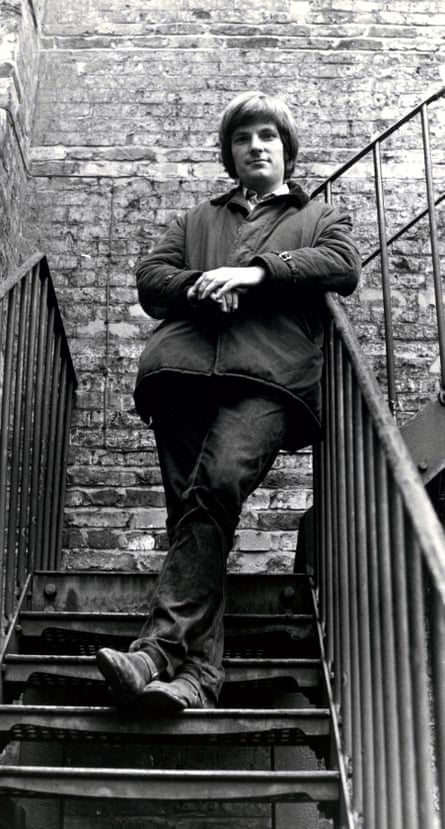
His training in accountancy was interrupted by national service, after which he began studying painting at Plymouth Art College. It was at the town’s arts centre that his first band was assembled: an octet including a young soprano and baritone saxophonist named John Surman, a prodigy who would become Westbrook’s primary featured soloist.
In 1963, having worked for a while as a scenic artist at Westward TV, he moved to London, continuing his studies at Hornsey School of Art. He and Surman were soon joined by the alto saxophonist Mike Osborne, the trombonist Malcolm Griffiths, the bassist Harry Miller and the drummer Alan Jackson, in a sextet that began to attract attention.
When Ronnie Scott, having moved his club to a new location, found himself with 18 months left of a lease on his former premises, he invited Westbrook and his band to take up residence at the Old Place, giving them the chance to build an audience and establish a reputation. On other nights Westbrook would appear with different musicians at the Little Theatre Club in Covent Garden, where he absorbed important new directions in free improvisation.
In these surroundings he could explore and shape the material for the extended pieces that would become the albums Celebration (1967), Release (1968) and Marching Song (1969). All three suites featured expanded versions of the core band, demonstrating Westbrook’s burgeoning artistic ambitions, and were recorded by the producer Peter Eden for Deram, Decca’s “progressive” subsidiary label, at a time when major record companies were still occasionally taking a chance on young jazz musicians.
Yet it would quickly become apparent that Westbrook was not content to inhabit such a limited world or conform to the expectations of its gatekeepers. After an Arts Council grant of £500 enabled him to give up his teaching job and turn professional, and Surman had left to base himself in Belgium, the premiere of a further extended piece, Metropolis, at the Mermaid theatre was followed by a collaboration with John Fox and the Welfare State troupe on an ambitious multimedia work called Earthrise, which received its first performance at the same venue in 1969. The introduction of Blake into Westbrook’s repertoire came about when Adrian Mitchell invited him to contribute the music to Tyger, a celebration of the visionary poet’s work, first performed at the New theatre in 1971.
By now the rhythms and timbres of rock were finding their way into Westbrook’s music, signalled by the presence of the guitarists Chris Spedding, Gary Boyle and Brian Godding, along with voices, at first that of Norma Winstone, on an album titled Love Songs (1970), a suite inspired by the poems of Westbrook’s first wife, Caroline Menis. In 1972 Westbrook’s working band was renamed Solid Gold Cadillac, and recorded two albums for RCA featuring the singer and trumpeter Phil Minton.
Then the group changed shape to become the Brass Band, which toured throughout Europe and occasionally merged with the rock group Henry Cow and the folk singer Frankie Armstrong to form the Orkestra.
In 1974 Westbrook was commissioned by Radio Sweden to write a major piece featuring Surman. He began its outlines while spending time in Leeds, where the painter, singer, composer and librettist Kate Barnard, his future second wife, was teaching at the art college. The title of the composition, Citadel/Room 315, referred to the room in a tower block where Westbrook worked on the piece, which was first performed in Stockholm and then recorded with his British orchestra for RCA.
Kate, whom he married in 1976, became a constant presence, an equal partner in many of their projects, singing their original songs and settings of lyrics from many sources, including the works of Goethe, Lorca, Rimbaud, Masefield and Siegfried Sassoon. She brought a powerful hint of Weimar-era cabaret to such works as Mama Chicago, The Serpent Hit and Art Wolf, dedicated to the 18th-century German landscape painter Caspar Wolf.
As a duo, in 1997 they recorded Love Or Infatuation, an album of songs by Friedrich Hollaender, the film composer who wrote Falling in Love Again for Marlene Dietrich. With the saxophonist Chris Biscoe, the Westbrooks formed a trio that would tour and record for 40 years.
In 1980 Westbrook composed the music for Caught on a Train, a BBC TV drama written by Stephen Poliakoff, starring Peggy Ashcroft and Michael Kitchen. A saxophone concerto for John Harle and the Bournemouth Sinfonietta, titled Bean Rows and Blues Shots, received its premiere in 1992. A concert version of Coming Through Slaughter, his opera based on Michael Ondaatje’s novel about the New Orleans cornetist Buddy Bolden, was performed at the Queen Elizabeth Hall in 1994.
The major orchestral works, some of them incorporating classical musicians alongside Westbrook’s own bands, continued to flow. The Cortège, with Kate and Minton delivering texts in French, Italian, Spanish and German, was first heard at the Bracknell jazz festival in 1979 before evolving during subsequent performances throughout the UK and around Europe.
It was followed by A Young Person’s Guide to the Jazz Orchestra (also titled After Smith’s Hotel), presented at Snape Maltings in 1983, Big Band Rossini, originally commissioned by North German Radio in Hamburg (1986), London Bridge Is Broken Down, a meditation on Europe’s troubled history since the first world war (1987), The Orchestra of Smith’s Academy (1992), and Chanson Irresponsable (2001), commissioned by BBC Radio 3.
A Bigger Show took shape in 2015 with the 22-piece Uncommon Orchestra. Its personnel featured reunions with several early collaborators, including the saxophonist Lou Gare and the trumpeter Dave Holdsworth, alongside some of the musicians the Westbrooks had encountered after they made their home in Dawlish on the Devon coast in 2004.
The much-loved Blake settings were continually revised and extended over a period of 50 years, gathered together under the titles Bright As Fire, Glad Day and The Westbrook Blake for concerts in venues ranging from churches in New York and Moscow to St James’s, Piccadilly, where, in 1757, the poet was baptised. In 2023 they were performed by a group of Norwegian musicians at the Lillehammer jazz festival.
With his final lineup, the seven-piece Band of Bands, Westbrook took part in a private concert for friends in Dawlish on a sunlit May afternoon in 2024. He played only a little, sitting back to listen as Kate, Biscoe and his fellow saxophonist Pete Whyman and the virtuoso accordionist Karen Street were featured in a rendering of music old and new, as ever suffused with the spirits of his great predecessors – Ellington, Charles Mingus, Thelonious Monk – but always clearly the work of a man who brought to his chosen idiom an open-hearted vision based on the principles of social justice, a fondness for barrier-testing adventure and a commitment to the essentially collaborative nature of jazz. A final performance of the Westbrook Blake took place at Blackheath Halls a few days before Christmas 2025.
“Being a jazz musician is for life,” he once said. “There’s no retirement, no pension. And there’s always the lure of the next gig, the next project, which is going to be your best yet.”
He was appointed OBE in 1988.
Kate survives him, as do the two children, Guy and Joanna, of his first marriage, which ended in divorce, and three stepchildren, Josie, Clio and Jason.