7 hours ago
16
7 hours ago
16
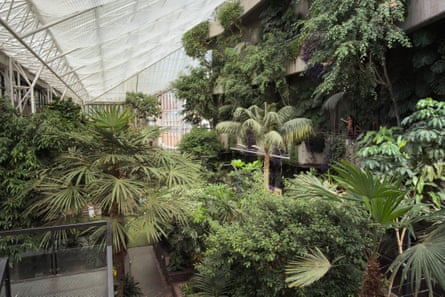
Above the waxy monstera leaves and bright pink hibiscus flowers in the Barbican conservatory hangs a giant net to catch the panes of glass that are at risk of falling from the ceiling on the unwitting plant lovers below.
This precarious situation has caused the estate to shutter its greenhouse on the third and fourth floors for three years so a full refurbishment can take place. But the hiatus has a silver lining for many of those who visited on Wednesday to give the plants from the conservatory a new home.
Five hundred people turned up to pick up a cutting from the Barbican’s plant collection and were asked to fill out an “adoption form” as if they were taking home a pet.
Lydia Goldberg, 56, a tech worker, was one of the first through the door and selected a pretty, silvery-green Swedish ivy plant.
“I am a houseplant lover,” she said. “I live in the Barbican and my bedroom overlooks the conservatory. I am sad to see it close but it’s great that it’s being restored. Having a piece of the conservatory in my flat will be incredible and this is a real community event. I can see quite a few of my neighbours here!”
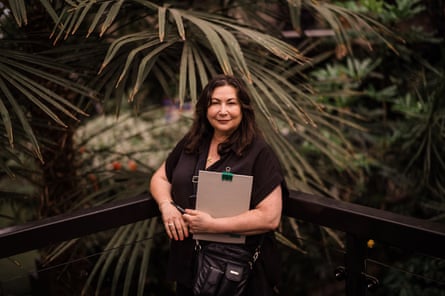
The Swedish ivy is among the plants being sorted by the head gardener, Marta Lowcewicz. She was fizzing with excitement as queues of people began to file in. “There has been a social media storm,” she said. “It is amazing how much interest there has been!”
There are going to be three adoption events, each giving away 500 cuttings from species in the conservatory. The first, held this week, ran out of free online tickets almost immediately.
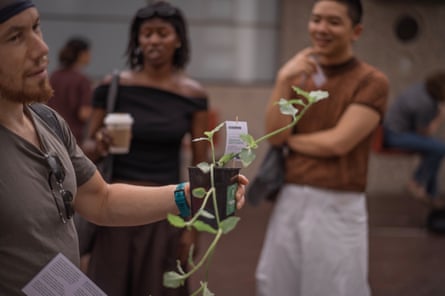
Part of Lowcewicz’s job is to figure out which plants will remain indoors and which will go outside. The climate has changed considerably since the Barbican was built in the 1960s and many indoor plants are now outdoor plants.
“Some of the plants are a bit rough around the edges after the weather we have had,” she said. London has sizzled in five heatwaves and the climate control in the conservatory has not caught up. “When we have new climate control and irrigation systems, the plants will be healthier.”
Lowcewicz will be choosing new plants for the collection, but says “we are looking to retain as many of our plants as possible”. She will select plants that have “big, bold leaves”.
“The architecture of the Barbican is striking and bold so we are trying to make sure the collection fits well with the concrete. We want them to soften it,” she said.
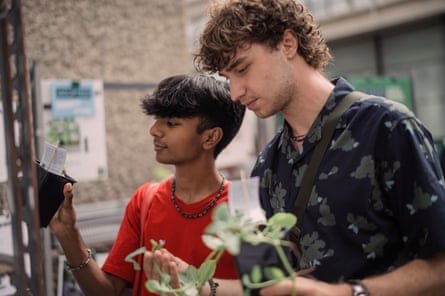
There are plants from all over the world in the conservatory and Geoffrey, a 36-year-old spatial designer, selected one that reminded him of Mexico, where he used to live. “I chose a white velvet plant, I love it. I am a great fan of the building and it is great to take a piece of it home with me.”
Savannah, 33, and Maria, 30, were grinning with delight and holding their cuttings. “I chose the peperomia,” said Savannah, who works with elderly people. “I love the texture of it, it’s very soft. I have a ton of plants, but I love the Barbican so it’s very special to have something from here.”
Maria, an architectural designer, chose the trailing purple heart plant. “I have lots of houseplants but this is my first non-green plant!” she said. “I am having a great time. Everyone here seems very excited, everyone loves plants. I will keep my new plant on my bookshelf.”
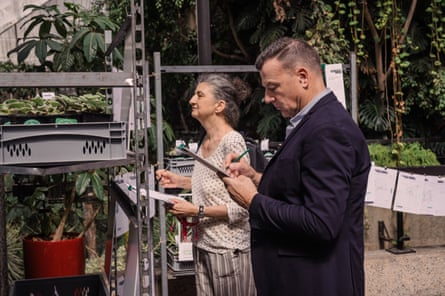
Visitors milled around the brutalist space as they waited to pick up their cuttings. Stella, 88, lives in the Barbican and chose a Benghal dayflower.
“I like it because it has a little secret blue flower,” she said. “I have houseplants everywhere and am meant to be cutting back but, really, how can you resist this?”
Stella has given some of her houseplants that grew too big for her flat to the conservatory, including a giant monstera. “It’s huge, I hope they don’t give it back to me!”
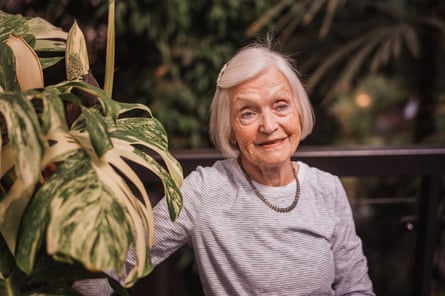
The event was bittersweet, as most people were rueful that the space will be shut for such a long stretch.
Dr Philippa Simpson, the chief operating officer of the Barbican, feels keenly the responsibility of faithfully restoring the conservatory, which means a lot to lovers of brutalist architecture and plants alike.
“It’s a green lung of the city,” she said. “We are undertaking a massive restoration of it because it was in urgent need of rescue. We have nets up to deal with falling glazing, massive waterproofing issues. It is leaking into all of our significant spaces.”
When the conservatory reopens in 2030, it will be fully accessible – as it is not currently, for those with limited mobility – and will be open seven days a week rather than during limited hours.