3 months ago
116
3 months ago
116
Think of a superfood. What comes to mind? Avocado? Turmeric? Quinoa? Many of us will have a grasp of the most mainstream so-called superfoods. The ones that have become dietary superheroes thanks to savvy marketing. Larger-than-life in the public imagination, they walk among us with a sheen: blueberries with their polyphenols; kale and its vitamin K; goji berries and all their antioxidants.
But what is and isn’t a superfood is actually down to trends – take the current resurgence of a previously shunned, tragically uncool food: cottage cheese. Beloved by Richard Nixon with pineapple (the Watergate tapes weren’t just illuminating in the ways Woodward and Bernstein hoped for) and a diet-culture favourite in the 60s and 70s, the creamy, tangy cheese curd concoction is back. And there are other supposed superfoods that are just as nutrient-rich, but that marketing hasn’t (yet) brought to our attention. Once a regular part of the UK diet, they have fallen, perhaps unfairly, out of favour. So which foods with serious nutritional chops have we forgotten? Which should we reintegrate?
Because, as experts point out, there isn’t really any such thing as a superfood – it’s much more about a super diet. “We all want an answer that’s a single thing. Is it fibre? Is it protein? Is it broccoli?” says Josiah Meldrum, co-founder of Suffolk-based pulse specialist Hodmedod’s. “The thing that we miss is that the real superingredient is diversity.”
Peas
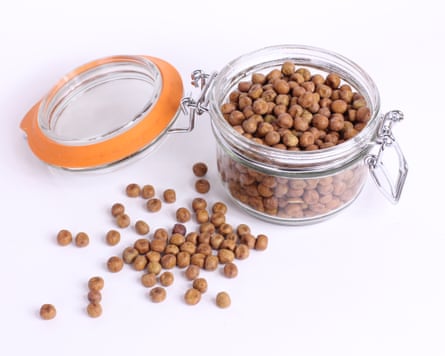
Everyone loves banging on about the benefits of beans, but peas are criminally overlooked. Dried peas in general have “all the same qualities as the beans”, says Meldrum. He’s not talking about the garden, petit pois kind, but varieties such as carlin – “a dark-skinned pea, that was common across the whole of northern Europe” and marrowfat, “a sort of chunky, blocky pea, which is used to make mushy peas”. They have history, too. “They’re one of the first crops to be grown in the UK by the first Neolithic farmers,” says Meldrum. They are, says food historian Annie Gray, “our native pulse … we ate a lot of them, and they’re brilliant.”
Why did their light get hidden under a bushel? It’s complicated, says Meldrum. “Industrialising early meant that we got richer” and therefore had a “diversity of new foods from the late 18th century on”. If you needed to eat something as lowly as peas, you clearly weren’t doing so well, so peas “became stigmatised”. Gray puts it more bluntly: it’s “because they’re associated with poverty”.
More fool our ancestors, though, because, according to Xuxa Milrose, a nutritional therapist at Omni Wellness, carlin peas are “really high in fibre, are a good source of plant-based protein and are really versatile”. According to Bini Suresh, a registered dietitian and British Dietetic Association spokesperson, “given that UK fibre intake remains below the recommended 30g per day, traditional pulses like these are incredibly relevant”. Boil carlin peas and they are, according to Meldrum, “a very nutritious snack”. For marrowfat peas, he says you can treat them much like you might avocado, and put them on toast. “You don’t see them as the hero ingredient anywhere … and they really, really could be.”
Prunes
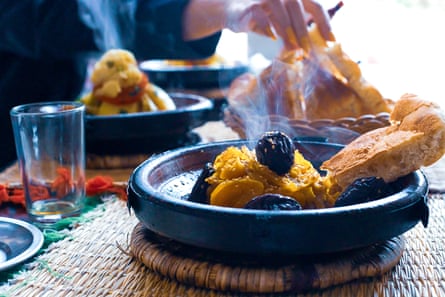
Often dismissed as old-fashioned, prunes were apparently in vogue during Elizabeth I’s reign, while the bacon-wrapped prune canapé, devils on horseback, was a hit in Victorian England. “They’re basically like dates, but with a less sexy PR,” says Milrose. “They’re just as high in fibre, they’re really rich in protective plant compounds called polyphenols and they have a specific type of sugar in them called sorbitol that increases the amount of fluid that your gut absorbs, which helps to soften the stool.”
Still often found in Persian stews or Moroccan tagines, their (unappealing to some) reputation as a natural laxative is perhaps part of why they fell out of favour. But that shouldn’t put you off. They’re also, according to Milrose, “really high in vitamins and minerals like copper, potassium, magnesium, vitamin K … and they don’t have the effect that other sweet things would have in causing the rise of blood sugar so rapidly, because of their sorbitol content and because they’re low in glycemic sugars”.
Plus, according to Suresh, “emerging research, particularly in postmenopausal women, suggests regular prune consumption may help maintain bone mineral density”. Milrose recommends putting them in porridge or, “if, say, you wanted to make your dessert a little bit higher in fibre, you could put them on top of meringues”.
Blackcurrants
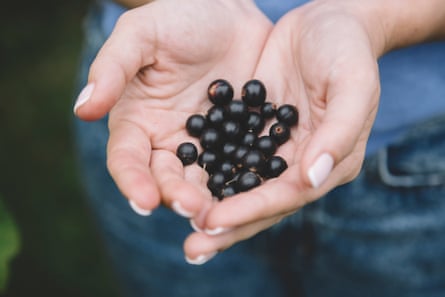
We all reach for oranges when we feel that first throaty twinge of a cold – but Gray would have us also reaching for blackcurrants, which are, she says, much higher in vitamin C. So much so that “during the second world war the government encouraged people to go out and pick them to make cordial”. Even Ribena was, she says, originally co-invented as a health drink by a biochemist and a scientist in Bristol (She notes that now Ribena is “largely artificially flavoured with very, very sweet cordial”). Labelled by the RHS as “tiny little bombs of health and flavour”, according to Milrose, blackcurants are also “full of anthocyanins, which are an antioxidant, known to reduce free radical damage”. Plus they’re “a really good source of potassium”.
Blueberries are one of the recognised superfoods, yet blackcurrants have languished. “People pick and choose which sort of berries to favour, but berries in general are really high in antioxidants, magnesium and they’re good sources of fibre,” says Milrose. For Suresh, “we’ve imported exotic berries for their antioxidant content while overlooking one growing in British hedgerows. There is growing interest in berry polyphenols and vascular health – blackcurrants quietly outperform many imported ‘superfruits’.” Gray thinks one reason they fell out of favour is because “we’ve also lost the taste for sour”. Because they’re not super sweet, “no one’s grabbing a handful of blackcurrants to eat”, says Milrose.
Perhaps it’s time to retrain ourselves and our sour-hating palates. Gray thinks that “everyone should have a blackcurrant bush in their garden … they grow really easily in the British climate … [and] it’s dead easy to make the cordial”. But one note of caution from Suresh: while the whole fruit offers fibre, juice does not.
Quark
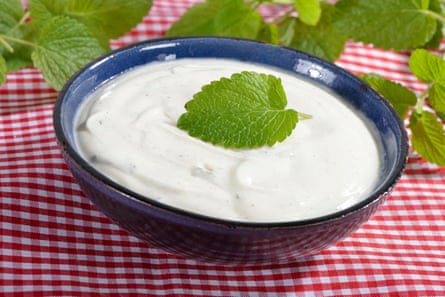
A German word for curd, quark is “a soft, unaged cheese” that, according to Milrose, is not dissimilar to cottage cheese. Yet while cottage cheese has enjoyed a resurgence thanks to it being “so high in protein and low in fat as well as being really versatile”, quark is still out in the cold – in the UK at least – despite being “actually higher in protein and lower in calories than cottage cheese”. According to Suresh, “with increasing awareness of sarcopenia (age-related muscle loss), accessible protein sources like quark are valuable … it delivers high-quality protein without the heaviness of many cheeses”.
Milrose remembers her mum eating it in the 90s. But its history goes back further: many sources say it dates from 14th-century Europe, and it reportedly has some unfortunate associations with the Nazi regime. Still big in the country, according to Mintel, “owing to its long history, the quark category in Germany is significantly more established than in other markets”. But, it adds, “quark has long taken a back seat to the far more active yoghurt sector with regard to the introduction of modern, lifestyle-oriented products”.
As with cottage cheese, quark is a versatile ingredient and can be used in sweet and savoury dishes, from cheesecakes to smoothies and moussakas. Three dishes that, despite sitting nicely in a sentence, should never be served together.
Sprouts
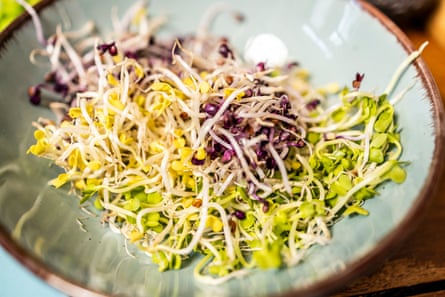
Milrose doesn’t mean the brussels kind, but alfalfa, broccoli and others – “the very young plants that are harvested and then they kind of look like cress”. Sprouts, says Suresh, “are essentially plants at their most concentrated growth phase – small in size, but dense in bioactive compounds”. Broccoli sprouts especially are, says Milrose, “one of the richest sources of glucoraphanin, which your body converts to sulforaphane when you chew”. This, she says, “is a sulphur-rich compound” that’s “really good for helping your body detoxify itself”. As if that wasn’t enough: “It’s really good at helping to lower inflammation as well.”
Sprouts were, she says, “very trendy in the 70s and early 80s when veganism was really having a big resurgence”. Because good vegan food was relatively hard to come by, Milrose thinks vegans got good at growing their own food such as sprouts. More recently, people may have steered away from them because of the well-publicised risks: they are common culprits for food-borne illnesses such as salmonella and E coli. But perhaps it’s time to think again – and learn how to prepare them safely, says Suresh, as well as making sure to source them from reputable suppliers. Milrose would advise eating them raw and on top of salads or avocado (or marrowfat peas!) on toast. But the Food Standards Agency is more cautious: it advises that, as a precaution, they should be cooked thoroughly – until they are piping hot throughout – before eating. As Suresh points out, the risk of bacterial contamination is heightened among certain groups – “particularly for pregnant women, elderly or immunocompromised individuals” – so for anyone falling under those categories they are best left off the menu.
Liver
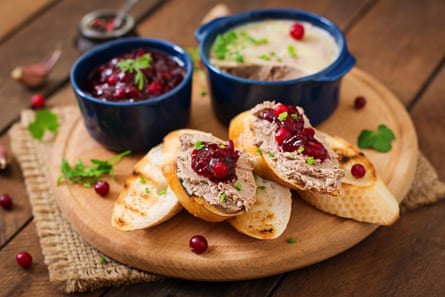
Once a staple of British cooking – “in the 60s and 70s, it was quite popular to eat liver and organ meats,” says Milrose – liver has all but disappeared from many British plates. It is still popular in huge swathes of the world and is often referred to as “nature’s multivitamin”. While Milrose is not supporting or promoting it (she’s an advocate for plant-based eating), liver is, she says, “nutritionally dense – It’s so full of protein and iron and B vitamins, [as well as being] one of the best animal-based sources of vitamin A.” Suresh goes so far as to call it “one of the most nutrient-dense foods available”.
Its iron content in particular is nothing to sniff at. Especially given “iron deficiency remains the most common nutritional deficiency globally,” according to Suresh, “particularly among menstruating women”. Yet, she says, “one of our richest traditional sources has fallen out of favour”. Plus, “haem iron (from animal sources) is more bioavailable than non-haem iron found in plant foods.”
But even the most carnivorous among us will want to consume with restraint. Liver is high in vitamin A, and Milrose cautions that “moderation is key,” to avoid vitamin A toxicity (the NHS advice is to avoid liver entirely during pregnancy). Plus, liver is “ high in purines, which can worsen or trigger gout”. One way to eat it is to make a paté, or in a Lebanese dish like sawdeh, where sumac and pomegranate are used to sweeten chicken livers.
Emmer
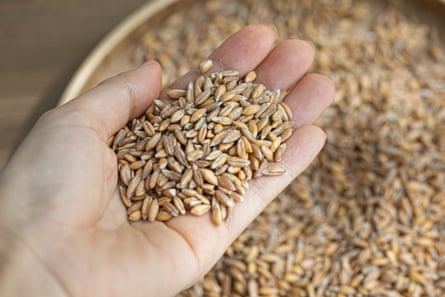
This ancestor of durum wheat is, says Meldrum, “one of the original cereals”. With ancient roots in the near east’s fertile crescent, “it has hung on in parts of Europe where it was traditionally eaten,” because, he says, “it’s very well adapted to quite difficult growing conditions”. Though it lacks a broad fanbase, in the UK, there is “a set of consumers that really recognise emmer as this fantastically nutritious, high-fibre, high-nutrient, high-flavour food”.
According to Meldrum, it is “nutritionally fantastic”. Speaking about wholegrains in general, but emmer in particular, he says: “The seed coat layer, which is generally removed for consumption in white flours and bread,” remains intact. “That is where most of the nutrition, other than carbohydrates, is.”
So why has it fallen out of mainstream use? “It doesn’t respond well to nitrogen fertiliser, so it’s not well suited to conventional farming and there’s been no real pressure from an agribusiness sense to see more of it eaten.”
Emmer is versatile and, with its nutty taste, more flavoursome than rice. You could, says Meldrum, use it as a straightforward substitute for rice, bulgur wheat or couscous. Because while we can easily – in our time-poor, convenience-rich world – fall back on the same old rice day in, day out, eating a wide variety of food is key to this kind of “super-diet”.
And, as Meldrum points out, this kind of diet is actually surprisingly old school: “Historically, our diets would be more diverse than we imagine them to be.” Now we might have “the illusion of abundance and diversity in supermarkets,” he says, alluding to the multitude of fancy packaging on our shelves, “but actually there is a dependence on very, very few species of plant and animal in reality.” Two hundred years ago, he says, “our diets would have been augmented with wild foods and forest foods, which we don’t eat any more.” Perhaps all is not lost – certain of these foods might be forgotten, but they’re not gone.