2 months ago
129
2 months ago
129
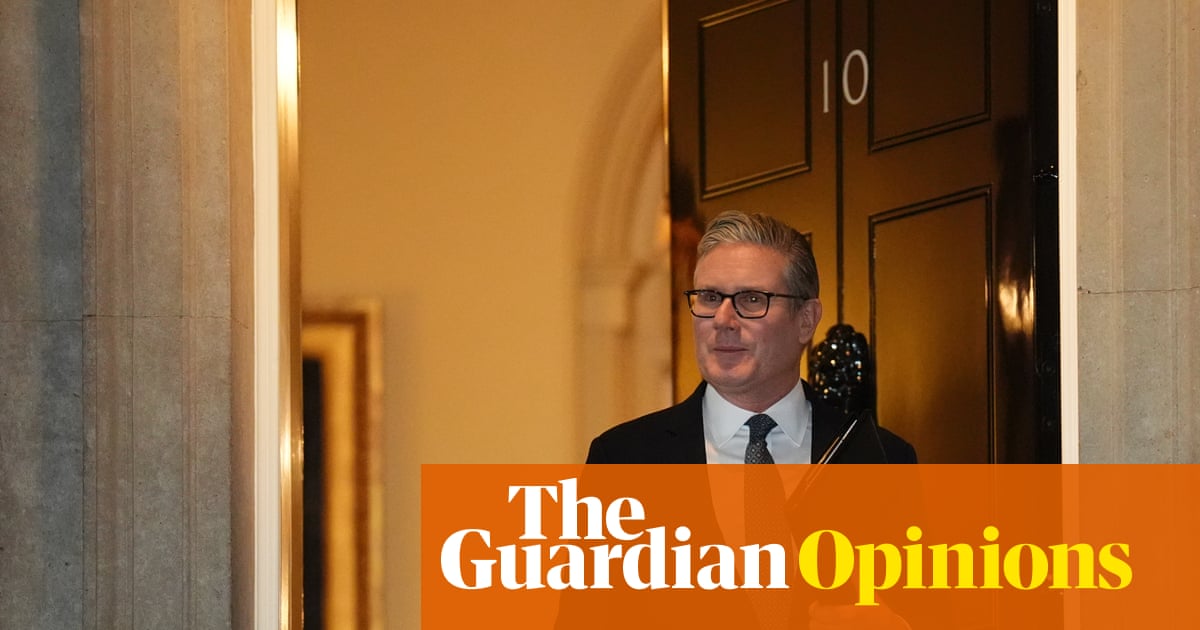
Rachel Reeves has announced that the Treasury will draw up plans to give regional leaders a share of national tax revenues as part of a radical plan to rebalance the English economy.
Setting out her intention to create investment-led growth, the chancellor promised “a genuine break with the past” that would shift spending power away from Westminster.
Reeves was delivering the Mais lecture – the second time she has given the high-profile annual address at Bayes Business School in London.
It is no coincidence that the UK is “the most politically centralised of advanced democracies, and one of the most geographically unequal”, Reeves said.
Treasury officials would bring forward a plan at the autumn budget to allow regional leaders to receive a share of national taxes, starting with income tax, she said.
She also announced new city investment funds worth £2.3bn for England’s regional “metro” mayors to spend on long-term investment projects, adding that they would be able to retain future business rates revenue.
Reeves’s chief economic adviser, Neil Amin-Smith, wrote a research paper while at the Institute for Fiscal Studies that examined the case for the devolution of taxes and suggested income tax was the right place to start.
Reeves called her approach “a permanent transfer of power and resources, not another exercise in local ambition frustrated by central government control”.
Local authorities across the UK have faced a funding squeeze in recent years, and several big councils have been forced into bankruptcy.
The Institute for Public Policy Research thinktank has previously called for mayors to be allowed to retain the additional business rates created by major local infrastructure projects.
Reeves acknowledged that she was giving the hour-long lecture at an “anxious moment”, as the impact of the Iran conflict threatened to harm the global economy, but she vowed to press ahead with Labour’s growth plans.
She said recent events, including the Middle East conflict, had confirmed that, as she had stated in her first Mais lecture two years ago: “Globalisation as we once knew it is dead.”
She conceded that the Iran war was “likely to put upward pressure on inflation” in the coming months but said the UK was in a stronger position than in the run-up to the Ukraine war in 2022, with inflation lower and the public finances improving.
Without mentioning Donald Trump by name, she stressed that “the single best way to protect families and businesses from rising energy prices is a swift end to the conflict in the Middle East”.
Reeves underlined three strategic choices the government was making in its efforts to boost growth: a closer trading relationship with the EU; more support for the “growth corridors” between Oxford and Cambridge and Liverpool and York; and a bet on the benefits of AI.
She said the government would pursue a closer relationship with Brussels, pointing to recent research suggesting that Brexit may have depressed GDP growth by as much as 8%.
“No trade deal with any individual nation can outweigh the importance of our relationship to a bloc with which we share a large border, and with which all supply chains are closely intertwined, and which accounts for almost half of our trade,” she said.
Addressing EU leaders directly, she suggested it would be positive for Europe-wide resilience and supply chains to reduce trade barriers with the UK.
Reeves struck an optimistic note about the economic outlook for the UK despite the looming energy crisis, highlighting the country’s record as the world’s second-largest exporter of services with strong creative, energy and pharmaceuticals sectors.
She also set out plans to change regulation to “shift the balance of power towards workers, consumers, bill-payers and renters”. Her lecture was titled The Active and Strategic State, and restated the approach she calls “securonomics”.
After two controversial tax-raising budgets since Labour came to power, the chancellor acknowledged the frictions, including within her own party, saying the argument for fiscal responsibility “must be fought and won, over and over again, to persuade people”.
In what appeared to be a sideswipe at potential rivals to Keir Starmer tempted to advocate a looser approach, she said: “For anybody who thinks this is the moment to change course, I just say to them: ‘Be very careful about what you are doing and what you are advocating.’”
The Liberal Democrat’s treasury spokesperson, Daisy Cooper, said: “After two anti-growth budgets and a wasted 18 months, this was yet more dither and delay. The obvious answer on economic growth is a new UK-EU customs union, and despite it staring the chancellor in the face she yet again chose to ignore it.”
Reeves also batted aside calls for the Treasury to offer immediate relief to graduates struggling with the burden of student loans.
“Yes, the student loan system is broken. But if you try to fix everything straight away, everything will fall over,” she said, citing “precarious public finances”.
“What is more broken is the fact that we have got one in six kids not in education, employment or training. So yes, we want to fix it, yes, we want to make improvements. But is it front of the queue? No, it’s not.”