5 hours ago
3
5 hours ago
3
The Reform UK leader, Nigel Farage, whose summer has been dominated by the Guardian’s disclosure of a £5m undeclared gift and his connections with a fraudster, emerged on Monday to claim that his party would launch the “largest military operation in the English Channel since world war two” to prevent small boat crossings.
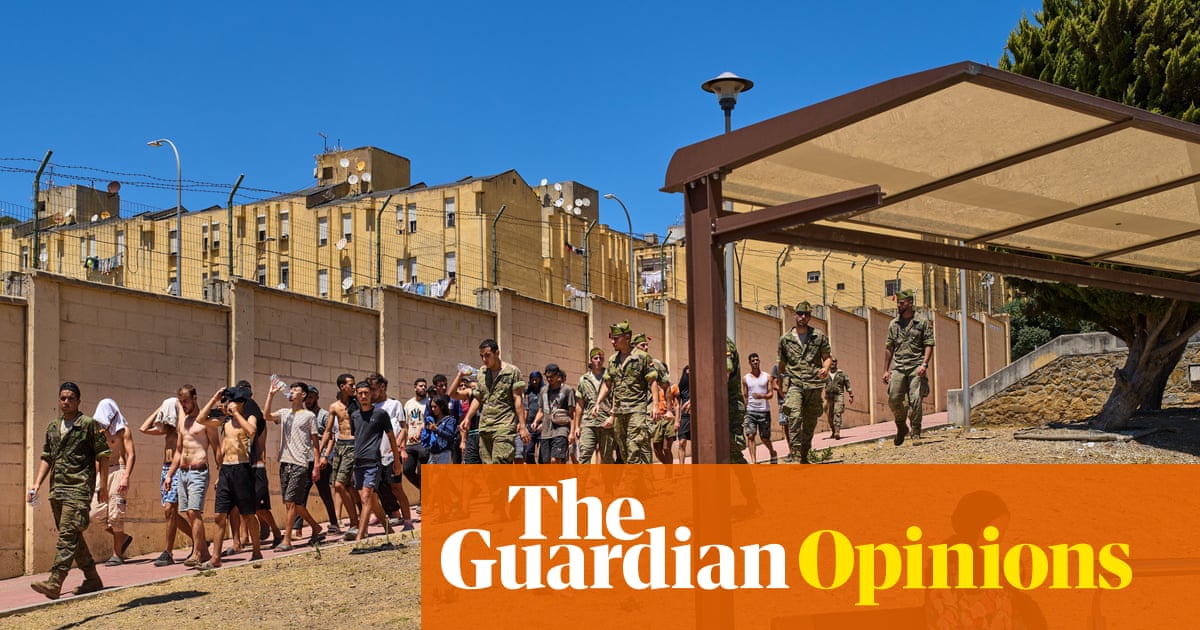
Pointing to unrest at the Spain-Morocco border, he said the Royal Navy would be sent to the Channel to intercept all dinghies carrying asylum seekers should his party win power at the next general election.
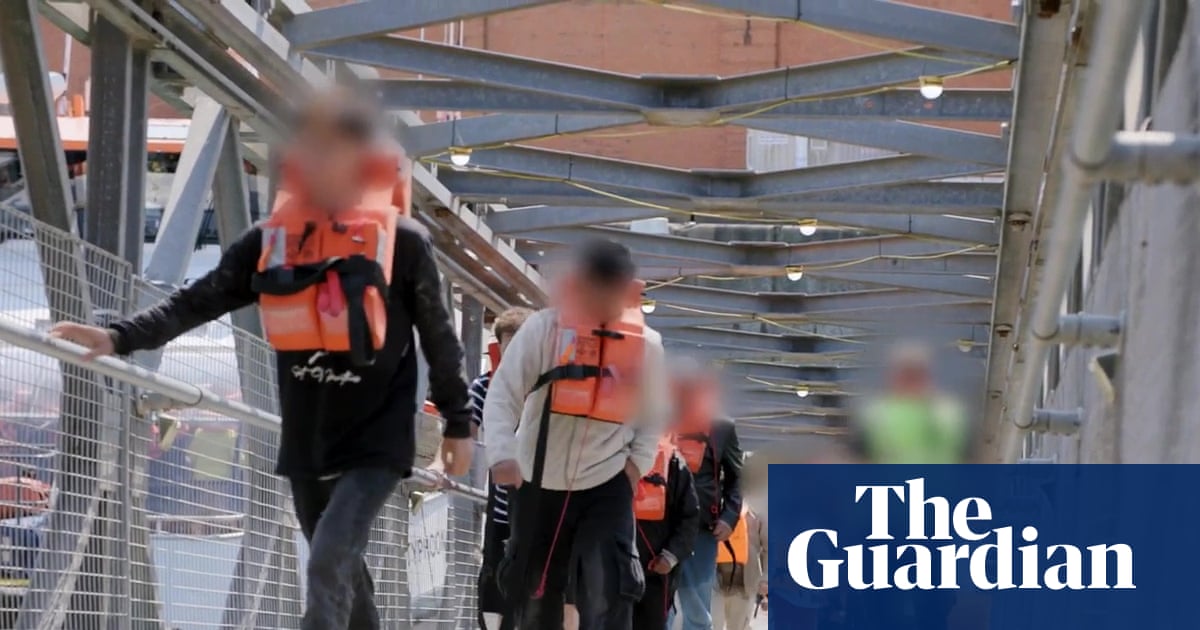
Under so-called Operation Fortress, migrants would be detained and given food and water before being returned “under escort” on naval vessels to France or Belgium. But sceptics have questioned whether the plans would work.
What would the Royal Navy be asked to do?
Reform’s policy document indicates that navy offshore patrol vessels (OPVs), instead of the Border Force’s fleet of five cutters and six patrol ships, would “close on and shadow” dinghies in the Channel.
Three OPVs, each nearly 80 metres (262ft) long, are deployed around the UK, though they are due to be decommissioned in 2028 and may be sold to Uruguay. One, HMS Tyne, is currently shadowing a Russian frigate, the Neustrashimy, in the North Sea with a French corvette.
An alternative, said Tom Sharpe, a former navy commander, would be to deploy a frigate, though he said it would be “an incredible waste of a military asset, to do a Border Force or ferrying job with a specialist warship”.
What does the Royal Navy think?
A master of any ship is taught they have a duty “to render assistance” to any person in danger of being lost at sea, and to proceed “with all possible speed” to those in distress, as spelled out in article 98 of the UN convention on the law on the sea, the foundation of maritime law.
Though each incident will be different, Reform envisages that Royal Marines on inflatables would approach what are often packed dinghies to pick up those onboard – though refugees and migrants may not be compliant as they are likely to fear arrest.
John Foreman, a former navy captain, said: “Mariners are obliged to rescue people at sea in distress and to not create conditions for putting them in distress.”
Has the UK deployed the navy to intercept small boats before?
Yes. In 2022, Boris Johnson’s government launched Operation Isotrope, which the then home secretary, Priti Patel, said would attempt to make crossing the Channel “unviable”.
A tentative plan for “pushbacks” – where ships are used to force small boats to turn around back towards France – was abandoned after concerns from military figures that it would be impractical, dangerous, and leave naval officers open to legal action.
Does Farage say this new plan is different?
Yes. He told reporters: “This is not pushback. We are talking about rescue and return.” He said the French government would be expected to accept the returned asylum seekers, claiming he had spoken to unnamed French politicians about the plans.
“Dealing with this problem would be a great, great relief to the people of northern France,” he added. “Attitudes towards this [in France] are starting to change, and they’re also beginning to realise that we have given them a lot of money and this would in fact, be helping them with their objectives.
“Can I guarantee you that they’ll welcome this with open arms? I can’t, but can I say there is a softening of attitude towards this position? Yes,” Farage said.
If the French government declined to accept the returns, Reform’s home affairs spokesperson, Zia Yusuf, said the marines would return them anyway to the French coast.
What problems do experts in immigration policy envisage with these plans?
Colin Yeo, a leading immigration barrister, said it should be “utterly obvious” that such a move would be a violation of French sovereignty and an illegal act of international aggression.
“No one needs a specific law citing to them to know that invading another country is wrong. But article 2(4) of the UN charter forbids ‘the threat or use of force against the territorial integrity or political independence of any state’,” he said.
Peter Walsh, a senior researcher at Oxford University’s Migration Observatory, said whether or not the plan would work hinged on the French government’s consent and if it would accept the returns.
“If the UK returned asylum seekers to France without its permission, one plausible scenario is that this would have major diplomatic consequences, prompting France to suspend existing cooperation such as intelligence sharing and beach patrols in northern France. It is possible it would attempt to repel the British ships to prevent further returns,” he said.
How has France responded to the proposals?
One French official told the Guardian that such plans would be “unacceptable”. “The [French] government would clearly not expect a key ally such as the UK to infringe on territory or waters without consent,” the official said.