12 hours ago
10
12 hours ago
10
Samsung’s top folding phone for 2026 is its first to carry the “Ultra” moniker in its name, packing a much bigger battery and better cameras into the thin and light body of a book-style foldable.
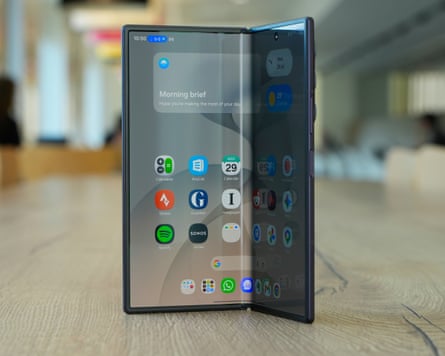
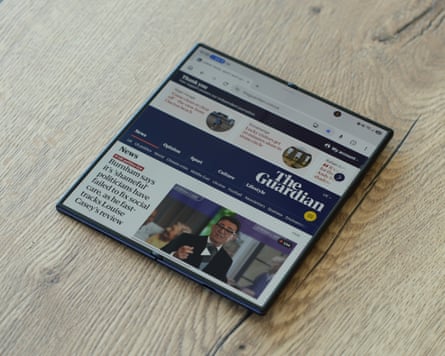
The Galaxy Z Fold 8 Ultra continues from where the exquisite Z Fold 7 left off last year. With its svelte chocolate bar dimensions opening into a square tablet, the Ultra sits above the new passport-shaped Z Fold 8 as Samsung’s top model. Costing £1,899 (€2,199/$2,099.99/A$2,999), it is a lot of money to pay for a phone, regardless of how many other devices it can theoretically replace in your pocket.
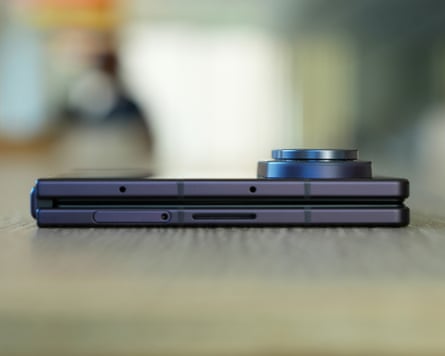
The Ultra sticks with the tried and tested form of its many Z Fold predecessors, and is almost identical to the Fold 7 physically. Weighing 215g and being only 8.9mm thick when closed, it is about the same as a large normal slab phone. The tall and super-bright outside screen makes easy work of phone-type tasks such as messaging, calls and mapping.
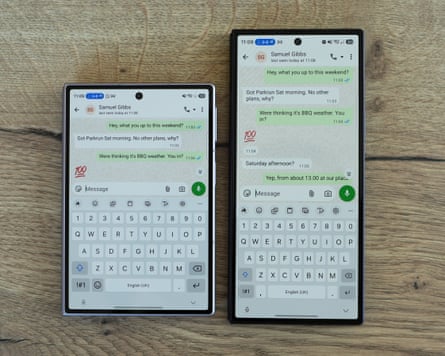
Open up the Ultra like a book to reveal the 8in OLED tablet screen, which is notably crisper and brighter than previous models, with a new anti-reflective coating that makes it easy to see in direct sunlight.
Browsing or reading books is particularly satisfying, while videos look great but have large letterboxing black bars top and bottom. The stereo speakers, when held in landscape, are good for watching TV without headphones.
The crease is less visible where the display folds but is still noticeable when the screen is off or you run your finger over it, and the necessarily softer material picks up fingerprints easily and needs more care than a traditional hardened glass smartphone.
Specifications
-
Main screen: 8in QXGA+ 120Hz (422ppi) Amoled flexible display
-
Cover screen: 6.5in FHD+ 120Hz (422ppi) Amoled
-
Processor: Qualcomm Snapdragon 8 Elite Gen 5 for Galaxy
-
RAM: 12 or 16GB
-
Storage: 256, 512GB or 1TB
-
Operating system: One UI 9 based on Android 17
-
Camera: 200+50+10MP rear with 3x telephoto; 10MP+10MP selfie cameras
-
Connectivity: 5G, dual sim, esim, USB-C, wifi 7, NFC, Bluetooth 6, UWB, GNSS
-
Water resistance: IP48 (1.5 metres for 30 minutes)
-
Dimensions folded: 158.4 x 72.8 x 8.9mm
-
Dimensions unfolded: 158.4 x 143.2 x 4.1mm
-
Weight: 215g
Two-day battery life and plenty of power for multitasking
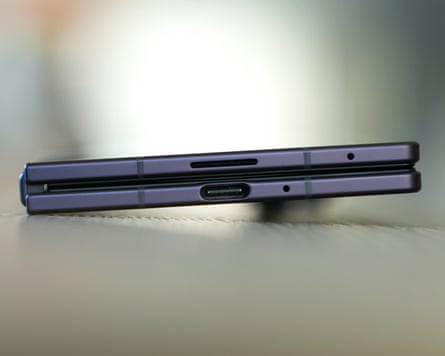
The Ultra has two meaningful upgrades on the inside. The latest Qualcomm Snapdragon 8 Elite Gen 5 chip has plenty of power for multitasking and demanding tasks, while a 13.6% larger capacity battery powers the phone through about two days of use. That is with the screens used for more than four hours each across a mix of wifi and 5G for browsing, messaging, taking notes, work and shooting photos, matching some of the longest-lasting folders available.
Gaming and more intensive tasks hit the battery harder, but most people will only need to charge the Ultra every other day.
One UI 9 (Android 17)
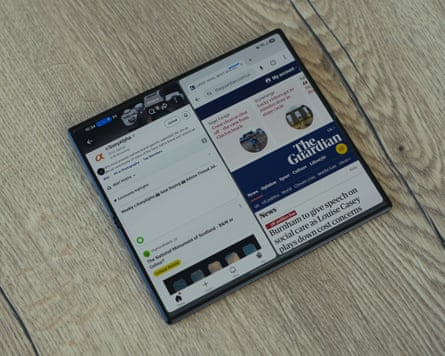
The Ultra runs the same One UI 9 software built on the latest Android 17 as the Fold 8. It is the best available for folding screens, allowing you to do more with the form while remaining a polished, customisable and refined experience.
The Ultra can run up to three apps in a split-screen grid at once, plus more as floating windows, which can be handy for messaging while watching videos. Flex mode pushes the app or video to the top half of the screen when partly folded like a tiny laptop. You can have separate home screens for the phone and tablet displays, and choose whether or not to continue using apps on the outside when you shut the phone.
The Now Bar works great for putting live scores, music controls and other ongoing tasks on the bottom of the lock screen or in the status bar. The Ultra also has some of the better AI tools available, including Google’s Gemini and a proactive suggestion tool called Now Nudge from the S26, which has been expanded for One UI 9.
The Ultra will receive Android and security updates until 31 July 2033.
Camera
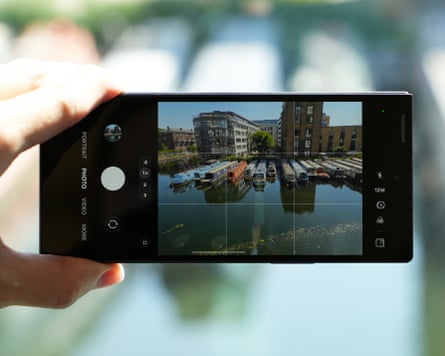
The Ultra has five cameras: a 10-megapixel selfie camera in each screen that is great for video calls; and three cameras on the back.
The main 200MP rear camera is little changed from last year’s model and remains the best of the bunch, capable of shooting fantastic photos across a range of lighting conditions. By default it captures photos at 12MP but can shoot at 50MP or the full 200MP with a quick tap of button. It also manages a very good 2x crop zoom for a bit of magnification.
The new 50MP ultra-wide camera is a big improvement on previous models, capturing brighter, more detailed photos, particularly in lower light settings. It also handles macrophotography well, producing excellent, highly detailed closeup shots.
The 10MP 3x telephoto camera is the weakest of the bunch. It can shoot good photos with a bit of work, but it falls far short of modern rivals on zoom and quality, particularly with indoor lighting. Digital zoom takes over for further magnification up to 30x, which starts to fall apart beyond 10x.
The cameras shoot great video, too, with a range of modes available including the impressive horizontal lock stabilisation feature from the S26 Ultra.
Sustainability
The battery has an expected lifespan of at least 1,200 full-charge cycles with at least 80% of its original capacity. The phone is generally repairable. Inside screen repairs cost about £600. Samsung offers a self-repair programme, as well as Care+ accidental damage insurance that reduces the cost of repairs to £50.
The Fold 8 is made from 14.4% recycled materials by weight. Samsung offers trade-in and recycling schemes for old devices, and publishes environmental impact in its reports.
Price
The Samsung Galaxy Z Fold 8 Ultra costs from £1,899 (€2,199/$2,099.99/A$2,999).
For comparison, the Galaxy Z Fold 8 costs £1,699, the S26 Ultra costs £1,279, the Honor Magic V6 costs £1,999.99 and the Google Pixel 10 Pro Fold costs £1,299.
Verdict
The Galaxy Z Fold 8 Ultra is the best folding phone available. It is not a radical upgrade on last year’s excellent Z Fold 7 and does not really deserve the “Ultra” branding, but the longer, two-day battery life is very welcome.
The form factor is great: easy to use as a regular phone when closed, plus an 8in internal screen that is brighter, crisper and much easier to use outdoors than before. The square tablet screen is great for multitasking, browsing and apps while being big enough to make watching video a good experience despite needing large letterboxing black bars.
The triple camera on the back is generally capable and does not feel like a large downgrade from normal flagship phones, even if the 3x telephoto camera is a bit weak. The Ultra has the top Android processor from Qualcomm with plenty of performance for anything you would want to do.
While you can get similar performance and battery life with better cameras and a less visible crease from some rivals, the Fold Ultra’s excellent, adaptable software is simply better and will be kept up to date until at least 31 July 2033.
Samsung has given wealthy buyers a choice of shape for its book-style foldable phones this year, but while the squatter Fold 8 seems better for video on paper, the Fold 8 Ultra is the one to get.
Pros: super thin and light, just like a regular phone when closed, great tablet screen, powerful multitasking with top performance, two-day battery life, water resistance, good set of cameras.
Cons: extremely expensive, no dust resistance, more fragile than a regular device and costly to repair, weak zoom camera compared with the very best normal phones, not a big upgrade on last year’s Z Fold 7.