2 months ago
74
2 months ago
74
Dino J Martins has never been able to resist the small things. The renowned entomologist and evolutionary biologist spent his formative years in biodiversity-rich western Kenya with his foster parents, Joe and Sarah Ellen, looking at birds, flowers and insects on Mt Elgon, and in Kakamega forest and Kerio valley.
He was especially transfixed by the miniature world beneath his feet – dung beetles rolling mounds of cattle dung; safari ants’ migrations across the plains; male butterflies that suck salt and other nutrients from the mud to produce “nuptial gifts” during mating; and bees pollinating the critically endangered African violet alongside crops in a farmer’s field.
“We had no television, so I learned to look at the creatures around me. Insects were the easiest to find,” says Martins.
The Royal Entomological Society estimates there are 1.4 billion insects for every person on Earth, making up to 90% of all animal species and more than half of all living things. “Throughout our lives, we are never more than a couple of feet from an insect, yet we ignore them,” Martins says. “From the food we eat to the ecosystems we depend on, insects and other invertebrates play essential roles, most of which we overlook or fail to appreciate.”
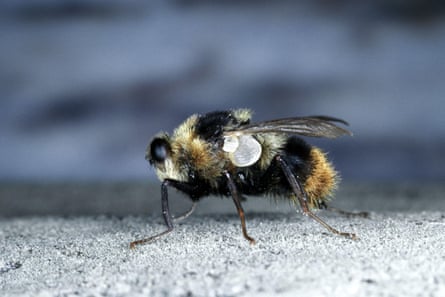
His early obsession with “dudus” (the Swahili word for insects) morphed into a scientific calling that peered deeper into the intimate lives of the world’s most overlooked architects.
Martins, who chairs the insect committee of Nature Kenya and is a research professor at Stony Brook University in New York, documented the bugs’ lives in his books, including Insects of East Africa, Butterflies of East Africa and, Our Friends the Pollinators: a Handbook of Pollinator Diversity and Conservation in East Africa.
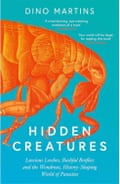
For his latest book, Martins has embarked on a journey to document the lives of much-maligned parasites. Having once described writing the book as a “crazy idea” before Aminatta Forna, the British-Sierra Leonean writer, “encouraged and revived” him, Hidden Creatures: Luscious Leeches, Bashful Botflies and the Wondrous, History-Shaping World of Parasites, published this month, is based on his personal encounters with parasites in east Africa and farther afield – in New York, the Borneo rainforests and the parks of London.
Martins, who studied anthropology at Indiana University and for a doctorate in biology at Harvard, cites a case where, as a child, he raised caterpillars only to discover that one had been parasitised by wasps. They laid their eggs in the caterpillar’s body, developed and fed on the caterpillar (which was still alive) and emerged from it by bursting through its skin to form their own cocoons.
“This made such an impression on me as a young child,” says Martins, who describes parasites with the same curiosity and empathy he reserves for pollinators and butterflies and says that to understand ecosystems, we must first understand the creatures that quietly hold them together. “No ecosystem or habitat exists without parasites. Their presence is an indicator of a healthy, complex biodiversity, even if we might be alarmed by their presence.”
In a world where parasites are often cast as villains, Martins argues they are central to the story of biodiversity and extinction. As humans develop better tools with which to understand them and their life-cycles, a deeper, more complex picture of nature emerges, teaching us many lessons about past relationships between different creatures, including how organisms evolved.
“Parasites are central to the story of biodiversity … affecting all living things directly or indirectly,” he says, adding that their ability to move between different hosts, overcome or hijack a host’s immune system or physiology, offers insights into how those same systems might be understood, or manipulated towards novel therapies or treatments.
When some species become extinct (such as the dodo) humans lose the ability to understand some of the most complex, intimate relationships in nature. Practical lessons in biology and conservation vanish too when parasites that were once hosted by such creatures disappear. Perhaps, Martins argues, we may never truly understand how a “parasite became a parasite” and how frequent, or rare, host-switching might be.
“Some day we may need the lessons from these parasites to survive greater challenges or emerging pathogens,” he says. “I strongly feel that we don’t have a ‘right’ as one species to wilfully oversee the extinction of another. Are we creating conditions where host-switching might become more common? This has ramifications for our own health and that of endangered species.”
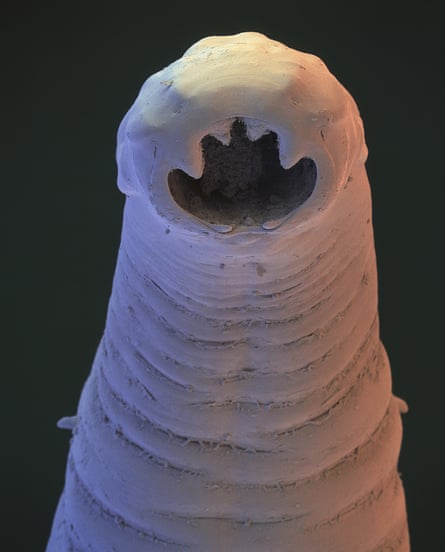
In Hidden Creatures, Martins writes that one in three people serve “as unwitting hosts to some kind of parasitic nematode at any given time”, including hookworms “that have sex frequently and vigorously” in our intestines. He suggests that some exposure to parasites can actually strengthen immunity despite our modern obsession with sterilisation and “clean living”, and that completely removing these biological creatures from our lives can have consequences “we are only just beginning to understand”.
“Parasites do cause a lot of harm and suffering and there is no question that our attempts to control them through the ages have saved many lives and livelihoods. However, some scientists are starting to think of parasites as just one part of our microbiome which has many roles to play in all aspects of our health,” he says.
Martins argues that the global shift in diets has created opportunities for the increase and spread of certain parasites, revealing a direct intersection between food systems and human health. For example, fish-farming, which has become an important source of protein for many people, is also creating unnatural densities of fish where parasites can thrive, while raising livestock in increasingly crowded conditions transports the parasite-laden effluents into water systems, leading to the rise of antibiotic resistance.
Yet, according to Martins, any human interventions will always be subject to the laws of natural selection, where humans kill lots of bugs with toxic chemicals, but will not kill all of them. “Some will survive and increase due to natural resistance, while using chemicals indiscriminately will end up making the problem worse,” he says.
His theory explains why human efforts to eradicate common parasites such as hookworms have been futile despite the use of preventive deworming drugs such as albendazole, since such drugs do not prevent reinfection when individuals are exposed to contaminated soil. There are no approved vaccines available for hookworms in humans but several promising candidates are in clinical trials, notably one developed by the Sabin Vaccine Institute.
But any vaccines, argues Martins, “will still be subject to evolutionary processes” and some hookworms will probably evolve ways to escape the vaccine, sustaining “a long-term arms race between humans and hookworms”.
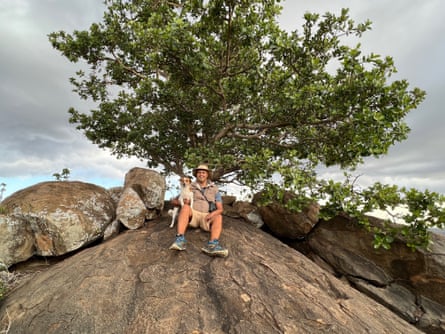
The 2015 Whitley gold award winner hopes Hidden Creatures will be of interest to members of nature-oriented societies and students of conservation, biology and medicine who want to explore the link between ecosystems and our own health, looking beneath the surface to the complex, beautiful world that we are part of.
“I try to present the natural history of the parasites as it is,” he says. “Even the most disgusting have some of the most incredible adaptations and abilities.”