3 months ago
162
3 months ago
162
When it comes to funerals, we tend to cling to the solemn and the tasteful. We hate to think about death, so we cordon it off from all recognisable signs of life – particularly warmth and comedy. Enter Butterflies Rising Funeral Care, the subject of new Channel 4 documentary The Fabulous Funeral Parlour, which is shaking things up.
Our introduction to this funeral home, founded by Liverpudlian Hayley McCaughran, is seeing a casket with a gold plaque that reads “FUCK OFF”. McCaughran tells us that when making nameplates they always ask families whether the deceased had a favourite saying: “We don’t do it a traditional way.”
Telling us the story of the funeral home itself, and following a few families’ experiences, The Fabulous Funeral Parlour tries to make us feel something new about the most universal experience there is. And it succeeds – there are numerous moments when I think: “How did they come up with that?” or laugh guiltily, wondering if something is inappropriate.
With pillarbox red curls and full beat makeup, McCaughran potters around the spa-like funeral home chatting to the bodies. “Morning, sir. How are we today? Still looking good, aren’t we?” she says to one man, splashing him with aftershave before a family visit. “Your tea’s on the side,” she tells another deceased person as she slips out of the room. “Just because they’re asleep it doesn’t mean that they don’t deserve the same respect as you or I.”
Of the families’ journeys with Butterflies Rising, the most live (quite literally) is Marion’s. She has just weeks to live, due to kidney failure, and wants to plan her own funeral to take the pressure off her young daughters. She reels off a list of things she wants for her last hurrah: a singer, a disco, a rave. You wonder how Marion keeps such a sense of humour at a time like this – she and her family joke that she’s a “real-life Barbie girl” – because she’s had an operation called an abdominoperineal resection “where they sew your bottom up”.
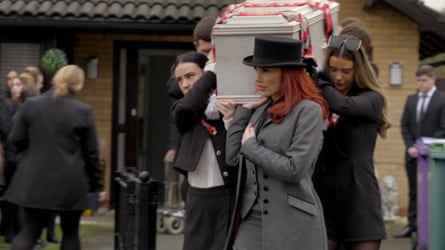
The parlour reminds us how important aesthetics are to so many of us in life. They take presentation very seriously – it’s not all blue eyeshadow and blush. Marion has come in with her makeup done so the funeral directors can see how she likes to present herself; the only thing she can’t do is cat’s-eye liquid eyeliner, but she’d like to have it at the funeral. McCaughran’s own glamour gives you the sense that Marion is in safe hands. In another instance, funeral co-director Neil Irons explains the importance of one client having his fleece zipped three-quarters of the way up.
The documentary’s lightness and camp are punctuated with tears, and it does a good job with the heavy lifting of conveying grief. McCaughran has her own reasons for coming to this work: her mother died of cancer at the age of 59. At the time McCaughran was a botox and filler technician and felt it was too late to retrain as a doctor or nurse. Instead she went into the funeral business. She claims she never properly grieved, which certainly comes up when she cries with Marion’s daughters: “It’s your mum – you only get one of them.”
One family is grappling with intense shock after the death of Margie, who was found dead in her home. She had struggled repeatedly to get sober from alcohol and died during a final relapse. Her daughter Mel never got to say goodbye, and we watch her go round and round in the recognisable circles in which grief tends to take you: “It’s not real; it can’t be real.” In another kind of documentary, these moments could easily feel voyeuristic or hammy – but Mel and all the families who appear are given the space for both vulnerability and dignity.
The Fabulous Funeral Parlour feels very Liverpudlian in the wit, strength and glam of its subjects. However, Liverpool and the cultural context that has produced such a unique business are rarely mentioned. Perhaps film director Lydia Noakes was cautious about how the city’s residents tend to get portrayed in the media, wanting to avoid cliches about Liverpudlian fashion or resilience. Or maybe she just felt that this story worked best on the level of human experience. But I want to know more about why Butterflies Rising came about where it did, whether it’s one of a kind and how it exists in relation to broader trends in the funeral industry.
Regardless of the answers to these questions, I am left with the surprising thought that I wouldn’t mind going somewhere like Butterflies Rising myself. We close out with McCaughran at her mum’s grave, marking the fifth anniversary of her death: “1,827 days since I heard your beautiful, unique voice.” She’s drinking a tin of Strongbow Dark Fruit on a patio chair. This moment perfectly captures the spirit of the taboo-busting Fabulous Funeral Parlour. If it’s not inappropriate in life, why should it be in death?