6 hours ago
7
6 hours ago
7
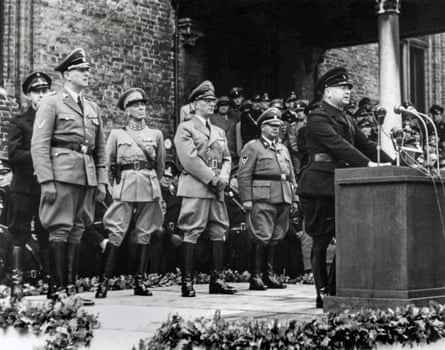
Several months ago, the Dutch art detective Arthur Brand was surprised to be contacted by a man who had recently made an uncomfortable discovery about his family’s wartime past: he had learned that he descended from Hendrik Seyffardt, a Waffen-SS general and one of the Netherlands’ most senior Nazi collaborators.
But there was more: the man had also discovered that a painting by the Dutch artist Toon Kelder, looted by the Nazis from the renowned collection of the Jewish art dealer Jacques Goudstikker, remained in the possession of the Seyffardt family.
Kelder’s Portrait of a Young Girl had been hanging in the hallway of his relative’s home near Utrecht for years, he told Brand. Speaking to the Dutch newspaper De Telegraaf, the man said he felt “deep shame” over his family history, but was also “furious” about the years of silence surrounding it.

The story made waves: the family, who had changed their name after the second world war, handed over the painting to Brand shortly after the story was reported in the Dutch media on Monday.
The current owner, who had inherited the artwork from her mother, said she had no idea that Goudstikker’s heirs wanted it back. Brand told the Guardian he was now in touch with the family to discuss “how to proceed”.
The moral outrage unfolding in the Netherlands reflects a mood of growing openness towards the country’s history of occupation, during which three-quarters of the Jewish population were murdered by the Nazis, thousands of Dutch people collaborated with the regime and Jewish property and homes were confiscated.
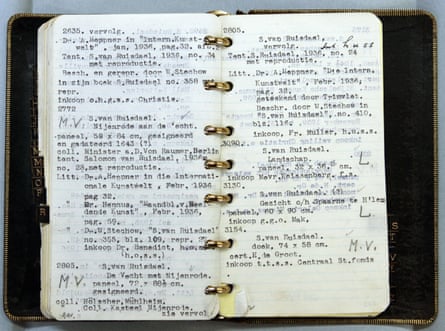
Since 2020, an approach of “humanity and goodwill” has been applied to restitution requests from Dutch national collections, while many auction houses refuse to sell disputed or looted art.
Emile Schrijver, the general director of the Jewish Cultural Quarter in Amsterdam – which opened a Holocaust Museum in 2024 – said younger generations may have more emotional distance from the war, allowing them to see injustices more clearly. Whether those injustices related to a painting or a smaller – but no less loved – family possession was of no matter.
“Not everybody owned great art, but not every piece of looted property has to be great art in order to be important to relatives,” he said. “A descendant who gets a silver spoon that was used in the Friday night soup for his great-grandfather – that might be more valuable than a painting that he doesn’t like.
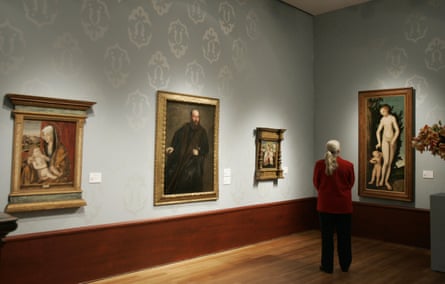
“It has as deep a meaning as a Kandinsky because it’s part of the same system: the eradication of a culture. That’s why this looting is connected so strongly to emotion.”
Gert-Jan van den Bergh, a legal expert in art restitution at Bergh Stoop & Sanders, said he had noticed a shift in recent years, suggesting moral accountability was beginning to weigh more heavily.
“For decades, many families approached these cases primarily as private property matters,” he said. “Today, younger generations often see them more as ethical questions connected to memory, identity and the legacy of occupation.”
The Jewish Dutch writer Yael van der Wouden explored some of these themes in her Booker-shortlisted debut novel, The Safekeep, set in the Netherlands of the early 1960s.
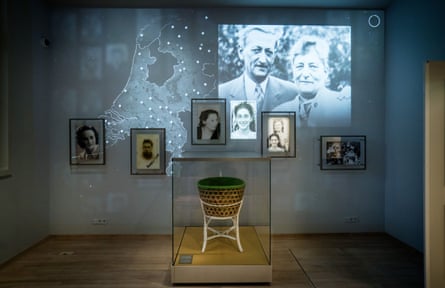
“I wanted to explore questions around complicity and how easily people might become perpetrators,” she told the Observer last year. “I wanted to look at how we remember and what we choose to forget, which narratives we prioritise and which ones we ignore.
“It’s something I have spent a long time thinking about as a teacher of comparative literature: how do you create fiction that forms a national understanding of what happened?”
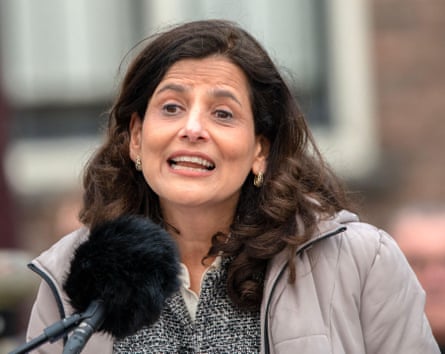
New generations can be more forgiving of their ancestors and sharper about their actions, according to Dutch journalist Sheila Sitalsing, who wrote the award-winning book Waar ik voor me schaam (My Shame) after discovering her grandfather’s collaboration in her mother’s deathbed note.
“On one hand, they are more detached and sometimes more forgiving,” she told the Guardian. “On the other, they can also be crystal clear (‘Nazi? Wrong!’).”
But why have so many stolen paintings and objects still not been returned? Eight decades after the liberation from the Nazis, Jewish property is still sitting quietly in Dutch family homes, pinned there by loaded silence, shame and a legal system that struggles to deal with this historical theft.
The answer could lie in a concept the Dutch call het zwijgen (“the silence”), the loaded omertà that grew around what happened during the second world war – and one of the reasons why an archive of legal dossiers on 425,000 people formally investigated after 1945 is still not fully open.
The war haunted the children of collaborators, according to Anne Marthe van der Bles, a senior researcher at the ARQ National Psychotrauma Centre, which has researched the family impact of collaboration.
“The war always sat at the dining table,” she said. “Children knew: we are not allowed to mention this, because Mum or Dad gets angry, sad, frightened. It is not just not talking about it. It is heavier and more loaded than that.”
Younger Dutch people, though, appear less weighed down, and more compelled to right the wrongs of the past. Experts warn they do not have for ever to act, and that thousands of stolen pieces risk being lost to fading family memory and fragmented archives if they are not returned soon.
Schrijver urged people to understand what such objects mean: all he has of his own great-grandmother and great-grandfather is a brick in a commemorative wall of names and a “stumbling” stone.
“Before these two things were there, I had nothing,” he said. “The truth is, we have to do justice to the people who are looking for looted objects from their family history. It’s almost never the monetary value. It’s the connection.”