2 months ago
163
2 months ago
163
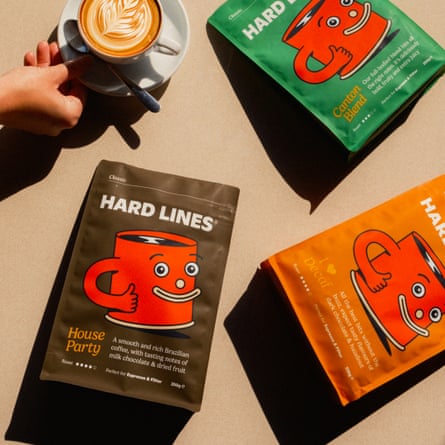
A bagel embodied as a human, with unexpected little arms and a sweet face. A sandwich giving the peace sign. A leather jacket-wearing fish brandishing a spatula. A chess board on the march. A rugby ball making a dash for it. A smiling pizza, tongue dangling, clambering from a box.
Perhaps you have seen such a character. Chiefly in the branding – and merch – of an independent pizza place or sandwich shop, in a natural wine bar or brew pub. Though its loose limbs now stretch far and wide; to podcasts, internet talk shows and even global fashion labels.
It’s often accompanied by text in a graffiti-like bubble font, or one Karl Toomey, a Dublin-based designer, strategist and lecturer, identifies as the 1970s-tinged Hobo font, in washed-out orange, red, purple, green or blue.
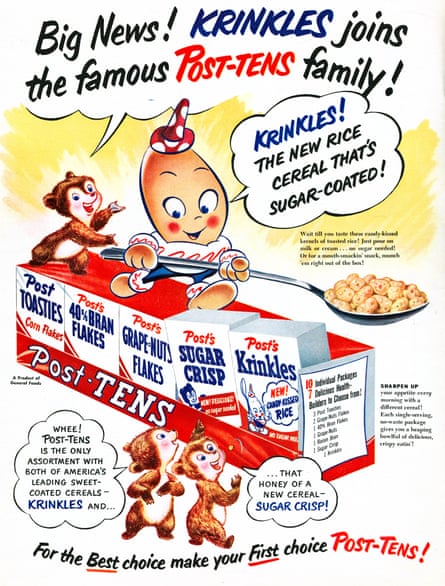
It might scream of businesses developed in the late 2010s or early 2020s, but it’s a graphic design/illustration style that largely dates from a 1920s and 30s animation technique known as rubber hose, so named from US cartoon characters with “exaggerated facial expressions” and “flailing rubber hose limbs without joints”. Add some 1950s Americana, a touch of the vintage ironic T-shirts found at Urban Outfitters in the early 00s (think, “South Korea’s got Seoul” or the name of a fictional children’s hospital alongside the slogan “We be illin’”) and 21st-century cartoon trends, a dash of graffiti and a nod to Charles Barsotti’s 1994 New Yorker drawing of a friendly looking cartoon piece of rigatoni pasta on the phone declaring, “Fusilli you crazy bastard! How are you?” Brewed together, you have what amounts to a prevailing visual style now helping to sell coffee in Cardiff and burgers in Manchester.
While not exactly ground zero for the aesthetic, Yard Sale Pizza, launched in ever-trendy Hackney in 2014 and now moving stealthily through zones 2 and 3 of London, is certainly emblematic of it. It was a time when numerous upstarts in the food and drink world were using cartoon branding, be it the colourful grotesque of Beavertown, or the minimalist line of Minor Figures. They offered arch, indie-ish alternatives to the cutesy “wackaging”(see Innocent smoothie bottles for a prime example) of the preceding years.
Several Yard Sale designs can be credited to Patrick Schmidt, a London-based designer and artist from Wales. “I’ve always done graffiti,” he says, “and then I was into tattoos … as well as being influenced by older cartoons”. Added inspiration came via the underground comics of Robert Crumb and the outsized cartoon figures in the later work of painter Philip Guston. Schmidt “developed an amalgamation of all those things”.
A friend introduced him to the owners of Yard Sale and together they made “a papier-mache chilli, that we named Juan”, which appears on their original T-shirt. It has rounded, rubbery arms and legs and is carrying a pizza while looking a little distressed. Schmidt followed this with other images – the aforementioned pizza among them – and others have since pitched in with designs, including a T-shirt with a smiling tomato holding flowers and a bottle of wine.
Another lodestar for cartoon-ish aesthetics is Top Cuvee, a wine shop/restaurant/bar with branches in the long-since gentrified neighbourhoods of Highbury and Shoreditch in London. Schmidt designed wine bottle labels for them: one features an image of a bunch of grapes wearing large boots. He’s also taken the look beyond its natural stomping ground of food and drink, collaborating with Levi’s and crafting cartoon designs for childrenswear.
“I think it’s just fun,” Schmidt says of the style’s appeal. Plus, “the way the world is, the economy and fucking weather … When there’s something at least a bit daft or makes you smile, I think that’s why it’s appealing.”
It is clear why brands are drawn to it. It’s playful and doesn’t take itself too seriously – in areas that are often awash with self-seriousness. It can soften a brand and literally put a human face on concepts that aren’t always easy to visualise. It has also become almost shorthand for independent-leaning, or at least independent-presenting, businesses.
But it isn’t solely a UK phenomenon. A friend recently noticed a shop in Belgium selling all manner of knock-off T-shirts in the style; it proliferates in other European cities, in the US and further afield. “It’s 100% saturated everywhere,” says Toomey. “You see it across everything,” he says. “It taps into authentic sorts of sensibilities. The look of it traces its roots back to mementoes or souvenirs that you might get at an independent pizzeria or whatever it might be.”
Granted, that seems less intuitive when adorning an eco cleaning brand, the endless variations of T-shirts for sale online with a smiling humanoid coffee cup alongside the phrase, “more espresso less depresso” or indeed on the fake merch of nonexistent chippies, fried chicken joints and hot sauces. “When you see big brands [and] fast fashion people that start using it as a kind of faux-subculture, it just doesn’t mean anything,” says Toomey.
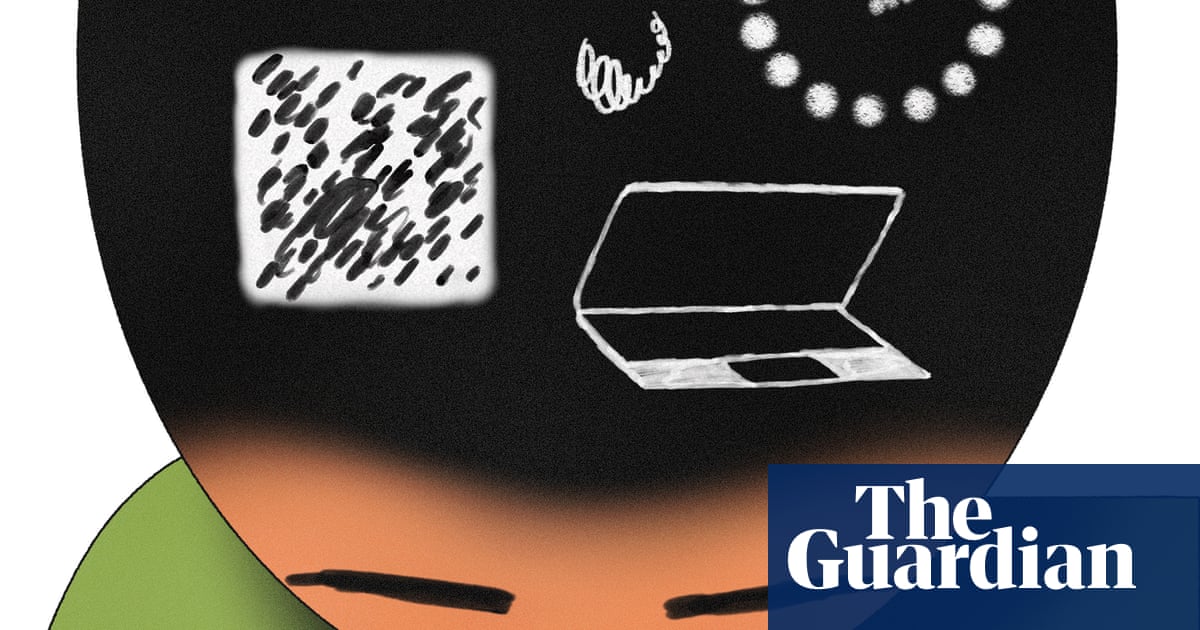
Toomey and other design-watchers see the emergence of these slightly irreverent and nostalgic character-led images as a reaction against the smoothed out graphics that dominated the tech world in the 2010s. Particularly pervasive was a colourful but flat illustration style known as Corporate Memphis, often used in advertising and user interfaces of tech companies.
Naturally, the more recent rubber hose ubiquity has also spawned its own detractors. Last year a piece by the writer Clive Martin in Vice labelled a new tribe of modern hipster as “the Normans” after the now-closed north London greasy spoon. “The key component of the Norman aesthetic,” he states, “is not so much the clothing as the cartoonish graphic design plastered across every single item of it.” In a video for It’s Nice That, the US-based designer Ram Reyes railed: “Just please stop putting arms and legs on everything conceivable. Please stop, I beg you!”
Reyes’ tone has softened – a little – but his major problem remains with what he calls the “templification” of design. For Reyes the use of rubber hose had become unbearably widespread by 2024, in particular because of the ready availability of templates, which meant brands of all shapes and sizes were landing on virtually identical images, without needing to fork out for a designer. With a few searches through templates on design platforms such as Canva or Adobe Express, a rubber-hose character can be swiftly ginned up, undermining the supposed homespun nature of the look. And that’s not even factoring in AI.
Schmidt says he’s still happy to use the style along with various other methods, but the tide could be turning more broadly. A recent piece in Graphic Design USA suggested branding will lean heavily on “elemental folk”, with traditional arts and crafts techniques – hand-drawn elements, decorative borders and “typography that feels carved, pressed, or inked rather than digitally neutral” – coming to the fore. Reyes cites “naive style”, which uses a childlike drawing manner, wobbly lines and clear imperfections, as a growing design trend – the font used at the north London cafe Jolene is based on something scribbled down by the designer’s six-year-old son. Other examples of this are more lo-fi and scratchy – with words scrawled in barely legible handwriting, seen in some coffee brands and gig posters, among others. All of these possible descendants seem like further reactions against the ease of mass produced images, whether from AI, templates or simply our own herd-like tendencies.
Of course there is no escaping AI or the churn of stock imagery gorging on every new trend. “I saw that on TikTok, some account was saying: ‘this is the new style that’s coming in’,” says Reyes of childish hand-drawn methods. “And then he was like: ‘Here’s how to AI generate it.’ I was like: ‘Bro, what are you talking about? Just pick up a pencil and draw.’ The point of the style was hand drawing badly.” Even something seemingly original will, he says, “make its way into these apps or AI generation, no matter. The machine will eat it.”