2 months ago
120
2 months ago
120
A couple of months ago, my mother moved into a nursing home. Her Alzheimer’s has progressed to a point where it’s no longer safe for her to live alone, and she now needs round-the-clock care. It has been my task to empty out her house, where she lived for more than 50 years.
It’s not a job I would have asked for; it requires that I trawl through memories that aren’t mine, or shared memories that are painful for one reason or another. But my mother is no longer able to make these decisions herself, about which of her possessions are worth keeping hold of and which should be discarded, either for practical reasons of space or necessity or because a continued attachment to the stories behind them might do more harm than good. By deciding these things for her I’m curating her life story.
Photographs form a large part of the source material. There are hundreds of them, spilling from tattered envelopes and pasted into leatherette-bound albums, or framed in torn cardboard or peeling gilt. Among them are faces I haven’t seen in years, faces I’d sooner forget, faces that hint at a family history that extends back further than my own experience. Ghosts benign and malicious, ancestors in the uniforms of war, correspondents from foreign lands whose lessons went unheeded.
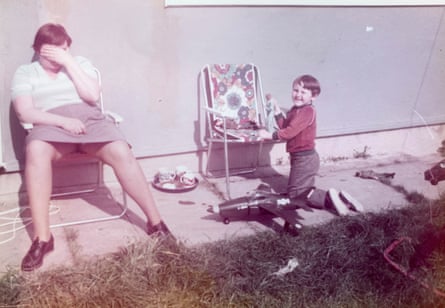
Here is a picture of Mum and me in our scruffy little back garden. She’s sitting in a folding chair, covering her face with her hand, either to shield her eyes from the sun or to convey her reluctance to be photographed. I’m kneeling apart from her, an Action Man in my hand, smiling for the camera on a squinting summer’s day. I’m six or seven years old, I’d guess, and oblivious to the unhappiness that already defined my mother’s life. Behind the camera, presumably, my father, the cause of much of it. I’ve always viewed my parents’ marriage as functional and essentially loveless. In my recollection they were never affectionate towards each other; all I remember are squabbles and silences. As I got older I became convinced that she stuck around only out of financial dependency and the fear of having to raise me alone.
It has never required a leap of imagination for me to think of my childhood self as a burden to my parents. Money was always tight. They both worked low-paid jobs, she as a barmaid and a home carer and a cleaner, he as a machine operator in a factory that manufactured resuscitation equipment for the medical industry. Our first television set was a rental; there was a slot at the back into which we fed 50-pence pieces to keep it working. I recall regular visits from the Provident rep, a garrulous Irishman who resembled Feargal Sharkey and was introduced to me as Uncle Frank. Back in the 1970s and 1980s, the Provident, a forerunner of today’s online payday loans companies, was the only realistic source of credit available to families like mine. My parents would borrow at an extortionate rate of interest to pay for Christmas and our annual caravan holidays, or to cover any shortfall in the weekly income if an unexpected bill came in. Every week, Frank would collect the next repayment instalment, in cash.
At the time I wondered why my mum gave Uncle Frank money every time he turned up on the doorstep. Was he in trouble? Were we helping him out? Hindsight corrects the error.
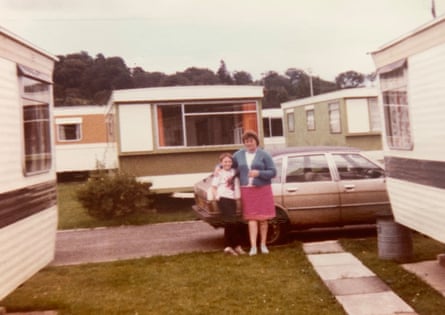
There is a photograph of Mum posing outside one of those holiday caravans. Scarborough, I think, the Blue Dolphin Holiday Park. As usual, she’s unsmiling. She looks weighed down, uncomfortable in her skin. These rare escapes from the daily drudgery of her life were never really escapes, because she brought her most pressing problems with her. She’d be paying for that August week away well into the following year; she’d be paying for her marriage for longer than that.
Is this one of the trips on which my father beat me? Maybe; there were many. I vividly recall the smell of wet linoleum and a chemical toilet, streaks of rain down the window, a glass of breakfast orange juice accidentally spilled, an eruption of temper and a punch on the jaw. Until recently, Mum could confirm the veracity of this memory and others. If I knew she’d understand it, I’d tell her I bear no resentment for the times she failed to protect me from him. At least she stuck up for me afterwards, held me while I cried, gave him the cold shoulder for a while until the practicalities of domestic life called for a truce.
That was the pattern that defined our little family: an infraction (his), followed by a choosing of sides (hers), followed by an uneasy peace. Rinse and repeat. Looking back, it becomes obvious that this pattern laid the foundation for the chronic anxiety from which I’ve suffered since my teens. And yet I’m determined as a point of principle to exempt my mother of any blame. She didn’t know what she was getting into until it was too late to walk away. If she were in a place to hear it I’d tell her that I’m sorry my existence complicated her own.
I spent the first three decades of my life wishing I’d never been born. An unhappy childhood will do that to you. I haven’t wished that for a long time, not since I met my wife and, in the wake of my father’s death, became indispensable to my mother. If I wasn’t here she’d have nobody to advocate for her now, in her time of greatest need. Maybe this is how I repay her for her sacrifices, by sitting by her bedside in a room on lease, reminiscing about the few good things she still remembers from a life of modest expectation. By wiping tea from her chin and massaging her back, by rigging our games of dominoes so she always wins, I’m doing what little I can to provide some comfort in her final months or years.
I don’t tell her what I’ve been doing between visits, that I’ve been busy gutting her home of half a century before the keys go back to the council. By omitting this truth I’m artificially sustaining the hope that she might one day return. She has stopped asking when she’s going home but I suppose she must still wonder from time to time. I tell myself it’s kinder in this instance to lie.
I know that by doing so I’m infantilising her; but Alzheimer’s got there first.
Her dependence on me, and on the kind, hardworking foreigners who care for her when I’m not there, is not touching. It’s wretched and humiliating. Age and disease take many things from us, but perhaps the most acutely felt loss is the loss of our autonomy. It’s been years now since Mum prepared her own meals, dressed herself or bought her own essentials. Her life has contracted like the field of vision in an eye going slowly blind.
When I’m in her old rooms I’m walking among the choices she once made. As I bag up her bedclothes for fabric recycling and assess her furniture for charity donation, the paucity of those choices hits home. Everything was bought solely on the basis of affordability. The quality is basic, the fashions dated. The small dining table is stained an old-fashioned mahogany, the sofa is a decade overdue an upgrade. The pleather handbags in the understairs cupboard are free gifts from a home shopping catalogue, still sealed in their cellophane wrapping.
I find myself pitying my father, for never being up to the job of providing my mother with a life of a desirable standard. After he died – eight years ago, of bowel cancer – the responsibility for taking care of those material needs passed to me. I tried to introduce little touches of luxury into her home. I bought her Denby tableware and a winter coat from the premium range at M&S. I tried to encourage her to think of herself as deserving of nice things, and to ask me for them. But her frugality was so ingrained that she never stopped worrying about money, and her need to retain some independence from the influence of my taste was so stubbornly misplaced that she never lost her habit for the generic and the tacky.
This is most evident in the army of knick-knacks that fill the house, the collections of glass paperweights and ceramic bells, the marble eggs and china spaniel salt and pepper shakers. Mum was never a talker or a sharer, she always kept her cards close to her chest, so it’s these random impractical objects that perhaps speak most eloquently for her personality. They peg her as having been whimsical, sentimental, traditional. I won’t claim that she loved all these little things she put up on display, or that they represented any deeply held values or affinities. But she chose them, for whatever reason, and this makes them inordinately precious to me in the moment, and so I handle them with reverence, taking them down from the shelves slowly, packing them carefully into boxes to be transported back to my house.
If ultimately they end up in a charity shop or in landfill, at least while they were with me they were still worth something. They mattered, because once they mattered to her, if only as symbols of accumulation and independence, expressions of the universal instinct to ornament our personal spaces and commemorate our path through the wider world. Proof of life, as compelling as the birth certificate and infant vaccination card I’ll find later in an envelope gone flaky with age. She might have accrued nothing much to speak of, no property and no material legacy, but she had these things to pull focus from the accoutrements of illness that surrounded her, the railed hospital bed she slept in, the commode on permanent station beside it.
Some things make useful props to awaken the stories at slumber inside her. I bring autographs collected from her time working behind the bar at Caesar’s Palace, a long-defunct Luton nightclub that attracted some big name acts in its 1970s heyday. Showing her Gene Pitney’s signed headshot, she surprises me by naming 24 Hours from Tulsa, one of his most famous songs; she watches an old performance on YouTube with something approaching rapture, a state she hasn’t occupied for so long I’d assumed it was beyond her. And look, there are Cannon and Ball and Frank Carson, the Drifters and the New Seekers, Des O’Connor and the Krankies.
The Brother Lees, a midweight comedy musical act of the time, were regulars at the Sunday afternoon kids’ slot; one of my earliest memories is of them sneaking on stage during my birthday announcement to steal the Smarties from my cake. Mum claims to remember it too, though I’m not convinced she isn’t simply responding to my enthusiasm for this slice of family lore. Either way, as long as I continue to produce these props, perhaps I can arrest her cognitive decline. Perhaps a person’s life force is like a campfire, and we keep it burning by telling our stories around it.
There is one story we never tell any more. It’s the story of her marriage. I never mention my father, and she never brings him up. We don’t talk about the evenings I spent alone with him while she worked the night shift at Caesar’s, how more often than not they’d end with a beating after he’d drunk himself into a spiral of depression and rage. We don’t reminisce over the last holiday I took her on – a week in Malta to celebrate the completion of my father’s chemo treatment. How he asked me, over an awkward lunch at a seafront pizzeria, why I never fought back when he assaulted me. Because I was a child, was my answer. How could I have fought back? I want to protect my mother from those memories, from the embarrassment they might cause her. I curate my own history to paint hers in a kinder light. If I can’t bring back the pearls for her, at least I can spare her the grit.
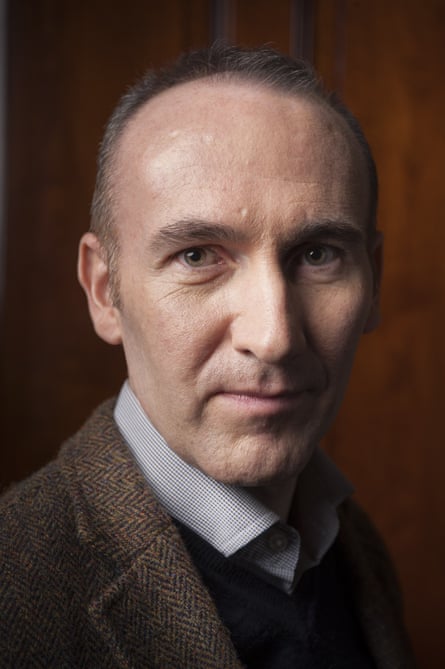
I hope she’s forgotten about my father, expunged him from her memory. For all that Alzheimer’s has taken from her, that ignorance would be a blessing. If she can see him in me still, I hope it’s only in the skin-deep similarities of our looks. Inherited trauma can be ruinous to a family. My father beat me because his father beat him. I determined from a young age that I’d break that chain, by being gentle. Whenever I brush Mum’s hair or stroke her hand, I’m enacting that promise. In speaking softly to her, in thumbing the tears from her eyes – all the quiet work of devotion – I’m reminding myself that the apple can fall far from the tree. Perverse though it may seem, I now feel a profound gratitude towards my father. His abuse gave me an example that I’ve defined myself against. Without it, I’m not sure I would have become the person I need to be now, capable of caring for my mother without resentment or squeamishness, vaulting the emotional barriers she always hid behind.
Once all the furniture and personal items have been removed from the house, the bareness of the rooms is devastating. All that remain are dunes of binbags lining their perimeters, stuffed with fabrics and expired medical supplies and small appliances too damaged to be passed on. The process of clearance has taken a month, a couple of visits a week squeezed in between my regular obligations. Each visit has been draining emotionally as well as physically: every corner contains a memory of violence or sadness, an echo of voices raised in anger. The end-of-tenancy date falls the other side of the coming weekend, and once the keys are handed back I will have no more access to the place. Anything I might have missed will be lost to me for ever. My final visit puts the seal on a box that contains my childhood and my mother’s married life, on all the hopes and disappointments and regrets thereof. It brings to mind the biscuit tin we buried in the back garden 30-odd years ago, a makeshift casket for a stillborn puppy, one of the litter Pepper, our German shepherd, conceived to a neighbourhood stray.
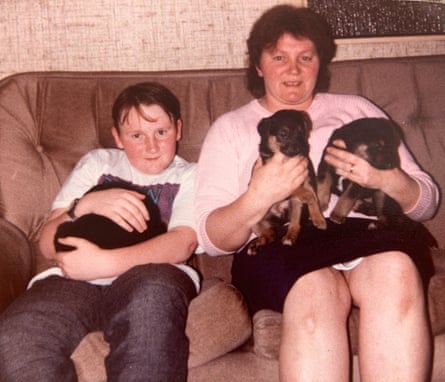
Another memory: a 13-year-old me, skipping school to sit with Pepper as she gave birth. Mum and Dad couldn’t take the time off work, and after much lobbying on my part agreed to entrust the midwifing to me. I can see myself pulling the first pup out of her, my hands shaking as I split the amniotic sac, rubbing the mouth as I’d been told to do, breathing into it to try to get the tiny lungs working. Then the despair of finding that it was already dead, setting the limp body aside to move on to its brothers and sisters, presenting the living ones to their mother to encourage an immediate bond, stacking them close to keep them warm. Six out of seven survived; I don’t think I ever gave myself credit for my intervention, so fixated was I on the one that got away.
That first puppy will be nothing but bones now; I resist the urge to go digging for them, to exhume a relic of a soon-to-be-forgotten time. But there is one last little pilgrimage to perform. Up in my old bedroom, scrawled in permanent marker on the wall of the built-in cupboard, an irreverent legend, in preteen handwriting: “SK woz ere 1976 – ”. I’d neglected to fill in the date before I left home. It’s now or never. I’m about to ask my wife for a pen when I have a change of heart. Suddenly it feels more satisfying to leave the sum unfinished, to submit to the notion that an unresolved version of me will haunt this small house for as long as it stands. Better than accepting that the past remains unchangeable, irredeemable, set in stone. As much as the lives we end up living, we’re defined by the parallel lives that slipped past us. There’s so much I wish had been different, for myself and for Mum; to go on wishing for it, in perpetuity, might be another way of extending her story, and mine.
It has been a week since I gave the keys to Mum’s house back to the council. I queued at the town hall, signed a form on Mum’s behalf relinquishing all claim on the location where so much of our lives had played out. Since then I’ve been sleeping a little better, as I recover from the stress of the removal deadline. The ghosts are settling.
Yesterday evening, as I continued sorting through Mum’s papers, I found another photograph. I’d never known that it existed, but it records a moment that I’ve long understood to be pivotal in her young life. She’s 15 years old, standing on the deck of a sailing ship at dock, smiling timidly for the camera. Her hair is cut into a short bob and her hands are clasped loosely at her stomach, the fingers of one pressed lightly to the palm of the other, as if she’s surreptitiously reading her own fortune. She looks beautiful, a little shy, excited by the glamour of the occasion, blissfully unaware of the unglamorous life that will soon unfold for her.
In a few short years she’ll be a wife and a mother, and then a divorcee and single mother, and then a wife and a mother again. She’ll work and raise her children, and then retire, and lose a child, and then a husband, and then her health will fail, and then her world will shrink to a single room, and then her faculties will leave her one by one, and then she’ll die. I’ll be there for as much of it as I can, but she doesn’t know that yet. All she knows, when the picture is taken, is that she’s lucky: she and her best friend, Jenny, have won a competition to go on a Thames river cruise with Johnny Kidd & the Pirates, the nation’s hottest new rock’n’roll group, who’ve just had a No 1 hit single with Shakin’ All Over. Mum’s handwriting, on the picture’s reverse, confirms the route from Tower Pier to Margate. To the extreme left of the photograph, under the ship’s rigging, Johnny Kidd himself, wearing his trademark eyepatch, is signing an autograph for another competition winner. He is wiry and boyishly handsome, a young star on the brink of bigger things. Six years later he’ll be dead, killed in a car crash at the age of 30. The picture is infused with a palpable energy of dissipated potential. Everyone in it – Mum especially – seems flushed with youthful promise, bonded by a shared conviction that the best days of their lives are waiting for them just around the next bend in the river.
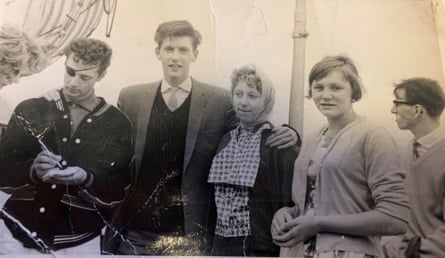
Over the years Mum has spoken about that day often but always in brief, omitting or unable to articulate the details, as if the feelings her remembrance evoked were too big or too personal to describe. Her tone of quiet awe has encouraged me to speculate about what that summer’s day in 1960 meant to her. It’s too late to ask her if my projections were accurate – she no longer has the language for it – but I understand nostalgia and regret, and I’m old enough to know the ache of young hopes that failed to bloom; when I cry for that girl who’d become my mother I cry for myself too, and for everyone I know and love. We’re all that teenager on an anchored boat, waiting to leave shore, and we’re all that old woman in a bed on wheels, our travels behind us, dreaming of the salt spray and the bulging sails.
This afternoon I’ll bring the photograph to show Mum. Hopefully she’ll be awake when I reach her, and it will jog a memory. She probably won’t have much to say about it, but perhaps, inside, she’ll be transported to another time and place. Once we’ve exhausted the subject I’ll turn to less demanding matters: how did she sleep, did she enjoy her lunch, does she want me to adjust her pillows. The trick is to keep talking, to make it harder for her to drift off.
If the weather is kind and she’s amenable, I’ll wheel her down to the garden. As she’s become more comfortable in her new environment, she’s taken to touching the flowers, rubbing the petals of the daisies between her fingertips, pulling the jasmine up to her nose for a sniff. Any interaction with the world gets my hopes up that she might yet outwit her disease. I know it’s ridiculous, that things are only headed in one direction, but I owe her all the hope I have.