4 hours ago
12
4 hours ago
12
Tories and Reform UK tell Burnham they will fight any plan to reform adult social care involving tax rises
Good morning. Yesterday Wes Streeting, the defence secretary, told Sky News that, while Andy Burnham spent his first week as PM focusing on cost of living issues, this week the public would see “a prime minister that runs towards big and difficult issues rather than runs away from [them]”. Those challenges include reforming social care and, as Peter Walker reports, Burnham has pledged to use “whatever political capital I have” to finally fix the crumbling social care system in England, saying that without rapid action the NHS could effectively collapse.
Burnham was speaking in a 30-minute interview with the BBC’s Laura Kuenssberg going out on Panorama tonight. The BBC put the full interview on iPlayer at 6am this morning, and there is a write-up on the BBC’s website here.
Burnham is due to give a speech on social care on Wednesday, but he is due to be addressing other problem issues this week as well. According to Andrew McDonald and Megan McElroy in their London Playbook briefing for Politico, tomorrow we are getting some announcement on getting young people back to work, on Thursday a defence-related announcement is due, and on Friday Burnham is expected to unveil plans (first reported in the Sunday Times) to give more control over how government money gets spent in their areas.
In his interview with Kuenssberg, Burnham was asked if he would put a new social care system in place before the next election. He did not make that commitment; he has only got three years at best, and full reform could take the best part of a decade. But he did say that he wanted to go “as quickly as I can on the reform” and that there were “major changes you can make before the next election”.
Burnham does not need Tory votes to pass legislation to reform social care in the Commons because he has a working majority of 166. But Burnham’s plans won’t survive if the next election results in Labour being replaced by a government committed to ripping them up. Ed Davey, the Lib Dem leader, has indicated that he hopes Burnham will produce plans that the Liberal Democrats can support. But Reform UK and the Conservatives have both signalled that they might use their opposition to the Burnham plan. When Burnham was health secretary before the 2010 general election, he floated a proposal to fund better social care through a levy on inheritance. The Tories immediately labelled this a death tax, it became hugely unpopular, and Labour had largely dropped the idea even before they lost the election.
We don’t know what Burnham will propose this time; the veteran Whitehall fixer Louise Casey is leading a review, and Burnham is expected to ask her to produce a final report soon, instead of waiting until 2028 as originally planned. But Burnham has talked about the case for a “care levy”.
In an article for the Sunday Telegraph yesterday, Robert Jenrick, the Reform UK Treasury spokesperson, said his party would oppose anything that amounted to a “radical tax grab”. He said voters “rightly want meaningful efficiency savings, not another tax assault”, and he challenged Burnham to hold an election on this issue. He has been repeating this message on GB News.
This morning, in an open letter to Burnham, Kemi Badenoch has implied that she is willing to work with Labour on this. “The Conservatives are happy to work with you and other parties on reforming social care,” she says. But she also makes it clear that she will fight like fury any plan Burnham is realistically likely to propose.
She says:
But we will only support a solution that abides by two core principles.
First, any solution to the issues around social care must also be fair to those who have made provisions and saved up over the course of their lives.
Second, the money must be found by reducing current spending. You must rule out any tax rises, or increased borrowing that will ultimately fall on the next generation to pay for.
Compared to the last Conservative government’s budget plans, spending in 2028/29 alone will be £152bn higher (that’s 11% above what was planned in that year under the Conservatives). As a result, taxes will be £105bn higher (up 8%) and borrowing will be £47bn higher (more than double previous plans).
The tax burden has risen to a record high under Labour, and there is already speculation that you will increase taxes further at the budget this autumn in order to pay for all the things you have announced in your first week, plus the outstanding gaps in funding for the defence investment plan.
(Labour is spending a lot more than the last Conservative government budgeted for the second half of this decade. But the Tory long-term spending projections were widely criticised at the time by economists as unrealistically low.)
I will post more on Burnham’s BBC interview soon.
Here is the agenda for the day.
11.30am: Downing Street holds a lobby briefing.
Afternoon: Andy Burnham meets Volodymyr Zelenskyy, the Ukrainian president, at a naval base in the UK.
As I explained earlier this month, we are no longer going to have comments open below the line on this blog. From today, if you want to contact me, or anyone else writing the blog when I am not here, please email [email protected]. I will post a bit more on how we hope to use this email system a bit later.
Key events
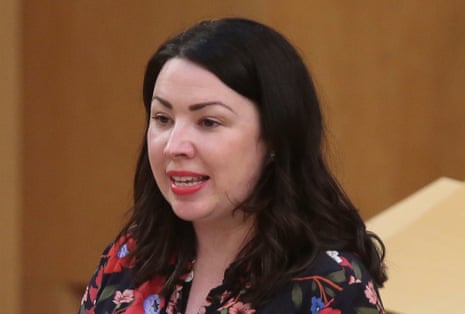
Starmer's refusal to stand down before May elections 'selfish and stubborn', says potential next Scottish Labour leader
Keir Starmer resisting calls to stand down was “selfish and stubborn”, according to the current sole Scottish Labour leadership contender, Monica Lennon.
As the Press Association reports, the earliest high profile call for Starmer to quit came from former Scottish Labour leader Anas Sarwar, who broke cover in February. Sarwar is now leaving Holyrood having been given a seat in the Lords and a job as a business minister by Andy Burnham.
Speaking to BBC Radio Scotland this morning, Lennon – a former MSP who will return to Holyrood to replace Sarwar under the regional list system – said Starmer was one of the main reasons why Scottish Labour won just 17 seats in the Holyrood election in May. She said:
Clearly, the focus is the May election and what’s happened in Scotland.
The party has had its worst election result ever in the history of the Scottish parliament – in fact we’ve been losing seats and votes since 1999, so there’s a downward trend that cannot be ignored.
There’s lots of reasons, but I think the primary reason was Keir Starmer.
We couldn’t get a proper hearing on the doorsteps or around the country because that was the first thing that was brought up.
People felt they saw Keir Starmer and his words and actions didn’t match – there was a deep disappointment.
She added:
I think, on reflection, Keir Starmer should have read the room, I think he was selfish and stubborn and I think that’s been a big part of our problem.
That has contaminated people’s view of Scottish Labour.
While the party is at its lowest ebb since the creation of the Scottish Parliament in terms of MSPs, Lennon warned: “It can get worse”.
The soon-to-be Glasgow MSP is the first to throw her hat in the ring to replace Sarwar, but has encouraged others to do so. She said:
Scottish Labour’s got some serious decisions to make, and it’s really important that our members have their say, that they’re heard.
I hope that other colleagues do come forward because I would welcome a debate, a discussion and a contest, because I think we really need to have that.
Burnham should stress 'moral' case for social care reform about more than just helping NHS, thinktanks say

Denis Campbell
Denis Campbell is the Guardian’s health policy editor.
Andy Burnham must convince voters of the “moral” and “positive” case for reforming social care, not just that it will help the NHS, health thinktanks said today.
The practical benefits that an overhaul of the system would bring for millions of older and disabled people and their families are also a strong argument the prime minister should make, not just less pressure on overcrowded hospitals, they believe.
Natasha Curry, the Nuffield Trust’s deputy director of policy, said:
It is right to recognise that the NHS and social care are deeply interconnected but the case for fixing social care extends far beyond protecting the NHS. There is a moral imperative to ensure older and disabled people can live independently with dignity and a compelling economic case too.
Millions of people have unmet care needs, while unpaid carers and disabled adults are too often prevented from working, participating in their communities and planning for their futures because the support they need simply isn’t there.
While it would help, reducing the number of people who get stuck in hospital despite being medically fit to leave – delayed discharges - won’t on its own get the NHS back to functioning smoothly, she added.
Better social care would undoubtedly help some patients leave hospital more quickly but we should avoid suggesting that fixing social care alone will fix the NHS.
Sarah Woolnough, the chief executive of the King’s Fund, welcomed Burnham’s determination to transform social care after successive governments “consigned [it] to the politically ‘too difficult’ box”.
His efforts to build public support for radical change must go beyond rhetoric about the NHS, she said.
Debates about social care are too often haunted by ‘death tax’ rhetoric and the costs of improving the system rather than focussed on the tangible benefits reform could bring for people and families.
If the prime minister wants to succeed where previous governments have failed, he must make a positive case for reform and build a shared understanding of why change matters.
The Casey commission’s already-planned engagement with the public is an “opportunity to build understanding of social care and what reform could mean for people and their families”, added Woolnough.
Burnham says 'big decisions' ahead on making council tax fairer
Andy Burnham has said there are “big decisions” ahead of his government on council tax, as he criticised the unfairness of the current system for making some people pay higher rates than are levied on more expensive homes in London.
In his interview with Laura Kuenssberg for the BBC’s Panorama programme, Burnham said:
There are people here in Greater Manchester who pay a much higher council tax than people living in much larger homes in London.
So the chancellor before, Rachel Reeves, was right to start to reform council tax to create some fairness there in relation to people in homes that are of much greater value, who haven’t seen their council tax go up over the years because of the failure to revalue the banding.
That’s an example of something that I think was right and fair.
Burnham added:
We need to honour the manifesto upon which Labour was elected, and if I was to bring forward any changes, obviously people would rightly say, well, is this consistent with that manifesto? So there are big decisions ahead, you are right about that.
Labour’s 2024 manifesto did not include any specific pledges on council tax. But during the election campaign Labour ruled out changing council tax bands. This did not stop Rachel Reeves last year announcing a council tax surcharge on homes worth more than £2m – a policy that could be seen as a breach of those campaign promises.
In a story for the i today, Eleanor Langford says Burnham is considering options to replace council tax and stamp duty. She says:
Two models are competing for support: a proportional property tax, which would replace both council tax and stamp duty with a flat 0.48 per cent annual charge on a home’s current value; or a land value tax – an annual charge based on the value of the land a property sits on, rather than the building.
Government sources have played down this report. We should get a more formal response at the lobby briefing later.
How to contact us and submit comments for publication
As I explained earlier this month, we are no longer having comments open regularly below the line (BTL) on this blog. We are sorry about that, and the views of readers who complained about this BTL last week were noted.
I was away for most of last week, but I was reading the blog and the comments and I am grateful to everyone who made a point of saying how much they appreciated the blog. And I particularly enjoyed the poetry tributes, like the My Way version from Hesfalleninthewater and the Cole Porter one from AverageObserver, which was so lovely I’m tempted to quote it on my CV. Thank you.
The fact that we are closing comments does not mean we want to stop hearing from you.
From today, if you want to contact me, or anyone else writing the blog when I am not here, please email [email protected].
You can email about anything but I am hoping that readers will use this email address for four things in particular.
1) Corrections. If I make a mistake, please flag it up and I will correct it. Blog posts are written and published quickly, and some errors do get through. It is even helpful to have typos pointed out; no mistake is too small to correct.
2) Comments (for publication). When we announced that we were closing comments BTL, many of you said you greatly value hearing what other readers think about the politics stories of the day. I would like to let this carry on by using some comments ATL. In particular, I would welcome comments that: contain new information about a story being covered ATL (ideally with links); contain comments or arguments about those stories that readers may find original and interesting; or signpost readers to other stories or articles they may find interesting (again, with links please).
It may take a while before I work out how best to mix comments with all the other material used ATL. I’m sure I will end up only using some of the comments submitted. But it is important and helpful to me to know what you think about what is in the news, so do please send in your thoughts anyway.
When I do include comments, I am less likely to quote in full anything longer than about 150 words.
And I will assume that readers are happy to be quoted by name unless they say otherwise.
3) Questions. If you have a question, do email. If I think readers generally may be interested in the answer, I will post the Q&A ATL (as I used to do when comments were open BTL.)
4) Complaints. If I don’t like the way I am covering anything, or not covering something, do say. I don’t have any control over other aspects of the Guardian’s reporting, but I always want to know if people have concerns about what I am writing.
All emails will get read, and I will try to reply to most or all of them too. But it is hard to know how many will come in.
If you want to contact me very quickly, I will probably see your message sooner if you use social media. You can reach me on Bluesky at @andrewsparrowgdn.bsky.social or, if you still use X, at @AndrewSparrow.
Ed Davey says Lib Dems want to help Burnham find 'real and lasting consensus' on social care reform
Ed Davey, the Liberal Democrat leader, has said that he hopes MPs can find “a real and lasting consensus” on social care.
In a statement issued in response to Andy Burnham’s comments on the topic (see 9.03am), Davey said:
I know for a fact this morning that carers I know will feel a sense of hope that politicians may finally do something serious to fix care in our country.
I am ready to roll up my sleeves and do whatever I can to find a real and lasting consensus on social care.
Family carers must be at the heart of any new system, everyone must get the care they need and no one should lose their home as a result.
Tories and Reform UK tell Burnham they will fight any plan to reform adult social care involving tax rises
Good morning. Yesterday Wes Streeting, the defence secretary, told Sky News that, while Andy Burnham spent his first week as PM focusing on cost of living issues, this week the public would see “a prime minister that runs towards big and difficult issues rather than runs away from [them]”. Those challenges include reforming social care and, as Peter Walker reports, Burnham has pledged to use “whatever political capital I have” to finally fix the crumbling social care system in England, saying that without rapid action the NHS could effectively collapse.
Burnham was speaking in a 30-minute interview with the BBC’s Laura Kuenssberg going out on Panorama tonight. The BBC put the full interview on iPlayer at 6am this morning, and there is a write-up on the BBC’s website here.
Burnham is due to give a speech on social care on Wednesday, but he is due to be addressing other problem issues this week as well. According to Andrew McDonald and Megan McElroy in their London Playbook briefing for Politico, tomorrow we are getting some announcement on getting young people back to work, on Thursday a defence-related announcement is due, and on Friday Burnham is expected to unveil plans (first reported in the Sunday Times) to give more control over how government money gets spent in their areas.
In his interview with Kuenssberg, Burnham was asked if he would put a new social care system in place before the next election. He did not make that commitment; he has only got three years at best, and full reform could take the best part of a decade. But he did say that he wanted to go “as quickly as I can on the reform” and that there were “major changes you can make before the next election”.
Burnham does not need Tory votes to pass legislation to reform social care in the Commons because he has a working majority of 166. But Burnham’s plans won’t survive if the next election results in Labour being replaced by a government committed to ripping them up. Ed Davey, the Lib Dem leader, has indicated that he hopes Burnham will produce plans that the Liberal Democrats can support. But Reform UK and the Conservatives have both signalled that they might use their opposition to the Burnham plan. When Burnham was health secretary before the 2010 general election, he floated a proposal to fund better social care through a levy on inheritance. The Tories immediately labelled this a death tax, it became hugely unpopular, and Labour had largely dropped the idea even before they lost the election.
We don’t know what Burnham will propose this time; the veteran Whitehall fixer Louise Casey is leading a review, and Burnham is expected to ask her to produce a final report soon, instead of waiting until 2028 as originally planned. But Burnham has talked about the case for a “care levy”.
In an article for the Sunday Telegraph yesterday, Robert Jenrick, the Reform UK Treasury spokesperson, said his party would oppose anything that amounted to a “radical tax grab”. He said voters “rightly want meaningful efficiency savings, not another tax assault”, and he challenged Burnham to hold an election on this issue. He has been repeating this message on GB News.
This morning, in an open letter to Burnham, Kemi Badenoch has implied that she is willing to work with Labour on this. “The Conservatives are happy to work with you and other parties on reforming social care,” she says. But she also makes it clear that she will fight like fury any plan Burnham is realistically likely to propose.
She says:
But we will only support a solution that abides by two core principles.
First, any solution to the issues around social care must also be fair to those who have made provisions and saved up over the course of their lives.
Second, the money must be found by reducing current spending. You must rule out any tax rises, or increased borrowing that will ultimately fall on the next generation to pay for.
Compared to the last Conservative government’s budget plans, spending in 2028/29 alone will be £152bn higher (that’s 11% above what was planned in that year under the Conservatives). As a result, taxes will be £105bn higher (up 8%) and borrowing will be £47bn higher (more than double previous plans).
The tax burden has risen to a record high under Labour, and there is already speculation that you will increase taxes further at the budget this autumn in order to pay for all the things you have announced in your first week, plus the outstanding gaps in funding for the defence investment plan.
(Labour is spending a lot more than the last Conservative government budgeted for the second half of this decade. But the Tory long-term spending projections were widely criticised at the time by economists as unrealistically low.)
I will post more on Burnham’s BBC interview soon.
Here is the agenda for the day.
11.30am: Downing Street holds a lobby briefing.
Afternoon: Andy Burnham meets Volodymyr Zelenskyy, the Ukrainian president, at a naval base in the UK.
As I explained earlier this month, we are no longer going to have comments open below the line on this blog. From today, if you want to contact me, or anyone else writing the blog when I am not here, please email [email protected]. I will post a bit more on how we hope to use this email system a bit later.