2 months ago
88
2 months ago
88
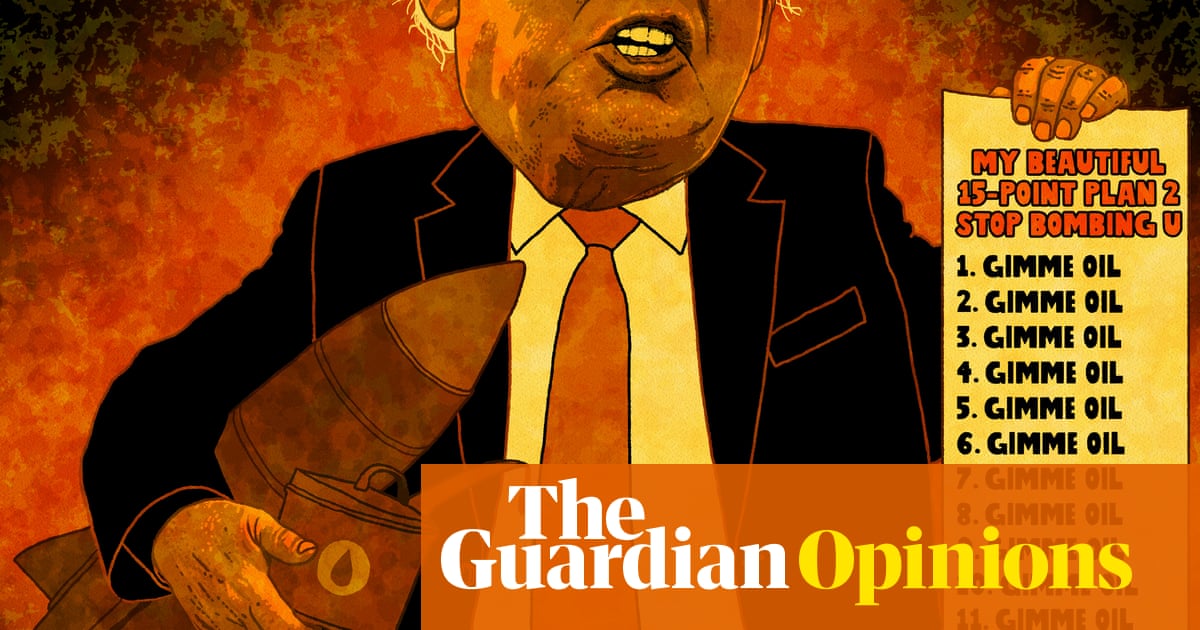
Donald Trump has said any country that does business with Iran will face a tariff rate of 25% on trade with the US, as Washington weighs a response to the situation in the country, which is seeing its biggest anti-government protests in years.
“Effective immediately, any Country doing business with the Islamic Republic of Iran will pay a Tariff of 25% on any and all business being done with the United States of America,” the US president said in a post on Truth Social on Monday. Tariffs are paid by US importers of goods from those countries. Iran has been placed under heay sanctions by Washington for years.
“This order is final and conclusive,” Trump said without providing further detail. Top export destinations for Iranian goods include China, the United Arab Emirates and India.
There was no official documentation from the White House of the policy on its website, or information about the legal authority Trump would use to impose the tariffs, or whether they would be aimed at all of Iran’s trading partners. The White House did not respond to a request for comment.
In response to Trump’s declaration, China said it opposed “any illicit unilateral sanctions and long-arm jurisdiction, and will take all necessary measures to safeguard its legitimate rights and interests”.
“China’s position against the indiscriminate imposition of tariffs is consistent and clear,” a spokesperson of the Chinese embassy in Washington said on X. “Tariff wars and trade wars have no winners, and coercion and pressure cannot solve problems.”
Iran, which had a 12-day war with US ally Israel last year and whose nuclear facilities the US military bombed in June, is seeing its biggest anti-government demonstrations in years. Trump has said the US may meet Iranian officials and that he was in contact with Iran’s opposition, while piling pressure on its leaders, including threatening military action.
Tehran said on Monday it was keeping communication channels with Washington open as Trump considered how to respond to the situation in Iran.
The White House press secretary, Karoline Leavitt, told reporters on Monday that airstrikes were among the “many, many options” that Trump was considering but that “diplomacy is always the first option for the president”.
“What you’re hearing publicly from the Iranian regime is quite different from the messages the administration is receiving privately, and I think the president has an interest in exploring those messages,” Leavitt said.
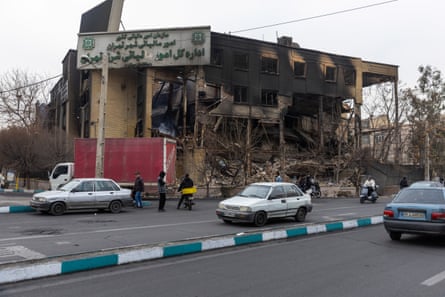
On Monday tens of thousands of pro-government demonstrators took to the streets of Tehran in a state-organised rally intended to show support for the regime. With the internet down in Iran and phone lines cut off, gauging the demonstrations from abroad has grown more difficult. However, on Tuesday morning the Associated Press reported mobile phones in Iran were able to make international calls.
Footage circulating online in recent days showed dozens of bodies lined up outside Tehran’s morgue, as the Norway-based NGO Iran Human Rights confirmed at least 648 people had been killed in the protests. Additionally, the US-based Human Rights Activists News Agency has reported more than 10,600 arrests by Iranian officials. Iran’s government has not offered overall casualty figures.
Meanwhile, non-essential French embassy staff have left Iran, two sources with knowledge of the matter told Agence France-Presse. The personnel left on Sunday and Monday, the sources added, without saying how many people had departed. “The protection of our personnel and our citizens is a priority,” a French foreign ministry official told AFP.
The demonstrations have evolved from complaints about dire economic hardships to defiant calls for the fall of the deeply entrenched clerical establishment.
The Iranian regime has responded with a harsh crackdown including mass arrests, internet blackouts and public warnings that participation in the demonstrations could carry the death penalty.
During the course of his second term in office, Trump has often threatened and imposed tariffs on other countries over their ties with US adversaries and over trade policies that he has described as unfair to Washington.
Trump’s trade policy is under legal pressure as the US supreme court is considering striking down a broad swathe of Trump’s existing tariffs.
Trump said in a Truth Social post that “it would be a complete mess” if the supreme court were to strike down his global trade tariffs.
He said “WE’RE SCREWED” if the supreme court ruled against the tariffs, before the decision, which could come as soon as Wednesday. It is a crucial legal test of his controversial economic strategy and his power.
Trump said it would be difficult to reverse the tariffs as businesses and countries could claim refunds, saying: “It would take many years to figure out what number we are talking about and even, who, when, and where, to pay.” He added: “It would be a complete mess, and almost impossible for our Country to pay.”
Iran, a member of the Opec oil producers’ group, exported products to 147 trading partners in 2022, according to the World Bank’s most recent data.