2 months ago
101
2 months ago
101
“Mr President,” said a reporter. “You’ve said the war is ‘very complete’ but your defence secretary says, ‘This is just the beginning’. So which is it?” Donald Trump’s eyes darted left and right then down. “Well, I think you could say both,” he parried.
The confusing answer at a press conference in Doral, Florida this week did not befit a wartime leader armed with stirring rhetoric and a lucid plan. But it was entirely on brand for the 47th US president. The tumultuous style that Trump brings to election campaigns, dealing with Congress and global trade relations has now been imported to the theatre of war.
For as the conflict with Iran enters its third week, impacting nearly every corner of the Middle East and causing economic tremors around the world, Trump has emerged as America’s commander-in-chaos.
He has eschewed the solemn Oval Office address favoured by his predecessors at moments of national crisis. There has been no trip to the military academy at West Point or televised visit to an aircraft carrier to rally the nation. Even when Trump did attend a dignified transfer honouring fallen service members, he wore a white baseball cap emblazoned with “USA”.
Instead the president has delivered a dizzying churn of social media declarations, off-the-cuff remarks and wildly shifting objectives. The whirlwind may prove disorienting for the enemy and make it easier for the president to declare victory at a time of his choosing. But it could also throw his own side off balance.
Jonathan Alter, a presidential historian who has written books about Franklin Roosevelt, Barack Obama and Jimmy Carter, said: “He’s a chaos agent and that’s what he specialises in. He doesn’t think any further ahead than the next news cycle and so you get an on-again off-again zigzag foreign policy.”
Alter added: “He lies as easily as he breathes so to believe anything out of his mouth like, ‘we demand unconditional surrender’ – well, two days later, he won’t be demanding it anymore and he’ll pretend he never said it. His words are at some level meaningless except, because they’re backed by so much weaponry, they take on enormous importance.”
Since ordering the Iran bombardment, Trump has struggled to make his case to a sceptical US public about why preemptive action was necessary and how it squares with his pledge to keep the US out of the “forever wars” of the past two decades.
Among several reasons offered was that he had a “feeling” that Iran was getting set to attack the US. Karoline Leavitt, the White House press secretary, slightly amended that position, telling reporters that the president “had a feeling” that was “based on fact”. But Pentagon officials have told congressional staffers in private briefings the US does not have intelligence indicating that Iran was planning to preemptively attack.
The war’s timelines and goals are also continually shifting. Pete Hegseth, the defence secretary, has said it is up to the president “whether it’s the beginning, the middle or the end” of the war. But Trump has been all over the map on this question.
During the course of one speech at a Republican gathering on Monday, he went from calling the war a “short-term excursion” that could end soon to proclaiming “we haven’t won enough”. In a phone interview with CBS News, he insisted: “I think the war is very complete, pretty much.”
Yet the same day the Pentagon’s official X account posted: “This is just the beginning – we will not be deterred until the mission is over,” and “We have Only Just Begun to Fight.”
Janessa Goldbeck, a Marine Corps veteran and the leader of the Vet Voice Foundation, commented: “That contradiction sends dangerous signals to adversaries about US resolve. When the president says the war is basically over and his Pentagon says it’s just the beginning, that tells the world the strategy is not under control.”
She added: “His fear is motivating him to try to find an exit strategy without comprehending the reality of what he has launched the United States into illegally and without congressional authorisation.”
At a campaign-style rally in Kentucky on Wednesday, Trump leaned further into the contradictions. He said of the war: “We won. The first hour, it was over.” But moments later he admitted the mission had not yet been accomplished. “We don’t want to leave early do we? We got to finish the job.”
Expectations of how a US war leader should behave, and what tone they should strike, have been shaped over 250 years. The first president, George Washington, had previously led the Continental Army to victory in the revolutionary war against the British empire.
Abraham Lincoln navigated the existential crisis of the civil war, distilling the national character with his Gettysburg address. Franklin Roosevelt steered the “arsenal of democracy” through the second world war, providing reassurance via fireside chat radio addresses. Lyndon Johnson and George W Bush struggled to sell their interventions in Vietnam and Iraq respectively.
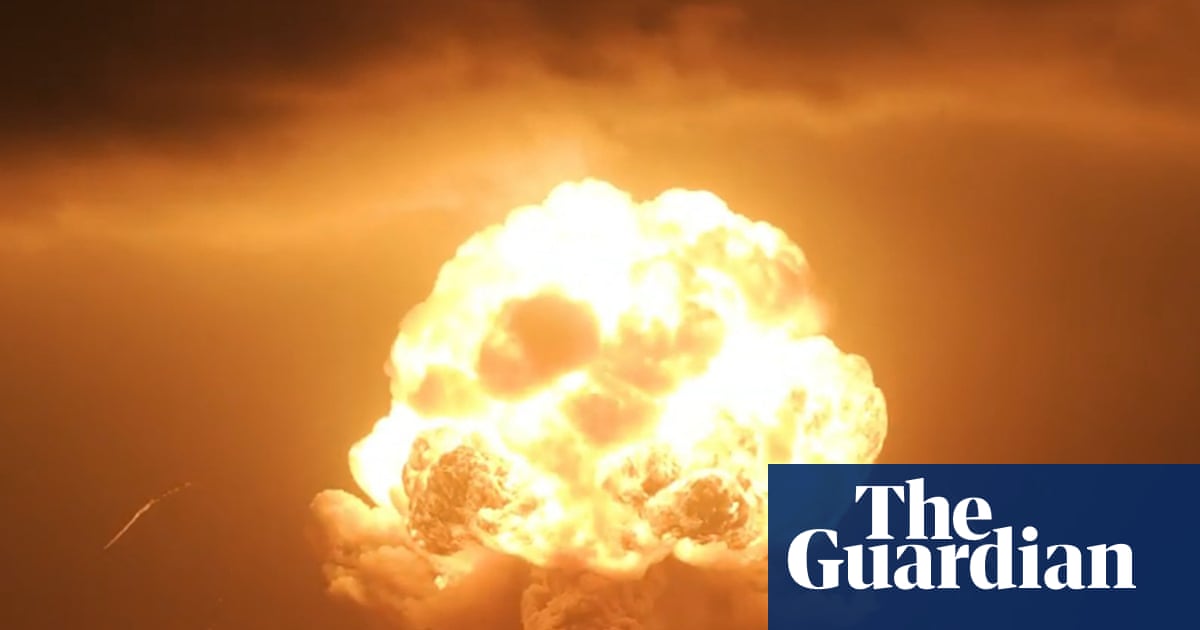
All were expected to combine a calm temperament and strategic intelligence with respect for the enemy and compassion for the fallen. Trump, as so often, has torn up the rulebook. On social media, his White House has sent out a series of pumped-up videos that mix real Iran war explosions with action movie heroes, video game footage and famous athletes.
At one event, Trump noted the deaths of US service members before abruptly pivoting to boast about his planned ballroom. Goldbeck said: “The way that he has spoken about casualties so far is absolutely unconscionable to me as someone who’s worn the uniform. It shouldn’t be something flippant.”
The president has also sought to deflect responsibility for the bombing of a girls’ school in southern Iran on the first day of the conflict, killing at least 175 people, most of them children. Last Saturday he blamed the attack on Iran, saying its security forces are “very inaccurate” with munitions.
Trump erroneously claimed that Tehran had access to Tomahawks, a US-manufactured weapon system that is only available to the US and a few close allies. A preliminary US military investigation has reportedly determined that the US was responsible for the strike. “I don’t know about it,” Trump said when asked about the report and whether he accepted responsibility.
There is little sign that his leadership is uniting the nation. Recent polling shows his decision to attack Iran has not come with the rallying-around-the-flag effect that has typically accompanied the start of recent US wars About half of voters in Quinnipiac and Fox News surveys said the military action in Iran makes the US “less safe”, while only about three in 10 in each poll said it made the country safer.
The president’s failure to make a coherent case could become a political vulnerability, particularly if he needs to ask Congress for supplemental funding outside the existing budget to replenish depleted missile stocks. Joel Rubin, a former deputy assistant secretary of state, said: “If you don’t have their political support, you tank the policy quickly.”
Unlike Bush, who sought an Iraq war resolution from Congress in 2003 with significant Democratic backing, Trump operates as a one-man show, Rubin added. “He is the most communicative president we’ve ever had. He’s out there every single day tweeting or posting or whatever. But he’s also the least clear on hard policy issues we’ve ever had. On taxes or tariffs or health care or war and peace, you literally can’t pin down what he’s going for. It’s a real paradox.”
Such ambiguity carries a potential upside for Trump: a lack of defined objectives provides him with a built-in escape hatch. Since he never established a concrete benchmark for success, he can declare victory and withdraw at any moment he chooses.
Matthew Hoh, an Iraq war combat veteran and senior fellow with the Eisenhower Media Network, said: “We can be glib and we can say, well, maybe there’s a genius in that because if you don’t set any clear goals no one can hold you to them. Donald Trump could be typing up a Truth Social message right now saying the war is over.”
But this flexibility comes at a devastating cost to US credibility. Hoh added: “Whether you’re a friend or foe of the United States and you’re watching this, you are at best confused by it but also likely frightened by it.”
Indeed, friends have been rattled. The British prime minister, Keir Starmer, and Spanish prime minister, Pedro Sánchez, faced the wrath of Trump, who deemed them not sufficiently supportive in backing his war of choice. On Wednesday he said of Spain: “I think they’ve been very bad – not good at all. We may cut off trade with Spain.”
If Trump has a historical precedent it might be Richard Nixon’s “madman theory” – the idea that keeping adversaries deeply uncertain about a president’s sanity and limits can yield diplomatic leverage. But past commanders-in-chief have also understood that military action requires a meticulously crafted narrative.
Bill Whalen, a research fellow at the Hoover Institution thinktank at Stanford University and former speechwriter, contrasted Trump’s approach with Frank Capra’s famous Why We Fight series from the 1940s, which plainly explained the stakes of freedom versus tyranny to the American public.
Whalen said: “Trump has not been as clear and concise as Capra in that regard and that’s something that’s missing here, which the White House needs to drill down on. Some days, the war is about 47 years of Iranian mischief. On other days, it’s about an urgency because they were only weeks away from nuclear weapons. The White House needs to be clearer on this front.”
The fog of war is yet to lift. The US military says it has effectively destroyed the Iranian navy and made huge strides in defanging Iran’s ability to launch missiles and drones at its neighbours. Yet the critical strait of Hormuz, through which roughly 20% of the world’s oil passes on a typical day, remains essentially closed to business. Chris Wright, the energy secretary, posted and then deleted a tweet claiming on Tuesday that the US navy had successfully escorted an oil tanker through the strait.
In an interview on Friday, Trump was asked by Fox News personality Brian Kilmeade when the war will be over. “When I feel it,” he replied, “when I feel it in my bones.”
Goldbeck of the Vet Voice Foundation observed: “President Trump launched a war without defining the mission and the goals of this war have changed multiple times. He seems to have expected regime change on the cheap but we’re clearly seeing an escalation with no end in sight and his own Pentagon is contradicting him in real time. It is a real mess.”