2 months ago
134
2 months ago
134
The UK and Switzerland both recorded the hottest-ever June temperatures on Thursday, while brutally hot conditions supercharged by the climate crisis were linked to the death of a third toddler in France and a sharp rise in medical emergencies across Europe.
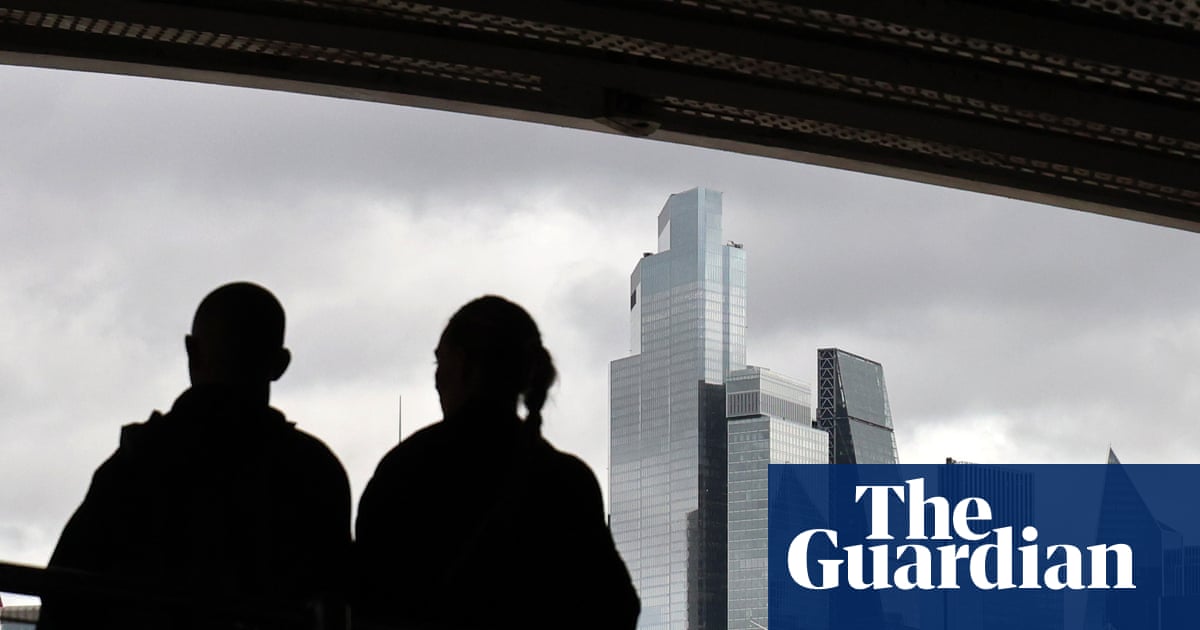
The UK’s new provisional high of 36.4C (97.5F), recorded in Yeovilton, Somerset, surpassed Wednesday’s June record of 36.1C in Gosport, Hampshire, which had beaten the previous peak of 35.6C set in Southampton in 1976.
In Switzerland, the national weather agency said temperatures had exceeded 37C for the first time in June, breaking a record set in 1947. “A temperature of 38C was even recorded at the Basel weather station” – the same place where the 1947 record was logged, MétéoSuisse said on social media.
Earlier on Thursday, the Met Office – the UK’s weather and climate service – said a sweltering night in Cardiff broke another heat record for the country. Temperatures only fell to 23.5C overnight in the Welsh capital, the highest minimum temperature ever recorded in June.
The scorching temperatures stretched across much of western Europe, with at least 101 million people expected to experience temperatures above 35C on Thursday, according to the news agency Agence France-Presse.
In France, where three-quarters of the country remained under an extreme heat alert, the national weather agency registered the hottest night since record-keeping began in 1947, as overnight temperatures from Wednesday to Thursday broke a record set earlier this week.
Public prosecutors linked the heat to the death of a three-year-old boy after he became trapped in his family’s car in the suburbs of Paris. Officials said the child had been thought to be napping but had instead climbed into the family car and been unable to get out after the child locks on the doors activated.
Earlier in the week, the extreme temperatures in France were linked to the deaths of two young children, while the prime minister, Sébastien Lecornu, said at least 40 people – many of them young – had drowned while swimming in unsupervised areas.

For days, officials across France have scrambled to cope with the searing heat, shutting down three nuclear reactors after the surrounding cooling waters became too hot, opening gardens and parks in Paris for the many struggling with heat-trap homes, and trying to adapt school buildings for the hundreds of thousands of teenagers sitting national exams.
The mayor of Paris, Emmanuel Grégoire, said there had been an “increase in mortality” in the capital but declined to provide figures. “Pretty much all our indicators are in a critical state,” he told the broadcaster TF1, citing calls to emergency services and hospital admissions and deaths.
The office of France’s health minister, Stéphanie Rist, said 25 cardiac arrests were recorded over 24 hours in Paris on Wednesday, compared with an average of fewer than 10. Across the country, there had been a fourfold increase in emergency room visits for heat-related reasons, it added.
In Spain, where on Thursday most weather alerts had been lifted, estimates from a public institute comparing daily death statistics with historical records suggested the heatwave could have been responsible for 212 deaths across the country between Sunday and Wednesday.
This week Spain recorded its highest daily average temperatures in June since at least 1950, with Monday’s figure of 28.1C followed by 28.2C on Tuesday.
The country’s often cooler north bore the brunt of the heatwave, with temperatures exceeding 40C in parts of the Basque Country, and the Cantabrian village of Tama hitting a record high of 43.7C on Tuesday.
In Italy, courts in Palermo, Sicily, said they had suspended all non-urgent hearings until 29 June due to “malfunctioning air conditioning”. The Italian newspaper Corriere della Sera reported five deaths from the heatwave, including two farmworkers and a builder.
The Netherlands issued a rare red alert over the blistering temperatures expected on Friday, while Germany was bracing for higher temperatures, with forecasts of between 35C and 41C on Friday and Saturday in parts of the country.
Open-air sports events were cancelled and the national rail operator, Deutsche Bahn, warned customers not to travel owing to the high risk of disruption from wildfires, heavy summer rain and thunderstorms.
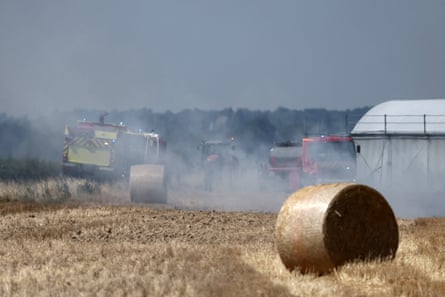
Heatwaves are now more severe and more likely because of the carbon pollution from burning fossil fuels, with scientists estimating the current extreme temperatures across Europe are between 2C and 4C higher as a result.
Many thousands of people are likely to have died prematurely in the heat, but the statistical analysis required to determine the number takes time to complete. The UK Health Security Agency found that more than 10,000 people died in Britain owing to summer heatwaves between 2020 and 2024.
The UKHSA has extended its red heat-health alert by 24 hours to 11pm on Friday. It is only the second red alert ever issued by the agency. The Met Office also extended its red alert for south-east England until 9pm on Friday.
Rising global heat is killing one person a minute around the world, health experts said in October.
“Europe’s savage heatwave is the latest price to pay for fossil fuel pollution baking our planet,” said Simon Stiell, the UN’s climate chief. “Schools closing, the vulnerable dying, economies sweating: this is what the climate crisis looks like in practice, and it’s just getting started.”
Global heating will not stop until carbon emissions fall to net zero, but they rose again in 2025.
Stiell said: “Extreme heat will keep getting worse, and other climate impacts – from mega-droughts, floods, wildfires and storms – will keep hammering every economy and population harder each year. But the solutions are equally clear: a faster shift to renewables – which are now much cheaper than fossil fuels – as well as protecting forests. There’s no time to lose.”

The UK parliament voted overwhelmingly on Wednesday to set a legally binding target of an 87% cut in emissions by 2040. That figure was proposed by the government’s official adviser, the Climate Change Committee, which said in May that the UK’s infrastructure was “built for a climate that no longer exists” and needed urgent improvement to protect people from the climate crisis.
Many schools have closed and rail journeys have been cancelled during the UK heatwave this week, which has been made even more dangerous and uncomfortable by high humidity. The National Education Union has urged the government to set out a timetable for equipping schools with air conditioning, which is currently rolled out unequally across the UK.
On Thursday South East Water implemented a hosepipe ban in Kent, affecting approximately 850,000 customers. Other areas serviced by the water company – Sussex, Hampshire and Berkshire – are also all on red alert warnings, with customers being asked to minimise usage as much as they can as demand increases with the rising temperatures.
The London ambulance service responded to a record 642 Category 1 calls on Wednesday and on Thursday Hampshire police were still searching for a 15-year-old boy who went missing while swimming in a lake the previous day.
Sadiq Khan, the mayor of London, launched the city’s first heat plan on Thursday. “Extreme temperatures are no longer a future threat, they are a present danger,” he said. The plan includes retrofitting homes at the highest risk of overheating, more tree cover, and safe access to water for paddling and swimming. A 2025 study found the proportion of UK homes reporting overheating in summer quadrupled to 80% in a decade.
Measurements taken by Greenpeace found pavements, rail platforms, building sites and other places across London reached surface temperatures of 50C to 60C on Wednesday. The black rubber floor of a playground in Islington was recorded at 53C at 5pm.
“This record-smashing heatwave has turned London into a sticky, sizzling cauldron,” said Mel Evans, Greenpeace UK’s head of climate. “This isn’t just weather, it’s a public health emergency driven by fossil fuel giants. These abnormal temperatures are stretching homes, schools, transport and our own health to breaking point.”
Additional reporting Farryn Stock