2 months ago
130
2 months ago
130
UK government 'minded to intervene' in Paramount's takeover of Warner Bros Discovery
Newsflash: British culture minister Lisa Nandy has just threatened to intervene in Paramount’s proposed $110bn takeover of Warner Bros Discovery on public interest grounds.
In a written answer to parliament, Nandy has cited concerns about maintaining plurality in the media sector.
Nandy says the Department for Culture, Media and Sport has written today to the current and proposed owners of Warner Bros Discovery to tell them she is “minded to intervene” on public interest grounds, namely:
-
The need for, to the extent that it is reasonable and practicable, a sufficient plurality of views in news media in each market for news media in the United Kingdom or a part of the United Kingdom.
-
The need, in relation to every different audience in the United Kingdom, or in a particular area or locality of the United Kingdom, for there to be a sufficient plurality of persons with control of the media enterprises, or the enterprises providing on-demand programme services or both, serving that audience.
Nandy adds:
I am conscious that the proposed acquisition is global in nature. In reaching this decision, my focus has been, and will remain, on the UK public interest and the range of services available to UK audiences, including Channel 5, TNT Sports, Cartoon Network, Nickelodeon, and CNN International, as well as Paramount+ and HBO Max.
The mega-merger will bring together the Paramount and HBO Max streaming services, Channel 5 and TNT Sports, which broadcasts Champions League, Premier League and the Olympics, the Hollywood studios behind franchises including Superman, Batman and Top Gun, as well as HBO, home to shows including Game of Thrones, The White Lotus and Succession.
Earlier this month, the UK competition watchdog opened an investigation…
… However it has been approved by the US Department of Justice.
Nandy’s intervention may not please the US White House, as Paramount’s owners, the Ellison family, are allies of Donald Trump.
Key events

Kalyeena Makortoff
Away from the Paramount/Warner Bros deal, Bank of England deputy governor Sarah Breeden has been renewing warnings over AI’s threat to financial stability, cautioning that - without tighter regulation - the widespread use of autonomous AI agents risk sparking a “market meltdown”.
Speaking at the ECB conference in Sintra, Portugal, Breeden reiterated the Bank’s longstanding warnings over the burgeoning technology, adding that it had increased the importance of stress testing the behaviour of financial firms in a crisis.
She said that the Bank was “experimenting” with simulation methods, alongside the Bank of International Settlements and Germany’s Bundesbank, in order to understand how the design of AI can end up driving herding behaviour.
Breeden says:
“That work can also explore mitigants: whether markets using AI agents are resilient enough; whether agents’ objective functions could incorporate public policy objectives; and whether guardrails are needed, analogous to circuit breakers or kill switches that would limit or stop trading market-wide if faulty AI models cause market meltdown.”
She added:
“If AI agents respond similarly to the same prompts or triggers, they could amplify volatility in stress – especially if their objectives drift from original goals or public policy objectives, in a manifestation of the misalignment problem that can arise with some AI models.”
That means authorities need to keep those “guardrails” under review:
“We must keep asking whether existing, technology-agnostic regulatory frameworks remain sufficient.”
CNN points out that Paramount has cleared regulatory hurdles in many other countries, including in the US, where the Justice Department signed off on the deal earlier in June without requiring any concessions.
Paramount has said that it expects the deal to take effect in the third quarter of this year, meaning by the end of September. Corporate meetings about how to integrate Paramount and WBD have been taking place for months already, they add.
Paramount says Warner Bros deal does not pose media freedom issues in UK
Paramount Skydance has responded to Lisa Nandy’s statement, declaring that it is confident that its proposed $110bn takeover of Warner Bros Discovery did not pose any media plurality issues in the UK.
A spokesperson for Paramount says (via Reuters):
“We are confident that our proposed transaction does not pose any media plurality issues in the UK and remain confident in our stated transaction timeline.”
This wouldn’t be the first time the UK has thrust a spanner into the wheels of a US takeover.
Back in 2023, the competition regulator blocked Microsoft’s takeover of gaming firm Activision Blizzard, only to later wave it through after various changes to the deal were proposed.
If UK regulators conclude that they have concerns about the Paramount/Warner Bros deal, the companies could try to address them by offering remedies such as divestments or commitments to protect editorial independence.
Lisa Nandy has also revealed that she could update the UK’s Enterprise Act to catch up with the world of streaming TV.
She tells MPs in her written answer that the Act, passed in 2002, doesn’t cover ‘on-demand’ TV, so she will update it if necessary.
Nandy writes:
The public interest consideration regarding plurality of persons with control of media enterprises, or enterprises providing on-demand programme services, is not currently specified in section 58 at the Act.
However, under section 42 of the Act, I may specify a new public interest consideration for Ofcom to consider in relation to the merger, if I consider it ought to be specified in section 58. As the legislation was drafted at a time where viewing was largely via broadcast linear channels, it does not cover the effect of a merger on streaming or video-on-demand services. I believe this ought to be able to be considered in relation to this and all future media mergers given the role on-demand viewing now plays in the market.
If I decide to intervene in this merger on the basis, I will bring forward secondary legislation to finalise this public interest consideration as the Enterprise Act requires me to do.
Nandy: I've not made a final decision yet...
Lisa Nandy adds that she has not taken a final decision on whether to intervene in the Paramount/Warner Bros deal.
She explains:
The ‘minded to’ letter invites further representations in writing from the parties and gives them until 6 July to respond.
If I decide to issue an Intervention Notice, the next stage would be for Ofcom to assess and report to me on the public interest considerations, and for the Competition and Markets Authority (CMA) to assess and report to me on whether a relevant merger situation has been created, and any impact this may have on competition.
Following these reports, I would need to decide whether to refer the matter for a more detailed investigation by the CMA under section 45 of the Act. I am mindful of the need to reach a final decision in a timely manner, and I will endeavour to do so as appropriate.
UK government 'minded to intervene' in Paramount's takeover of Warner Bros Discovery
Newsflash: British culture minister Lisa Nandy has just threatened to intervene in Paramount’s proposed $110bn takeover of Warner Bros Discovery on public interest grounds.
In a written answer to parliament, Nandy has cited concerns about maintaining plurality in the media sector.
Nandy says the Department for Culture, Media and Sport has written today to the current and proposed owners of Warner Bros Discovery to tell them she is “minded to intervene” on public interest grounds, namely:
-
The need for, to the extent that it is reasonable and practicable, a sufficient plurality of views in news media in each market for news media in the United Kingdom or a part of the United Kingdom.
-
The need, in relation to every different audience in the United Kingdom, or in a particular area or locality of the United Kingdom, for there to be a sufficient plurality of persons with control of the media enterprises, or the enterprises providing on-demand programme services or both, serving that audience.
Nandy adds:
I am conscious that the proposed acquisition is global in nature. In reaching this decision, my focus has been, and will remain, on the UK public interest and the range of services available to UK audiences, including Channel 5, TNT Sports, Cartoon Network, Nickelodeon, and CNN International, as well as Paramount+ and HBO Max.
The mega-merger will bring together the Paramount and HBO Max streaming services, Channel 5 and TNT Sports, which broadcasts Champions League, Premier League and the Olympics, the Hollywood studios behind franchises including Superman, Batman and Top Gun, as well as HBO, home to shows including Game of Thrones, The White Lotus and Succession.
Earlier this month, the UK competition watchdog opened an investigation…
… However it has been approved by the US Department of Justice.
Nandy’s intervention may not please the US White House, as Paramount’s owners, the Ellison family, are allies of Donald Trump.

Aluminium is on track for biggest quarterly fall in three years, on hopes of a pick-up in supplies from the Middle East.
Benchmark aluminium on the London Metal Exchange has fallen by 10% in the last quarter, Reuters reports. In June alone it slumped by 15%, the biggest monthly fall since the 2008 global financial crisis.
The Middle East accounts for 9% of global output, which was badly disrupted by the closure of the strait of Hormuz after the Iran war began.
Segro: Prologis is trying to buy us on the cheap
Taleover battle news: UK warehouse operator Segro has reiterated its opposition to being acquired by US rival Prologis.
After Prologis issued a presentation outlining its takeover approach (made earlier this month), Segro said its board “unanimously and unequivocally” rejected the proposal, as it undervalues the company.
Segro accuses Prologis of an “opportunistic” attempt to take advantage of “a period of share price dislocation following the Middle East conflict”. The company also points out that the value of the cash-and-share offer has fallen since it was made, as Prologis’s shares have dropped in value.
Andy Harrison, chairman of SEGRO, says:
“There is nothing in Prologis’s announcement and presentation issued this morning that changes the Board’s clear position. Prologis is trying to acquire SEGRO on the cheap when our share price has been dislocated by the Middle East conflict and at a price that reflects none of the quality, scarcity and growth embedded in the business.
We have unanimously rejected their Proposal because we continue to believe our compelling standalone investment case can deliver superior shareholder value. Capital is not a constraint on our ability to unlock all of this value for our shareholders. We look forward to providing more detail on our growth strategy and value case next week.”
Oil heads for largest quarterly fall in six years
Speaking of oil…. Brent crude is heading for its biggest quarterly loss since the Covid-19 pandemic hit the global economy six years ago.
With just one trading day to go, Brent is on track to record a 38% fall for the April-June quarter, as easing tensions in the Middle East pushed down energy prices.
That follows a 94% surge in January-March, and would be the biggest monthly drop since the first quarter of 2020.
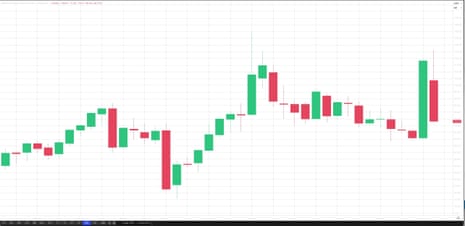
Oil has fallen through much of June, as Washington and Tehran hammered out an interim peace agreement and agreed to meet for talks to end the conflict.
At $73.18 a barrel at pixel time, Brent crude is only $1 a barrel higher than before the conflict began,
Simon Prior, fund manager of Premier Miton Corporate Bond Monthly Income, suggests the oil price has fallen too sharply, given many countries need to rebuild their crude reserves after running them down since the Iran war began.
Prior explains:
“What I believe market participants are overlooking is the next phase. If strategic petroleum reserves were used to dampen the spike, those barrels eventually need replacing. If commercial inventories have been drawn, they too need rebuilding. The market may be assuming that returning Middle East supply simply creates excess barrels later this year. That feels too simplistic. Some of those barrels may already have a destination: government tanks, commercial storage and refineries trying to rebuild cover.
Nor is reopening the Strait a binary event. A few tankers leaving the Gulf would be visually powerful and probably bearish for prices in the short term. But the harder question is whether ships are willing to go back in. A shipowner, insurer and crew need confidence over the full voyage, not just the day the first headline breaks. We can debate how long full trust takes to return, but it feels unlikely to be immediate.
Cheaper energy prices would help the UK economy grow, and there are encouraging signs that traffic through the strait of Hormuz is picking up.
Bloomberg reports that around 24 commodity ships including those that haul oil and liquefied natural gas, as well as bulk carriers, transited the strait in both directions on Monday, data from Kpler shows. This trend has continued this morning, with a supertanker re-appearing in the gulf, along with a number of smaller ships.
Taken together, the oil tankers can hold around 11 million barrels of crude, and their movements point to increasing confidence by shipowners to transit through the waterway, they add.
Burnham faces 'supremely tricky balancing act' as economy ekes out growth
This morning’s UK GDP report shows a ‘lacklustre performance’, raising challenges for Andy Burnham, reports Susannah Streeter, chief investment strategist at Wealth Club:
The latest assessment of UK economic health also provides some reassurance that the economy is still eking out growth.
The pound has risen a little but is still languishing around $1.32, sharply down from this year’s highs back in January of around $1.38.
The snapshot shows the economy is hardly firing on all cylinders. While first-quarter growth held steady at 0.6%, the downward revision to annual growth to 0.9% is a reminder that the recovery remains fragile.
Encouragingly, business investment and exports were revised higher, suggesting companies are still prepared to commit capital despite high levels of unpredictability on the global and domestic scene. However, the economy continues to rely heavily on consumer and government spending to fuel growth.
If Andy Burnham does get the keys to Number 10, he’ll face a supremely tricky balancing act. While his vision outlined yesterday to power up growth in the regions may resonate politically, it was light on detail about how productivity, private investment and skills shortages would be tackled in practice. Investors will be looking for a clearer roadmap showing how growth can be boosted sustainably without unsettling bond markets or putting further strain on already stretched public finances.
Barclays buys Canary Wharf HQ for £750m

Julia Kollewe
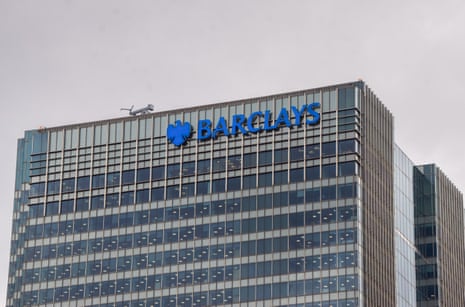
Barclays has bought its Canary Wharf headquarters in London for £750m, in one of the biggest office acquisitions in recent years.
The UK bank has acquired a 999-year lease in its global headquarters at One Churchill Place from Canary Wharf Group, securing control beyond the current lease which runs to 2039. It said this would give it greater certainty over its long-term occupancy costs.
Barclays has been refurbishing the 1m square foot building to create more flexible space as working patterns change. It has served as the bank’s global headquarters since 2005.
C.S. Venkatakrishnan, the Barclays chief executive, said:
“This acquisition gives us long-term certainty, greater flexibility over our London footprint and reinforces our continued confidence in London as one of the world’s leading global financial centres.”
Shobi Khan, chief executive of Canary Wharf Group, hailed the decision as a “strong endorsement of both Canary Wharf and London”. He added:
“It underlines the long-term confidence that leading businesses continue to place in the district as a location where they can invest, grow and bring people together.”
Khan has sought to build life science and technology clusters to breathe new life into the docklands estate in east London, where the property company transformed wasteland into a financial centre to rival the City in the 1990s. It has also built thousands of homes and tried to bring a buzz to the area throughout the week by introducing free music and arts festivals, as well as open water swimming, paddleboarding and go karting.
The area became a ghost town during Covid lockdowns and was slow to recover. In recent years a number of banks and law firms headquarted in Canary Wharf, including HSBC and Clifford Chance, have announced they would move back to the City to smaller buildings, as they downsized amid hybrid working.
However, HSBC leased extra space in Canary Wharf last summer after a push to bring staff back to the office at least three days a week, rising to four days for senior managers. While it confirmed its move back to the City in 2027, it now plans to operate from several offices in London, including Canary Wharf.
UK housebuilders face £4.5bn class action over house prices
The drop in UK housebuilder shares this morning (see here) also follows the launch of a £4.5bn class action over claims that alleged anti-competitive practices resulted in higher prices for homebuyers.
The claim is being led by Mark McLaren, a former legal affairs manager at the consumer group Which?, against Barratt Redrow, Bellway, The Berkeley Group, Bloor Homes, Persimmon, Taylor Wimpey and the Vistry Group, The Times reports.
It comes after seven housebuilders agreed last summer to pay £100m to affordable housing schemes after the UK competition watchdog found evidence that they may be sharing commercially sensitive details that affect the price of homes.
UK growth is 'potential parting boost for Rachel Reeves'
Encouragingly, all three main sectors of the UK economy – service, production and construction – grew in the first quarter of this year, according to this morning’s national accounts.
The largest contribution from the services sector, which grew by 0.8%.
Thomas Watts, MPS portfolio manager at wealth manager Julius Baer, says:
“A potential parting boost for Rachel Reeves: UK GDP came in broadly in line with expectations for the first quarter, rising by 0.6%.
Encouragingly, the composition of growth was more balanced than in recent quarters. Both construction and production posted gains of 0.2%, signalling a modest but welcome broadening in economic momentum.
Services, the traditional engine of the UK economy, remained the standout performer, expanding by 0.8%. However, the fact that all three main sectors contributed positively will be particularly reassuring for policymakers, both at Threadneedle Street and in Downing Street.”
Three in five UK homes listed this year not selling
The UK housebuilding sector has been hit by weakening demand this year with three in five homes listed since January yet to sell, according to property portal Zoopla.
Zoopla has also reported that buyer demand has fallen by 15% year-on-year across the UK, due to “the combination of political uncertainty and higher borrowing costs”.
Zoopla reports:
Higher mortgage rates and political uncertainty have shrunk the pool of committed home buyers, pushing sales agreed to 7% below last year. A change of Prime Minister and questions over future tax and spending priorities in the Autumn Budget have added to the uncertainty.
At the same time, buyer demand has fallen by 15% YoY, with more people taking a wait-and-see approach until the outlook becomes clearer. However, this is not the first time that the market has absorbed economic and political uncertainty, with the 2022 mini-budget triggering a sharp fall in sales agreed of more than 20%, with the market recovering once mortgage rates stabilised.
This may have knocked shares in housebuilders this morning; Persimmon (-3.9%) and Barratt Redrow (-3.6%) are leading the fallers on the FTSE 100 index.
There’s some good news for Germany, as it reels from its exit from the World Cup last night.
The number of unemployed people in Germany fell by 1,000 in June, labour office figures show, better than forecasts of a 7,000 increase.
The seasonally adjusted jobless rate stood at 6.3% in June, in line with the previous month.
“There is little sign of change in the labour market,” labour office head Andrea Nahles said in a statement.
“Unemployment is falling only slightly, and employment subject to social security contributions is continuing its slight downward trend.”