3 months ago
161
3 months ago
161
Amid calls for a national shutdown on 30 January, Anton Kinloch displayed a sign on the sidewalk outside Lone Wolf, his craft cocktail bar and restaurant in Kingston, New York. In large block letters he wrote: “WE LOVE ICE IN DRINKS. WE DON’T LOVE ICE IN REAL LIFE. SOLIDARITY ALWAYS.”
Along with his wife and business partner, Lisa Dy, he had made the difficult decision to stay open, electing instead to donate a portion of the night’s proceeds to a local immigrant advocacy group. With frigid temperatures and inclement weather stymying business in the region this winter, he simply could not afford the lost revenue. But he refused to stay silent in the aftermath of the brutal killings of Renee Good and Alex Pretti by Immigration and Customs Enforcement (ICE) and Customs and Border Patrol (CBP) agents in Minneapolis.
Within hours, Kinloch discovered that the sign had been vandalized and thrown into the middle of the street. Its wooden frame was splintered and the chalkboard surface shattered; it appeared to have been run over by a car several times. Earlier in the day, he’d received at least a half-dozen derogatory messages after posting support for immigrants on social media. “I spoke to other business owners in the area, and they said that they had received similar threats,” he said. “They also saw a decline in their social media followers after speaking out. People were unfollowing them, blocking them and sending them hate messages.”
Since Donald Trump returned to office last year, restaurants and bars across the country have found themselves on the frontlines of aggressive immigration enforcement and intimidation by masked federal agents. According to the American Immigration Council, immigrants comprise 22% of the restaurant industry’s workforce, a figure that exceeds 30% in states with large foreign-born populations such as California, New York and Texas. With threats against immigrants rising, many restaurant owners have been vocal in their opposition to ICE in their communities. But the most outspoken businesses said they’ve also become a target for vitriol by ICE supporters: online harassment, boycott threats and even physical confrontations. Some restaurateurs claim they have been besmirched by phony negative reviews on sites like Google and Yelp.
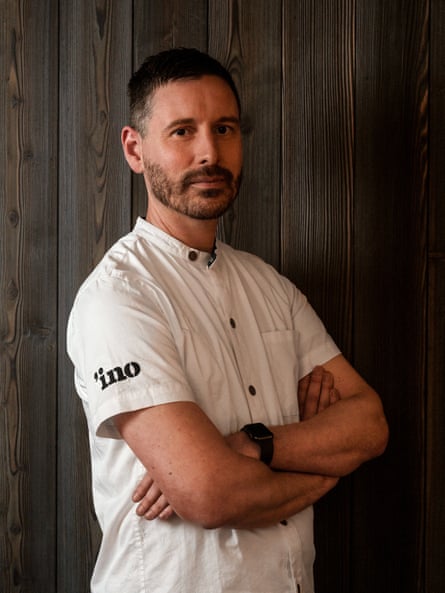
Jamie Kenyon, executive chef and partner of Bottino in New York City, said that within minutes of posting a pro-immigrant message on his restaurant’s social media page the day of the national shutdown, his restaurant received an obscenity-laced phone call from a stranger condemning the post. Kenyon was taken aback by the threatening response to what he considered a benign show of solidarity. “We are all immigrants,” it said, explaining the restaurant group’s decision to stay open and its plans to donate 15% of sales to the National Immigration Justice Center. “One less place to visit,” one commenter responded. “Maybe when some illegal sets you on fire you’ll grasp why.”
Later that day, the restaurant received two blistering one-star Google reviews in quick succession. “Their horrendous values and morals do not represent us,” the reviewer wrote. “They are extremely hateful and immoral. Would not go here under any circumstances.” Kenyon suspects that the angry caller may have been responsible for the slanderous reviews and, while he and his partners are working to have them expunged, the reputational harm is irreversible. A 2015 report by Moz, a software company specializing in search engine optimization, revealed that over 67% of respondents were influenced by online reviews and that businesses risk losing 22% of customers when one negative review turns up in their search results. “When you get good reviews, they’re so precious, and bad reviews are devastating,” Kenyon said. “But when they’re fake and total nonsense, it’s just infuriating and really damaging to businesses.”
At Pizza Matta in Chicago’s Logan Square, a dispute over the immigration issue led co-owner Jason Vincent to refuse service to an ICE supporter who had been leaving the restaurant harassing, politically charged messages on Instagram for months. The conflict escalated when the customer came into dine the same day that five-year old Liam Ramos was abducted by federal agents in Minnesota. After a contentious exchange, Vincent demanded he vacate the premises. “I refuse to cook for fascists and their enablers,” he said. While it isn’t official policy in his restaurants, Vincent said he reserves the right to refuse service to anyone who comes in wearing a Maga hat or a pro-ICE T-shirt. “I was raised Jewish, and I was taught from a young age ‘never again’,” he said. “What is happening here is ‘never again’.”

Rising hostility toward immigrants has some business owners increasingly on edge about the risks of being too vocal. “It’s really important for small businesses to speak up and make our point of view clear,” said Cheetie Kumar, co-owner of Ajja in Raleigh, North Carolina, and a board member and vice-president of the Independent Restaurant Coalition. “But at the same time, I’m an immigrant, there are people in my restaurant who work for me who are immigrants, and I definitely don’t want to put a target on anyone’s back.”
The plight of immigrant workers resonates with many foreign-born restaurateurs, especially ones who’ve experienced uncertainty around their own immigration status in the past. “I’m so thankful that I just received my citizenship a year ago because it’s scary,” said Kenyon, who relocated to the US from Manchester, England, when he was 14 years old. “Without that, I’d be up at night. I have a family to feed, too.” He believes that sensible immigration enforcement should focus on removing criminals who pose a threat to the community, not targeting innocent people based on the color of their skin. “The biggest ‘crime’ that immigrants are committing in restaurants every day is working,” he said. “They’re giving back to the community. That’s the best crime in the world.”
Most industry leaders agree that deporting the millions of immigrant workers whose labor is the industry’s lifeblood would be catastrophic. “People of color and immigrants have been holding up the entire food system in this country since its existence and historically without any equality,” said Sean Sherman, chef-owner of Owamni, an indigenous restaurant a few miles from where Alex Pretti and Renee Good were killed. “You can’t just pull all of this massive workforce out and expect these systems to continue to work.”
Restaurants across the country are already battling rising inflation and skyrocketing costs. They can ill afford reckless immigration enforcement that threatens their workforce and destabilizes their communities. In Minneapolis, where federal agents have been aggressively targeting the hospitality industry, sales at local restaurants are down as much as 50-60%, according to Sherman. “At this rate and this pace, every restaurant in Minneapolis would probably be shut down in two months.” (Tom Homan, the border czar, announced last week the administration’s plans to draw down 700 officers in Minnesota.)
Vincent has seen a similar effect in Chicago, where ICE had been conducting regular enforcement operations late last year. In October, when agents deployed teargas across the street from a school on the same block as his restaurant Giant, he said it was the slowest night the establishment has ever had in its 10-year history.
Sherman recently traveled to Washington DC to deliver a petition with more than 3,000 signatures to Minnesota’s junior senator, Tina Smith, urging Congress to rein in ICE. Days before his visit, an Owamni employee was apprehended outside of the restaurant by immigration agents and disappeared to a detention center in Texas, despite being properly documented (the employee has since been released).
“Our priority is not fighting trolls online,” said Sherman. “We’re trying to figure out how we can make some noise to alert people that this is not the America we want to be living in.”