7 hours ago
16
7 hours ago
16
After a summer of repeated heatwaves and exceptionally dry weather in the UK, rain has brought some relief this week, but drought remains widespread and experts warn it will take weeks of sustained rainfall for water supplies to recover.
For people growing their own fruit and vegetables, it has been a challenging and sometimes surprising season. The Guardian spoke to growers across England about how they are adapting to a hotter, drier climate.
‘It’s just not sustainable’
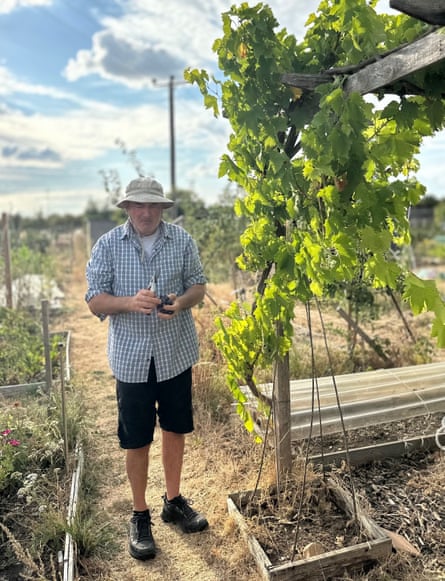
John Peel, 62, has been growing vegetables on his Oxfordshire allotment for eight years and says this has “definitely been the most difficult” season yet.
His plot suffered a “double whammy” – a late frost in May, which destroyed nearly all his apples and soft fruit, before months of heat and drought left much of the allotment scorched.
While some gardeners have reported fewer slugs and snails, other pests thrive in hot, dry conditions, such as the flea beetle.
“It’s not just the drought that’s impacted things,” Peel says. “It’s the flea beetles. Normally the flea beetles would be going dormant now and they’d have stopped feeding. But they’ve absolutely decimated the brassicas. I have covered them with quite fine mesh and they’re still getting under, through and around that.”
Even crops that survived have disappointed, despite the effort he has put into watering them. His tomatoes are smaller than usual and, rather than the customary glut of courgettes to give away, he has only grown enough to feed his own household.
“It’s definitely less for more work. It’s just not sustainable. Certainly trying to do it by pouring more water on it isn’t going to work,” he says.
“It does get a little bit: what the hell am I doing this for? You put a lot of work into growing things and then something either destroys them or eats them.”
‘I don’t see any of this as a positive thing at all’
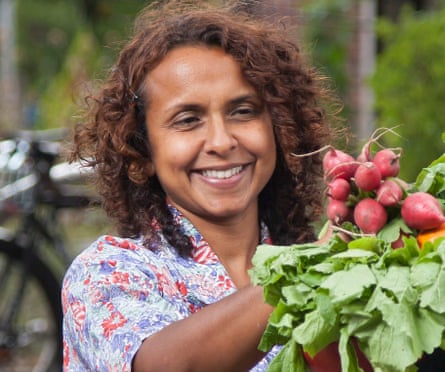
Nicola Scott, 50, who works in sustainable food system change, has been growing vegetables on allotments for more than 15 years and has a plot in Old Trafford, Manchester.
She says this year has been particularly hard as usually growers might have to contend with one significant hot spell, rather than this year’s repeated heatwaves.
“Last year we did have prolonged dry weather, which is unusual for Manchester, but then we had heavy rain, so it went from extremes. Whereas this year, we’ve had the extreme and prolonged dry weather, but I think we have only had one good bout of rain since June,” she says. “This shouldn’t be happening in Manchester. This is weird.”
Salad leaves have bolted or become scorched, while her early potatoes struggled even with regular watering. Scott’s two large water butts ran dry, although techniques to retain moisture in her soil such as broadforking, which loosens the soil so water can penetrate more deeply, have meant her outdoor beds have needed less watering.
She is now considering giving more space to chillies and aubergines and experimenting with growing sweet potatoes in her greenhouse.
“I do a lot of work on addressing climate change issues so I don’t see any of this as a positive thing at all. I think it’s quite concerning,” she says. “For me it’s about trying new things, but also really trying to think of ways to still grow the stuff I really like growing.”
‘It has been exhausting and relentless’
Emma, 47, who has two allotments with her partner near Bristol, described keeping them alive this summer as “exhausting and relentless”.
Watering is all done by hand from troughs on the site. A thorough weekly water of both plots takes about two hours and involves about 6,000 steps carrying watering cans.
“It is my summer exercise routine,” she says. Other allotment holders were similarly weary: “I think everyone’s just complaining about how relentless and exhausting watering is.”
“While I haven’t seen many slugs or snails for the past 10 weeks or so, we’ve struggled with larger animals like badgers, rats, maybe foxes taking stuff. I can’t help but think that this is due to the weather,” she says. “They’ve taken all our sweetcorn, parsnips and a chunk of the carrots – even as I’ve tried to protect them.”
The prolonged heat and drought has left wildlife struggling to find food and water. Guy Barter, chief horticulturist at the RHS, says this could be driving animals towards allotment crops. Badgers, which feed heavily on earthworms, may struggle to dig into baked-hard soil and instead “help themselves to carrots and potatoes and things like that”, he says.
Meanwhile, during hot weather, slugs go deep in the soil to escape the heat, and the snails “squirrel themselves away in dark, cool, moist places”, Barter says.
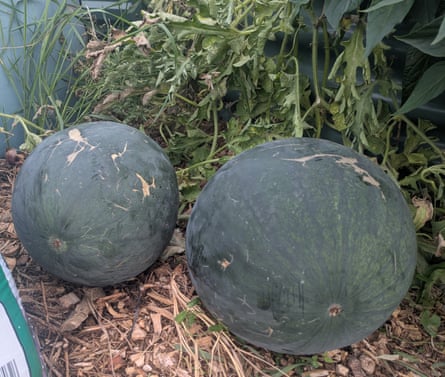
On Emma’s plots, her peas, potatoes and beetroot have struggled in the heat, while many other traditional allotment crops are “not really enjoying the lack of water”.
But the heat has brought some successes. Her tomatoes ripened weeks earlier than usual, her sweet potatoes are the biggest she has grown in five years and she is growing cantaloupes for the first time.
Most strikingly, she has successfully grown watermelons near Bristol. After experimenting with them last year, this year’s crop has been even more successful. “I thought I got lucky last year because of the weather,” she says. “It was such a wonderful thing to have our own watermelons.”
The changing conditions may alter what she plants in future. “It might put me off growing some of the more traditional things,” she says.
‘Where there aren’t trees, it’s just like a dust bowl’
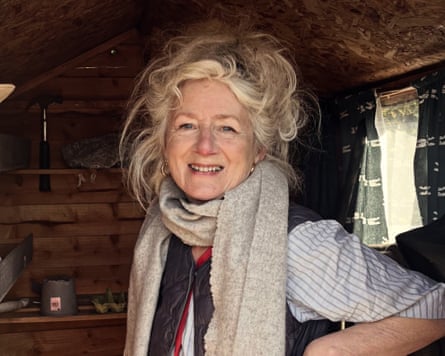
Christian Doyle, 80, has had her allotment in Arundel, Sussex, for just a year. People told her she would not be able to grow much because of a huge goat willow shading much of the site. However she believes it is partly thanks to the shade that her vegetables have mostly thrived.
When she took over the plot, it was waterlogged and its heavy clay soil seemed like a disadvantage. She piled the beds with compost, manure, straw, hay and wool, following no-dig principles.
Now, she believes that organic matter is helping retain precious moisture – something that Barter says is certainly possible, while RHS guidance says mulching and adding organic matter can help reduce the amount of water the bed needs.
Doyle has harvested onions, garlic, potatoes and beans and is particularly proud of her dwarf French beans and tomatoes. “It’s all an experiment. I didn’t know if anything would work.”
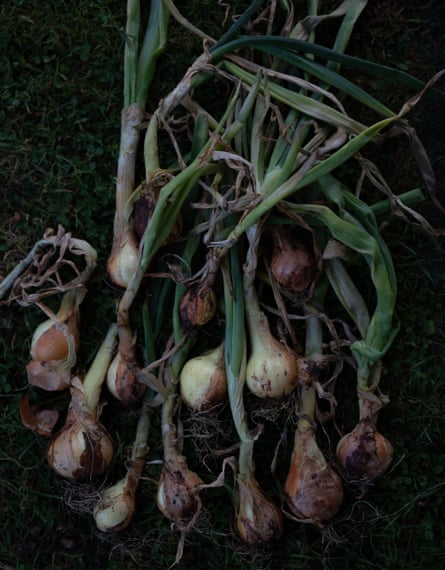
“I just keep going down there thinking, ‘well, everything could be dead’ and it’s not,” she says, adding that the plot has become a haven to her. “My allotment, even in this awful heat, has been a joy to be in because of the cool shade of the tree.”
She has planted two silver birches, an alder and fruit trees to provide even more shade in future, and plans to use more mulch and tall plants to shelter vegetables as summers become hotter.
The existing tree has shown her how important that could become. “Where there aren’t trees, it’s just like a dust bowl,” she says. “I’m thinking about the future and the shade they will bring long after I’ve gone.”