3 months ago
197
3 months ago
197
The three women refer to each other as “the girls”, even though they are in their 40s and 50s, long past girlhood. They have a WhatsApp group called Sister Solidarity, even though they are biologically unrelated.
The unshakeable bond between Laura Hughes and Lauren Preston, both 45, and Mary Sharp, 58, came about for the saddest reason – all three were raped and abused by Martin Butler, a manipulative drug dealer on their estate in London who groomed and coerced them decades ago.
Butler is now serving a lengthy sentence for the rape and buggery of Sharp in 1988. At his trial, Preston and Hughes provided bad character evidence as part of the prosecution case against him, about the grooming, rape and abuse they suffered from him in the mid-90s. He was subsequently convicted of the historic rape of an unidentified teenage victim, after a separate trial last year.
Butler was in his mid-30s, 20 years older than Hughes and Preston, when he started to groom them on their estate in Ruislip. His flat had a reputation as a party house, with drugs and alcohol on tap.
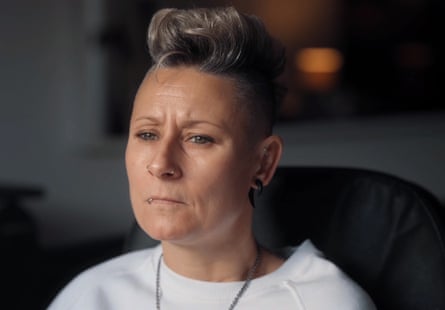
In February 2023, the Guardian reported on the three women meeting for the first time, after Butler was convicted of the offences against Sharp.
Hughes and Preston had known each other since early childhood, living in the same neighbourhood and attending the same school. Neither knew Sharp, although she, too, lived in the same area.
More rape survivors are speaking about their ordeals now, with some, like Sharp, Hughes and Preston, waiving their right to anonymity. When Gisèle Pelicot went public about the multiple drugged rapes she endured, she said she was doing so in the hope of bringing about changes in society, adding that shame has to change sides in rape cases.
Although speaking up and seeing a rapist convicted can be empowering for survivors, closure and healing is not straightforward. As Preston, Sharp and Hughes have found, the journey is bumpy and the scarring is deep. However, the support the women give each other has changed everything.
“We would never allow a man to use the word ‘girls’ about us, but we use it with each other,” says Hughes. “We all have the same demon, the same monster, but we are rising together.”
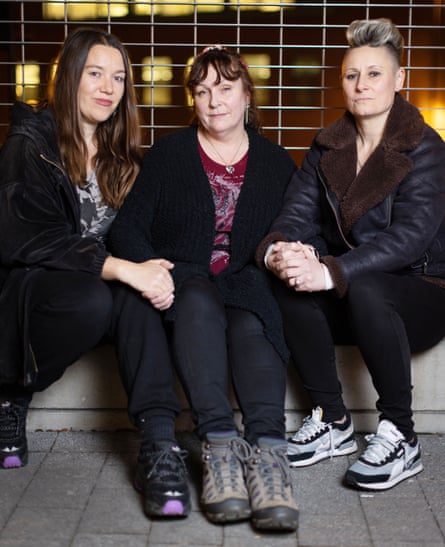
When the three women met for the first time, their connection was instant. More than three years on, their love and friendship has deepened and their determination to shore each other up, emotionally, remains steadfast.
“The girls are so strong,” says Sharp. “I felt so weak for so long before I met them.”
“We had your back from the beginning, Mary, before we even met you,” says Preston.
This week, a documentary airs on Channel 4, inspired by the original Guardian article, about the three women who, between them, were able to take down their rapist.
Preston and Hughes had both reported Butler to the police in the years after they had managed to break away from him, but had not succeeded in getting justice. Everything changed in 2018 when Hughes posted an appeal on Facebook for victims of Butler to come forward. She found three photos of him and wrote: “Martin Butler: Call for victims and witnesses. Grooms, drugs and rapes children in Ruislip, London, UK, possibly in Mevagissey, St Austell, Cornwall.”
The post attracted a huge response. “What I wrote was shared 1,700 times in four days and went as far as Australia,” says Hughes. “People who responded to the post said things like: ‘Yeah, he was a right sleaze.’”
Sharp saw the post and went to the police.
What prompted her to come forward, years after her experiences with Butler, was the terror that he might kill someone, as he had almost killed her.
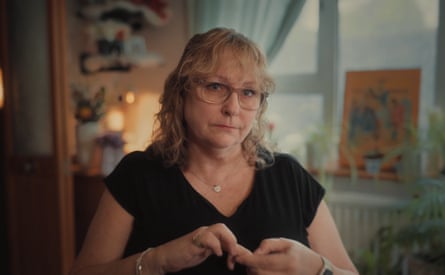
“I wouldn’t want anyone else to experience the near-death torture I experienced from Martin Butler,” she says. “I was so young when it happened that for years I believed I had done something wrong. After the rape, Martin Butler told me it was my fault.”
Sharp approached the police with the evidence she had, but there were many obstacles before she was able to give her evidence via video link at the trial. The CPS repeatedly told her there wasn’t sufficient evidence to prosecute Butler. “I had to fight three times to get them to proceed with the case. I very nearly gave up,” she says. “There were so many times when I felt I couldn’t cope. I thought to myself: ‘Why am I living through this hell again and again when it isn’t going anywhere?’”
Seeing Butler jailed for his crimes has made a huge difference to all three women – Preston says the minute she sat in court and heard the word “guilty” from the jury she began to feel “lighter”. Yet all of them are well aware that their lives might have taken a very different course if they had never had the misfortune to encounter him.
Sharp was an artist, but says that the trauma of being bound, strangled and raped by Butler meant she was unable to continue with this work for a couple of decades. “I feel like I’ve lost 30 years,” she says.
Preston was so traumatised she developed agoraphobia and didn’t leave the house for four years. Hughes says that as a result of being groomed, drugged and raped by Butler, “I’ve had some really unhealthy relationships.”
“He stole my family from me and he stole my childhood,” she says. “I knew that at any moment he could easily kill me.”
Hughes says she hoped Butler’s conviction would act as an emotional “cure”. But that did not materialise.
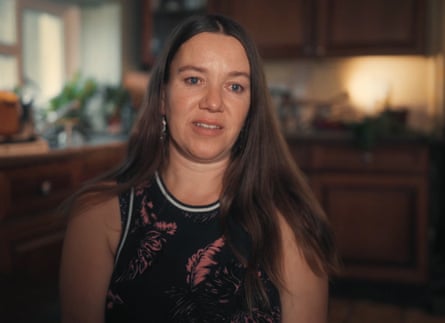
“There was a really long five-year buildup to the trial. You expect a magic button will be pressed after the conviction. But there wasn’t one.”
The recovery process continues for all of them. “For all these years I gave Butler the power,” says Preston. “Because I thought that if people knew what had happened, they would think it was my fault.”
“I wore my shame about what Butler did to me, I blamed myself and I carried it. But now I have given it back to him,” says Sharp.
“The misogynistic culture of silencing women keeps predators out there,” says Hughes. “The only thing to stop them is to show their face.”
Preston says the trauma of the trial and the challenges of deciding to speak publicly initially had a negative impact on her. “For about a year, I went backwards. I started to really suffer from anxiety.”
But all are determined to move forward. “We are not out of the woods,” says Sharp. “I do still have wobbly moments.”
“I feel like I have freed my childhood self,” says Hughes. “I can look myself in the eye now, almost as if I have become my own parent. Someone said that pain is a skin you can’t take off. I feel that’s true with me and my trauma. But having the girls helps me cope with living in that skin and getting stronger within it.”
“Everything that has happened, the court case, the documentary, it does make me hold my head up higher,” says Preston. “I couldn’t have done any of this by myself. The girls give me strength.”
“I feel stronger now,” says Sharp. “I wouldn’t do anything to upset my girls. They are part of me now.”