1 month ago
61
1 month ago
61
In Jeffrey Epstein’s wider circle, women and girls were treated as less than human by powerful men acting far beyond the law. The sexual trafficking plotted by him and his fellow criminals is the most egregious example of a global network of wealthy and powerful men that thinks it can act with impunity. Nothing less than a century-defining rebalancing of power and accountability is equal to this moment and the trauma of the victims. This scandal is primarily about them and their pain.
But as I digest the details of what has emerged, I also find it hard to find words to express my revulsion at what has been uncovered about Epstein and his impact on our politics. During the financial crisis, I wanted every moment of every day to be spent doing everything that could be done to save people’s homes, savings, pensions and jobs. That a member of the cabinet at the time was thinking more of himself and his rich friends is a betrayal of everything we stand for as a country. That the leaks of sensitive information were going to someone we now know was the ringmaster of a cabal of abusers and enablers sickens me.
In the weeks and months to come, we must find ways to rebuild trust. Yet trust in politics, once dented, is difficult to repair. And so, as the police investigate Peter Mandelson amid allegations of financial and political misconduct, indeed criminality, politicians have a herculean task to persuade people that they act in the public interest and not only self-interest. Already, two-thirds of the British public believe that politicians are out primarily for themselves. The grim truth is that unless something fundamental changes, this week’s revelations will be acid in our democracy, corroding trust still further.
We in Britain must face uncomfortable facts. Every few years, our country has suffered a major scandal that shakes us to the core but from which lessons are never fully learned: the Profumo affair of the 1960s, the “brown envelopes” sleaze of the 1980s, the MPs’ expenses affair of the 2000s, the Boris Johnson Partygate excesses of the early 2020s and now the Mandelson affair.
I have to take personal responsibility for appointing Mandelson to his ministerial role in 2008. I greatly regret this appointment. I made it at the end of his four years as the UK’s European commissioner on trade. I was informed that his record in the role was unblemished and there were no reports of a relationship with anyone named Epstein. No one could say I promoted him out of favouritism. I did so in spite of him being anything but a friend to me, because I thought that his unquestioned knowledge of Europe and beyond could help us as we dealt with the global financial crisis. I now know that I was wrong. He seems to have used market-sensitive inside information to betray the principles in which he said he believed, and he betrayed the people who believed in them – and him.
His activities, which his own emails have brought into the public arena, do not only show his duplicity. They force us to examine how easy it is in our country to trade secrets – for wealth to gain access to power, how backdoor routes to decision-makers can be covered up, how lobbying for financial gain can circumvent well-meaning but insipid rules and how our laws seem to have failed to catch up with corruption. The case is now unanswerable for comprehensive and immediate action to clean up our politics with new rules for politicians and public servants, as well as powerful new institutions and checks to enforce them.
Just after the Johnson scandals, at the request of Keir Starmer, I chaired a review of our constitution whose report included recommendations on standards in public life. And because he commissioned and subsequently approved all of it, the prime minister is in the best position to lead its full implementation.
To his credit, some of its recommendations are already being put in place – tightening the code on ministerial behaviour, reforming electoral laws to ban foreign money and reducing the suffocating overcentralisation of Whitehall – but he will be the first to agree that we must now move much faster and further.
First, we need an independent anti-corruption commission to be appointed by parliament, with the commissioner given the remit and power in law, as our review promised, to root out any criminality in UK political life by detecting and punishing it wherever and whenever it occurs. And to remove all doubt as to our determination, parliament should be quite specific in naming “corruption” a new statutory offence, as the Law Commission has proposed and Transparency International has sought in the public office (accountability) bill going through parliament. The anti-corruption champion, Margaret Hodge, has done her best with a limited remit, but the commissioner should have statutory powers of search and seizure and access to bank records, and all public bodies should be required to fully cooperate. Australia has led the way in introducing such an agency and that can be a blueprint for rapid reform.
Proper behaviour in public life is, however, more than simply the absence of suspicious money. The Nolan committee in 1995 laid down the underlying principles that should govern public life and public service, but the mechanisms for enforcing these have proved seriously wanting.
We need the new ethics and integrity commission – which replaced the committee on standards in public life in October 2025 – to be placed on a statutory basis, as it supersedes the current hotchpotch of standards commissioners and ethics advisers. At the moment, it is only advisory and has no powers to investigate individual cases, impose penalties or enforce its conclusions. It should be empowered to take a proactive role in investigating all alleged breaches of the various codes for ministers and MPs. An updated MPs’ code of conduct, which should also have a statutory footing, should include a general prohibition on MPs’ second jobs – with only a few exceptions required to maintain professional memberships, such as in medicine. Through the innovation of citizens’ juries – as promised by the Labour manifesto – there should be a greater role for the public in deciding and enforcing the rules to be followed by politicians.
Questions have been raised about the awarding of contracts, not just in the wake of the many Covid PPE scandals, but in relation to lobbying by a company co-founded by Mandelson, Global Counsel (whose overseas activities led to new advice on transparency being issued in 2025), and other firms. Transparency International reports that less than 4% of lobbyists are covered by the hastily concocted 2014 Lobbying Act. A report, No Rules Britannia, in April 2025 stated that we are the western world’s least transparent country. Conventions about commercial confidentiality should no longer prevent public service contracts delivered by private companies being subject to reasonable freedom of information requests.
It is no accident that in both the Michelle Mone and Mandelson cases, the spotlight has fallen on the House of Lords. Its membership contains many good and great public servants beyond reproach. But without greater accountability and a fully adequate statutory lobbying register akin to those in Germany, Canada, the US and France, the Lords’ 50 known lobbyists and the 91 members who are paid for their political advice form a section of our lawmakers that reminds me of the old rotten boroughs. Too many peers have second, third or fourth jobs, some of them employed under the radar because of a suspiciously lenient system for the declaration of conflicts of interest. I believe that we are one false declaration away from yet another scandal. Reform of the Lords, therefore, cannot stop at removing a few hereditary peers and expelling those guilty of crime.
In the absence of the most desirable outcome that I and the Labour commission support – the replacement of the Lords by an elected second chamber – we need immediate action to exclude lobbyists and to mandate rigorous standards of disclosure. Proper declaration of interests should be required also by those appointed to the privy council, and five years is a more appropriate delay than the current two years for former ministers lobbying or doing private business in areas where they clearly have inside knowledge of undoubted commercial value.
This week’s events show why it is also imperative that the government bring in a fully accountable system for vetting major appointments such as those of Mandelson, and one that allows public scrutiny. Before the first world war, an incoming minister had to immediately put himself up for re-election as a constituency MP as a condition of taking up government office. A minister making executive decisions was seen as different from a legislator scrutinising them. It is because we have had since then no satisfactory means of vetting ministerial or other major appointments that mistakes are so easily made.
The way forward is to hold parliamentary hearings, similar to those in the US Senate, for newly appointed ministers to ensure the right questions are asked and answered in public about present and past interests and conduct. We already have formal parliamentary hearings for new members of the Bank of England’s monetary policy committee. It is a system of formal vetting that should extend at a minimum to senior ambassadors. If it had been in place last year, it would have led to a very different ambassadorial appointment
None of these changes can be guaranteed to prevent a determined individual from betraying our country. But we owe it to the victims of abuse, whose moving accounts have triggered current investigations, that our every action is now determined by the effort to prevent the powerful acting with impunity against the powerless. Without delay, the prime minister can do what he has always wanted to do: legislate for a new era of transparency, putting in place the strongest possible safeguards to prevent misbehaviour and to ensure proper accountability if misconduct happens. The time is overdue to let in the light – and send the princes of darkness on their way.
-
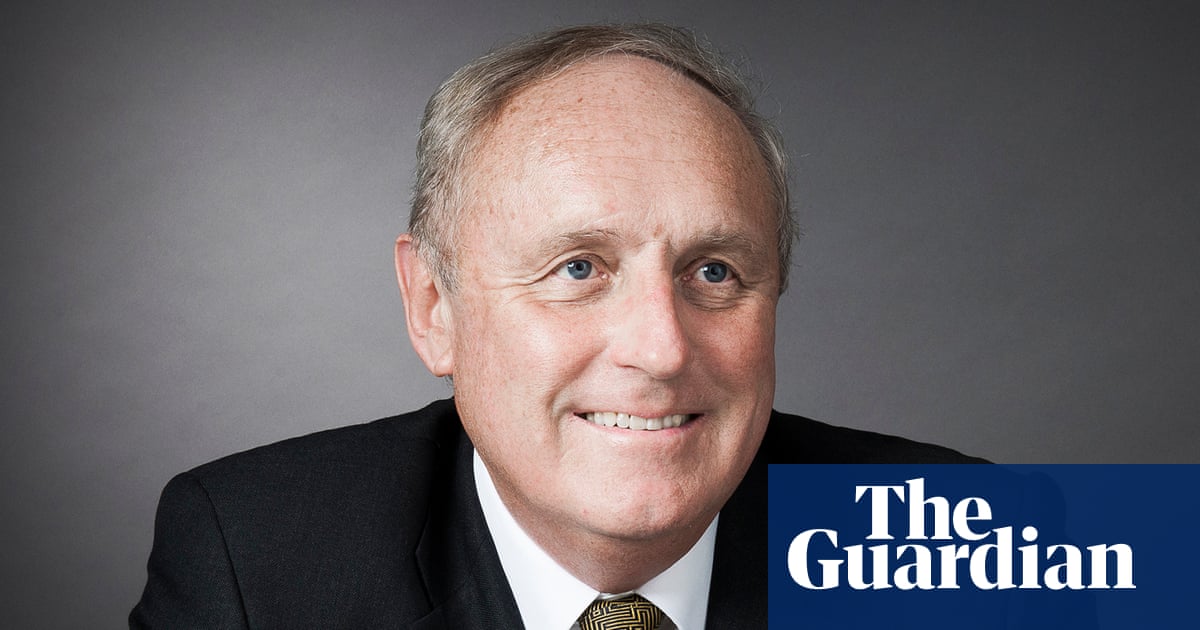
Gordon Brown is the UN’s special envoy for global education and was UK prime minister from 2007 to 2010
-
Do you have an opinion on the issues raised in this article? If you would like to submit a response of up to 300 words by email to be considered for publication in our letters section, please click here.