2 hours ago
9
2 hours ago
9
Chancellor Merz hosts crisis talks after AfD's win, reports say
Meanwhile, Bild newspaper is reporting that chancellor Friedrich Merz has called crisis talks within his CDU party this morning to discuss his response to last night’s result.
“Merz is under massive pressure,” the paper notes.
He is expected to speak to the media around 1.30pm local time (12:30 UK).
Key events
Italian press write about 'darkness above Berlin' after AfD's state election win
Angela Giuffrida
in Rome
All of Italy’s daily newspapers have led with AfD’s victory in Saxony-Anhalt, with La Repubblica’s headline describing it as “the darkness above Berlin”.
The political reaction exposes the divisions in Giorgia Meloni’s ruling coalition. Matteo Salvini, leader of the far-right League, said the victory was “remarkable for the AdD” and reportedly sent a message of congratulations to its leader, Alice Wiedel.
Antonio Tajani, who leads the centre-right Forza Italia, said the victory was “bad news” while Meloni, whose Brothers of Italy party has neofascist roots, has not said anything publicly.
Some reports suggest her views align more with Tajani, in that the election result is not something to celebrate but should be a warning that the EU must be more effective in its response to the concerns of citizens.
Opposition politicians say the rise of the extreme right is Europe is worrying while Roberto Vannacci, who in Italy is hoovering up support on the far-right – posing a serious dilemma for the government as it seeks a second mandate in general elections next year – welcomes the victory.
Chancellor Merz hosts crisis talks after AfD's win, reports say
Meanwhile, Bild newspaper is reporting that chancellor Friedrich Merz has called crisis talks within his CDU party this morning to discuss his response to last night’s result.
“Merz is under massive pressure,” the paper notes.
He is expected to speak to the media around 1.30pm local time (12:30 UK).
German freedom undermined by Russian drones, Moscow-friendly lawmakers, minister warns
Meanwhile, German interior minister Alexander Dobrindt said the country’s freedom is under threat from Russian drones as well as by domestic lawmakers who support Moscow in parliament, underscoring the government’s harder line against Russia.
Freedom in Germany is “threatened from outside by Russian drones in our skies and from inside by Moscow’s ideological low-flyers in our parliaments,” said Dobrindt, speaking at a political rally in Bavaria, Reuters reported.
Berlin has blamed Russia for a drone attack in August at Leipzig/Halle airport.
Dobrindt’s warning comes after the far-right AfD, which has been pushing for restoring ties with Russia, won state elections in Saxony-Anhalt on Sunday.
On immigration, Weidel insists that her party “warmly welcomes everyone who contributes positively to our society” and pays taxes, but says it would implement a very strict migration policy.
“For us, it is not a matter of whether someone is a foreigner or has a migration background,” he says, but insists AfD does not want “unregulated, irregular migration across open borders, consisting largely of unskilled individuals using our social welfare systems.”
She says it is unacceptable that people have to worry for their safety at Christmas markets, and Germany needs to “secure our borders and precisely control who comes to us and who is not allowed to come.”
She says her party would “deport those who commit crimes here or are staying illegally.”
She says the current migration policy “leaves people to watch as they become strangers in their own country,” and is negatively affecting public finances.
AfD to open talks on ruling in Saxony-Anhalt
AfD’s Saxony-Anhalt leader Siegmund also says the party has “a mandate to govern,” but stresses it will not want to compromise on its principles and key proposals.
“I will run as the candidate for minister-president in Saxony-Anhalt if it becomes apparent that we have secured a stable majority,” he says.
He says without a majority – and relying on abstentions and other workarounds – would not be satisfactory.
But the AfD will “extend a hand” to every other party to hold exploratory talks on whether they can find an agreement on what’s next.
He appears to suggest that defections from other parties could be an option, saying he will “hold discussions … if there are individual groups or MPs willing to join us in tackling this historic task.”
He says he wants to see Weidel as a future German chancellor so they work side by side.
The AfD’s ambitions are “not just about Saxony-Anhalt; they are about Germany,” he says.
AfD’s Chrupalla continues in this vein, saying the German public wants to see a change in direction, and specifically saying the electorate is “fed up” as the government keeps “transferring billions of our tax money to Ukraine … instead of using it for our own population.”
He says the party has “a clear mandate” to rule in Saxony-Anhalt and will hold discussions with others about what can be done.
AfD eyes 40% vote share at 2029 parliamentary election, Weidel says
Weidel continues by saying that the electorate wants to see strong leadership capable of setting a “direction” to “guarantee our country’s viability for the future.”
She says CDU/CSU “will never again be able to win a federal election,” and says she expects AfD to get “at least” 40% at the next federal election in 2029.
“The people of this country want a change in policy; they want politics that serves the interests of our country,” she says.
AfD's Weidel celebrates 'a dream result' for far-right AfD
AfD’s Weidel celebrates “a historic election result” - which she calls “a dream result” - for the AfD, the party’s best “by a wide margin.”
She says the triumph was fuelled by a number of previous non-voters turning up to support her party, which she calls a triumph for democracy.
She says the electorate “lost trust” in federal politics and the government, saying “no chancellor before him was as unpopular as Friedrich Merz is.”
“The election in Saxony-Anhalt shows that people expect a change in policy,” she says, stressing a need to fight irregular migration, change energy policy and lower taxes in particular.
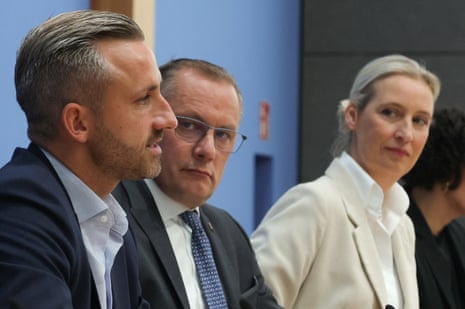
AfD leaders speak after Saxony-Anhalt win
The co-leaders of the Alternative für Deutschland Alice Weidel and Tino Chrupalla and the party’s Saxony-Anhalt leader Ulrich Siegmund are now giving a press conference after last night’s win.
I will bring you the key quotes here.
AfD's gain in Germany will be seen as a worrying sign ahead of 2027 election marathon - snap analysis
Jakub Krupa
The Saxony-Anhalt election has been closely watched – as will be the other two upcoming German state election in Berlin and Mecklenburg-Vorpommern – ahead of a number of key elections in the next 12 months which could see right and far-right parties making further gains across Europe.
Starting from Sweden this weekend, we will also see Latvia and Bulgaria go to the polls this autumn, but then the focus shifts to the 2027 French presidential elections, and key parliamentary races in France, Italy, Spain, Greece and Poland next year.
As Viktor Orbán said (9:57), “buckle up.”
Italian government split in reactions to AfD's win
Italy’s foreign minister Antonio Tajani called the election result “terrible news … because it concerns a political force that is antithetical to the liberal and western values,” Corriere della Sera reported.
But Italy’s deputy prime minister in the same government Matteo Salvini was delighted with the outcome of the vote, calling it “a resounding success that highlights the strong demand for change, security, and jobs.”
“In the face of those on the left who stoked fears and catastrophic scenarios. Fear? Terror? Danger? No, it’s called DEMOCRACY. Another Europe is possible.”
For what it’s worth, Giorgia Meloni has yet to respond to the election result.
European leaders concerned about AfD win
We are also getting first reactions from European ministers.
Donald Tusk, the prime minister of Poland, said:
“In Poland, only idiots or traitors can rejoice at the triumph of the AfD in Germany.”
Poland’s foreign minister Radosław Sikorski called the AfD’s win “a very worrying” signal for Europe.
France’s Europe minister, Benjamin Haddad, described the win as “a serious moment in Europe”, warning that “nationalism and xenophobia will never be a solution”.
“We must listen with humility to the anger, the concerns, the fears, and respond to them,” he added. “We cannot forget our history. That is the meaning behind the choices made by France and Germany.”
French finance minister Roland Lescure joined in his warnings, saying Europe faced “a major challenge in the face of a populist wave” across the continent.
But former Hungarian prime minister Viktor Orbán celebrated AfD’s win, saying it was “a huge night for Germany and Europe!”
“Buckle up. This is just the beginning!”
Russian presidential aide praises 'historic' win for 'pragmatic' pro-Russian AfD
Russian presidential envoy Kirill Dmitriev took a screen grab of US president Donald Trump’s post on Saxony-Anhalt and praised a “historic win for the pragmatic AfD”.
AfD is pro-Kremlin, urging a stop to support for Ukraine and pushing for Ukrainians to no longer receive refugee status.
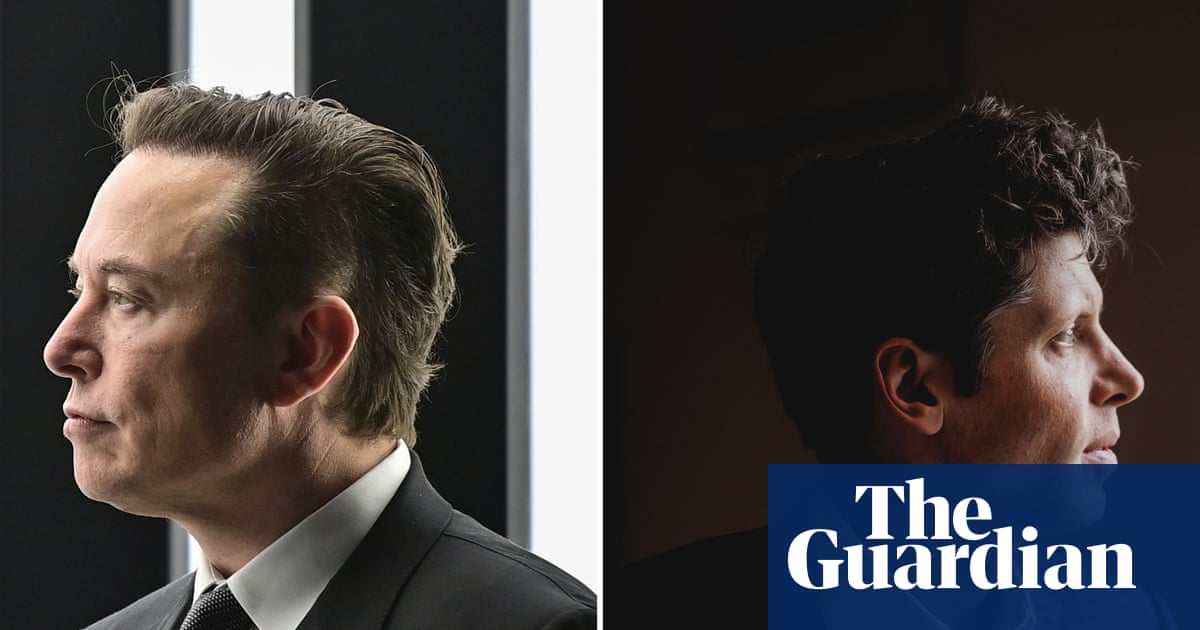
AfD state leader thanks Elon Musk for support after Saxony-Anhalt win
On Sunday night, Ulrich Siegmund, the AfD’s lead candidate, thanked Musk on X “for your support and for your clear and highly important perspective on the political developments of our time”, adding: “I would very much welcome the opportunity for strong and constructive cooperation”.
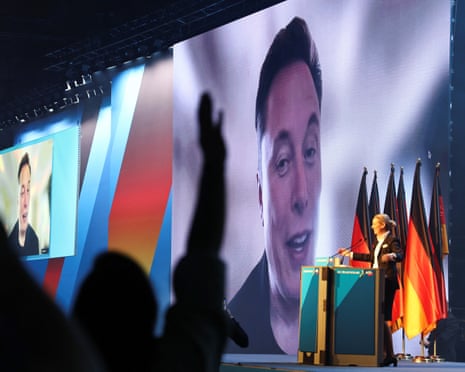
Siegmund wrote his comments after Musk said “Well done!” in German to AfD co-founder Alice Weidel, when she posted about the projected win.
Morning opening: What now after AfD's election triumph?
Jakub Krupa
Europe wakes up this morning to final results of the Saxony-Anhalt state election in Germany, with the far-right Alternative für Deutschland confirmed as the winners – but without a majority in the state parliament.
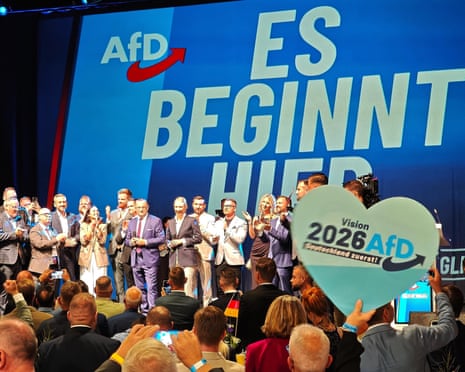
Cue chaotic discussions about what’s next, including theoretical scenarios with defections, a minority government backed on issue-by-issue basis by the far-left Sahra Wagenknecht Alliance, or even… a snap election to resolve the deadlock.
We are expecting to hear from the embattled German chancellor, Friedrich Merz, around lunchtime. With German media running grainy pictures of Merz looking glumly on the backseat of his car, it is probably fair to say that the pressure on him will only increase.
There are also lots of political reactions from across Europe, with no doubt more to come.
I will bring you all the latest here.
Separately, I will keep an eye on Ursula von der Leyen’s trip to Greenland amid renewed US interest in the territory, and on the funeral of Bosnian Serb war criminal Ratko Mladić.
It’s Friday, 4 September 2026, it’s Jakub Krupa here, and this is Europe Live.
Good morning.