2 months ago
162
2 months ago
162
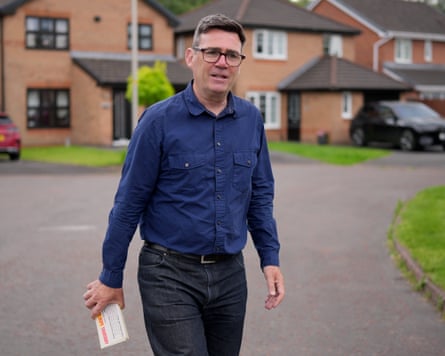
It was 3.30am, just after the Wigan returning officer had read out Andy Burnham’s 9,231 majority, and a close adviser to Burnham texted: “We will need to be ready a lot sooner than we thought.”
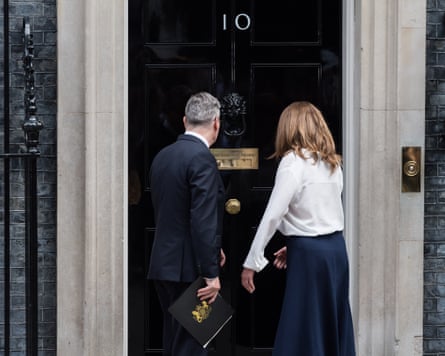
Keir Starmer resigned on Monday before Burnham was even sworn in as an MP. Wes Streeting was out of the race an hour later. Burnham travelled down on the Avanti West Coast – yet to be nationalised – to Euston on a train that was delayed by 21 minutes. But everything else about the transition will be whiplash fast.
The new MP for Makerfield is likely to be prime minister in less than three weeks’ time. If he has no opponents, he will be in No 10 by 17 July.
“The next general election will be won or lost in the first 100 days – it’s very difficult to change people’s views after that,” said one MP close to Burnham. “They also need to see real delivery, like Zohran Mamdani promising to fill potholes in New York and people leaning out of their windows and actually seeing it.”
Over the course of the Makerfield byelection campaign, Burnham had understandably wanted to spend most of his time focused on winning the constituency.
But with poll numbers heading in their direction, he began spending more of his time talking to the very small close circle of policy advisers who have been thinking about what comes next. The team has been besieged by policy submissions and have been fending off legions of hopefuls who want their ideas associated with the next prime minister.
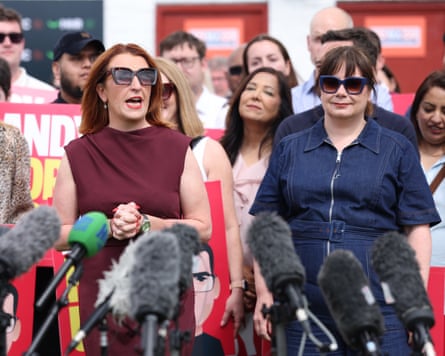
One thing is clear. “We will need to look like change,” one senior figure in the Burnham campaign said. His transition team will be the three female MPs who delivered his stunning victory in Makerfield – Anneliese Midgley, on the unions and the party, Louise Haigh on the agenda for government and Sally Jameson, who has been running the numbers for Burnham with MPs. Over the next fortnight, Burnham plans a number of speeches to set out his agenda.
There is a plan starting to form for the first 100 days in power. First will be a significant offer on devolution, building on the reforms that Starmer has begun but one that shows the serious intent behind everything Burnham said at the byelection – “They have voted for more power for the north and everywhere forgotten by Westminster.”
The recent Devolution Act gives mayors sweeping powers, but sources close to Burnham suggest he will go further, potentially a slew of new mayors for different parts of the country. Another option could be the introduction of a “basic law” – mooted by Burnham in his book Head North – which would mandate the government to raise living standards everywhere.
But whatever form it takes, it will be a message that his will be a government serious about raising the living standards of the forgotten parts of the UK.
Burnham will also flesh out his ambitions on public control of essential utilities, an agenda which he remains deeply serious about pursuing, despite some scepticism from other quarters of the Labour party. The scale of that ambition will depend on who he chooses as chancellor – but it is firmly at the heart of his project.
Other key early parts of the agenda will be opportunities for young people in work – having praised the review led by Alan Milburn – and addressing the housing of asylum seekers in HMOs, an issue he promised to tackle during the byelection campaign.
His seriousness about taking a tough line on migration would suggest that Shabana Mahmood will stay in post as home secretary – though no cabinet position is certain.
The timing is faster than many had wanted. From the very beginning of the Makerfield campaign, Burnham’s strategists said their aim was to have him in place to give the leader’s speech at Labour party conference in Liverpool in mid-September.
But since the thumping win, some began to question the benefits of a long transition. “There are pros and cons,” one said. “I do not think the party will wear both a coronation and a long transition.”
And there is a concern too that any power vacuum gives Burnham’s enemies – both in politics and in the rightwing media ecosystem, a chance to wound the PM in waiting.
Starmer has faced an online onslaught of hate like no other, fuelled by fake news spread by far-right agitators. Burnham is likely to face the same, and has shown a willingness to fight back on social media, but it would still be better to be in office than in limbo.
But although members of Burnham’s team concede they will need to present a new agenda, there is a programme of government that will continue.
“There is stuff within the manifesto that needs to be delivered on, that might actually need to be reupped and some of which there is more room to be ambitious on,” one said.
Burnham will appoint a team and a cabinet-in-waiting over the next fortnight – though he had hoped to have more time to make those crucial decisions.
“This is an accelerated version of what we expected, for sure,” one of his team said. But one thing is clear – there will be significant change at the top of government with the aim of having a much broader spread of Labour ideologies.
Transition preparations in government have been going on under the radar. Darren Jones, the chief secretary to the prime minister, met Burnham’s ally Louise Haigh in Makerfield during the campaign. Jones has held meetings in the Cabinet Office with officials about how to handle the destabilising impact of a transition period or a leadership contest.
The talks included kicking off the process for budget preparations – including work on the “long tail” of effects from the war in Iran – as well as asking for advice for any national security or civil contingencies oversight, given that far-right riots took place over the previous two summers.
There remains a small possibility that a challenger could come forward to enter a leadership contest. Some MPs and ministers met over the weekend to discuss whether it might be possible to have a woman run against Burnham.
But most have concluded that the instability is not worth the risk – especially seeing as Burnham does not have a particularly factional reputation.
“We have to think about what is best when there is some really big things that need to be done,” one minister said. “We ultimately know what Andy is trying to achieve, he has been doing it for a long time.
“We don’t need a boring factional battle. There is a Labour government agenda, much of which he has been part of and delivering. He has been in power in Manchester for years. For some ministers, he will know more about the agenda they are delivering than Keir did.”
Starmer will be in post for the Nato summit on 7 July but the next step for the EU reset – scheduled in Brussels for 22 July – will now be postponed. Burnham will face potentially damaging electoral battles in his first months, first the Greater Manchester mayoralty he has just vacated and there is a whisper of a byelection in Holborn and St Pancras, should Starmer step down as an MP, which would test the new prime minister’s ability to beat the Greens.
But there is one potential bright spot of a swift transition. If Burnham is in No 10 by Friday 17 July, he could – in a perfect universe – see England win the World Cup that Sunday evening. There would be few better starts for a new prime minister.