2 hours ago
10
2 hours ago
10
World War II with Tom Hanks opens with a sales pitch, for World War II, by Tom Hanks. “The second world war,” says he, eyeballing us in medium closeup with calm paternal authority, “is the largest event in human history. No part of the globe is unaffected. The second world war changed everything. For all of us.”
Hanks is the narrator and is at the beginning and end of each of the 20 instalments, the on-screen master of ceremonies for a series that is up there with the largest documentaries in human history. Its 20-episode run invites comparisons with ITV’s monumental 1973 classic The World at War, which sprawled across 26 episodes. The new series persists in telling us that we are, together, tackling the big one. After Hanks’s introductory spiel, there is a montage that recurs at the start of subsequent episodes, with contributors underlining how massive the war’s impact was.
So why does the series not feel epic? Why does it struggle to elevate and move us with the awesome sweep of history? Perhaps it’s partly because Hanks and co are right about the sheer scale of the subject, to the point that 20 episodes aren’t enough. In the triple bill that kicks the show off, events that zip by slightly too quickly include Hitler’s rise to power, the Germans’ unexpected use of the Ardennes forest as a route to France in 1940, and the Dunkirk evacuation. Every aspect has had books the size of breeze blocks written about it; the TV version must summarise.
But it’s more that World War II with Tom Hanks has been made in the 2020s, not the 1970s, with all that entails. The World at War was built on a stunning array of interviews with first-hand witnesses, many of whom were speaking for the first time and imparting details that viewers could not already have known. Those people are dead now. A new documentary has to replace primary sources with something, and this one succumbs to the scourge of 21st-century factual programming, the talking head.
In between the archive clips with their sober, demure Hanks narration, up pop academics and popular historians to give takes that rarely contain major insights. Much more often, the hired experts emphasise, colour or simply repeat what we have just learned. Admittedly, they do recover from a catastrophic start. After the actor has begun the narrative by setting out the terrifying force of German’s invasion of Poland, complete with precise statistics about how many men, planes and tanks Hitler sent in, and vivid footage showing us how devastating the attack was, you’d be forgiven for switching off immediately when history podcaster Dan Carlin appears on screen and bellows, pointlessly: “September 1st, 1939! A storm breaks over Poland!”
The contributors are not generally as irritatingly unnecessary as that, but these vox pops give this show a monotonous rhythm. Clip, narration, talking head. Clip, narration, talking head. It doesn’t help that they’ve been filmed and lit plainly, exactly as they would be for a solid but uninspiring low-budget doc on BBC Four or PBS.
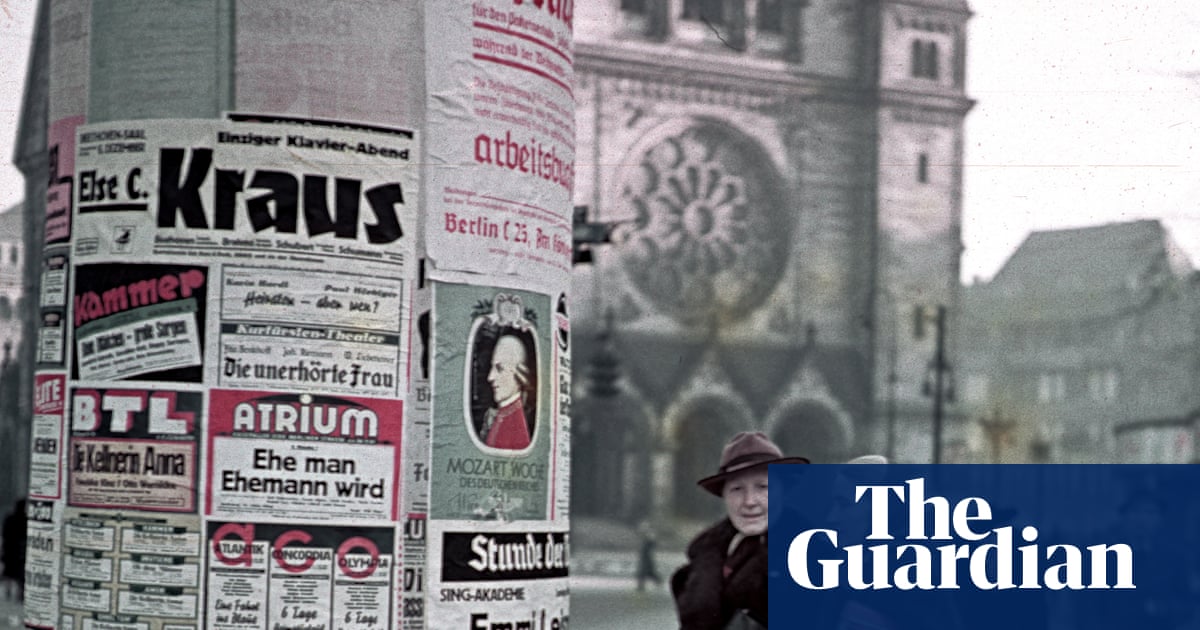
We are, however, compensated with tremendous archive film, some of it newly discovered. Ever since the invention of the motion picture camera, armies have somehow managed to accommodate a bloke who tags along and records them, even in the most explosive and perilous situations. So it is that we are right there with the British, the Russians and – particularly in these early episodes when everything seems to be going jolly well for them – the Germans. In the decades since the war ended, better access has also been granted to German and Russian news broadcasts of the time: a good trick WWTWTH likes to use is to swiftly cycle through the contemporary propaganda response to an event on all sides of the conflict, giving us a rounded snapshot of who was up and who was down.
It doesn’t look as if this series will overturn any of the settled, mainstream opinions about the war. It doesn’t pass the dinner party test: should you become embroiled in an onerous conversation with a history bore, you won’t be able to draw on the time you’ve put in here and annihilate your opponent with a barrage of did-you-knows and I-think-you’ll-find-there’s-more-to-its. That deep analysis isn’t there.
That doesn’t mean Hanks’s efforts have been wasted. The World at War is more than half a century old, and there are two or three new generations who are never going to be persuaded to go back and seek it out now. The modern equivalent is keeping it alive by repackaging it in today’s standard format. If your knowledge is sketchy, a 20-hour investment in this programme will provide you with the basics. It does feel basic, though: the war is too big for it.
-
World War II with Tom Hanks aired on Sky History and is available on Now.