2 months ago
133
2 months ago
133
In the week that many families went to the coast for the fresh sea air or the tang of fish and chips, visitors to one Lancashire resort inhaled a rather more unpleasant aroma.
“Welcome to Fleetwood,” read the local newspaper headline. “The town that smells of bin juice.”
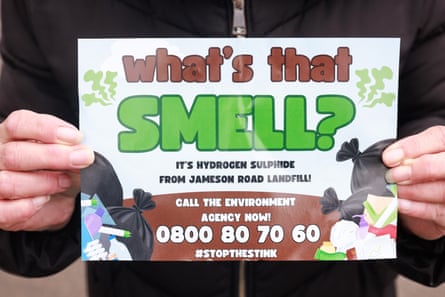
For more than two years, the former fishing port has been choked by a putrid pong from a reopened landfill site that has prompted more than 20,000 complaints to the Environment Agency.
Despite promises to tackle the smell, which residents have compared with rotten eggs and animal excrement, many say it is worse than ever. Nearly 6,000 complaints have been logged by the EA in the last six weeks alone.
Dave McPartlin, the headteacher of nearby Flakefleet primary school, said it was now so bad children were refusing to play outside. “It’s disgusting and it’s particularly bad when the weather tends to be nice, so just as people want to get fresh air you get this really offensive, intrusive smell that just lingers,” he said.
The foul stench is hydrogen sulphide, a toxic gas that was released when Transwaste, a recycling firm, reopened the decades-old Jameson Road landfill in late 2023 after it had been closed for five years.
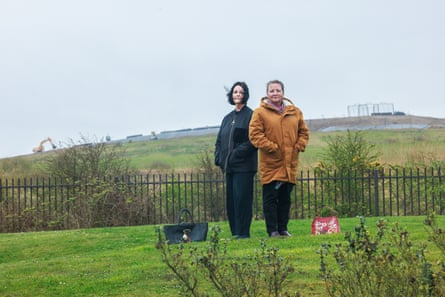
Residents said the smell has caused retching, vomiting, nose bleeds, headaches, itchy eyes and a worsening of breathing conditions. Even at night, the smell lingers because the temperature drop means the gas stays closer to the ground than it does during the day.
“People are getting gassed in their beds – that’s how they’re describing it,” said Donna Davidson, a retired teacher who lives in Thornton-Cleveleys, a village nearly 3 miles from the landfill, and has experienced the wind blowing the smell into her home and beyond to the edge of Blackpool.
Holidaymakers at the caravan sites next to the landfill have complained online about the “absolutely vile” smell making them sick. One family who had booked an autism-friendly caravan described their “hell” after their child with extreme sensory needs was “so nauseous at the smell they couldn’t even leave their room”.
Allison Rowe, 65, who moved to Fleetwood during the Covid pandemic, remembers the first time the stench clung to her throat. “It was February 2024,” she said. “I came out one morning and all of a sudden it was: ‘What’s that bloody stink?’
“Sometimes I come back from somewhere in the car and I’ll vomit my guts out, straight out of the car.”
Rowe said she was diagnosed with two lung conditions six months ago – asthma and slight chronic obstructive pulmonary disease (COPD) – and believed they were linked to the landfill.
“It’s an abomination,” she said. “Nobody knows what the long-term consequences will be for the people who are now pregnant or have other health issues. The authorities need to protect the people.”
An Imperial College London study in 2020 found a small increase in congenital abnormalities in those living close to municipal waste sites, but there has been little detailed research on the issue.
Fleetwood has some of the most deprived neighbourhoods in England, with higher levels of asthma and nearly double the national average rate of COPD, conditions the UK Health Security Agency says are made worse by breathing in noxious air.
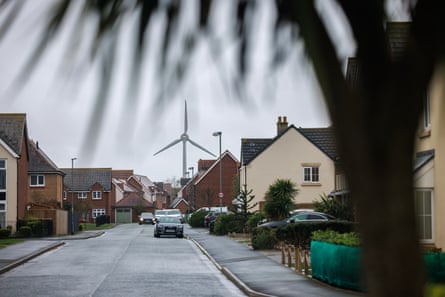
In the almost two years to January, the EA recorded 74 compliance breaches at the Transwaste site, a third of which were classed as “significant”.
The Hull-based firm, run by brothers Paul and Mark Hornshaw, began installing a permanent barrier on the landfill this month to address the stench, claiming it applied to the EA to carry out the work in December but was only given the go-ahead last week.
Many residents said they felt let down by the relevant public agencies, including the EA, two local authorities and the NHS.
“They are treating us with contempt,” said Dr Barbara Kneale, a trained GP and consultant in occupational medicine who lives a mile from the landfill.
Together with Davidson, she is gathering evidence to try to get the site closed permanently. This includes detailed hydrogen sulphide readings from people’s homes and keeping track of the trucks piling rubbish into Fleetwood, which have been traced to Dover, Dunfermline, Hull and beyond.
Last month, a group of more than 100 local people staged a slow march to the landfill in protest, some aided by walking frames, others wearing face masks.
“Nobody’s taking it seriously. They just think we should put up with it,” said Kneale, 61. “I think they had a real shock that people of Fleetwood have stood up.”
Lorraine Beavers, the town’s MP, used parliamentary privilege last month to describe Transwaste as “crooks” who were being allowed to “evade accountability for their crimes”. She told the Guardian: “The smell is worse than ever and is destroying lives and livelihoods [and] I will not rest until the site is shut down.”
Transwaste said it strongly rejected Beavers’ “entirely unfounded” allegations and that it complied with all laws and committed itself to the highest standards. It said many of the odour issues were a result of bringing the site back into operation.
Wyre borough council, the site’s landlord, said it could only take legal action if residents recorded detailed diaries and allowed council officers to witness the smell inside their homes.
“There’s been 20,000 complaints to the Environment Agency – is that not enough?” said McPartlin, adding that he felt Fleetwood had been forgotten. “If this was some wealthy Surrey commuter belt this would never be allowed to continue.”
An EA spokesperson said: “The community should not have to tolerate odours that affect their environment. We have pushed the operator to cover areas of the site where waste has recently been deposited to reduce odour and are pressing them to install permanent capping as soon as possible to prevent future emissions.
“Environment Agency officers are on the ground actively monitoring the situation, and if we don’t see improvements, we will not hesitate to take further enforcement action.”